Fringillidae
Eurasian Siskin
Spinus spinus
- Scientific name
- Spinus spinus
- Family
- Fringillidae
- In Sweden
- Partial migrant, breeds here
- Size
- 12 to 13 cm
- Swedish Red List 2025
- Not red-listed
- Global Red List (IUCN)
- Least concern (LC)
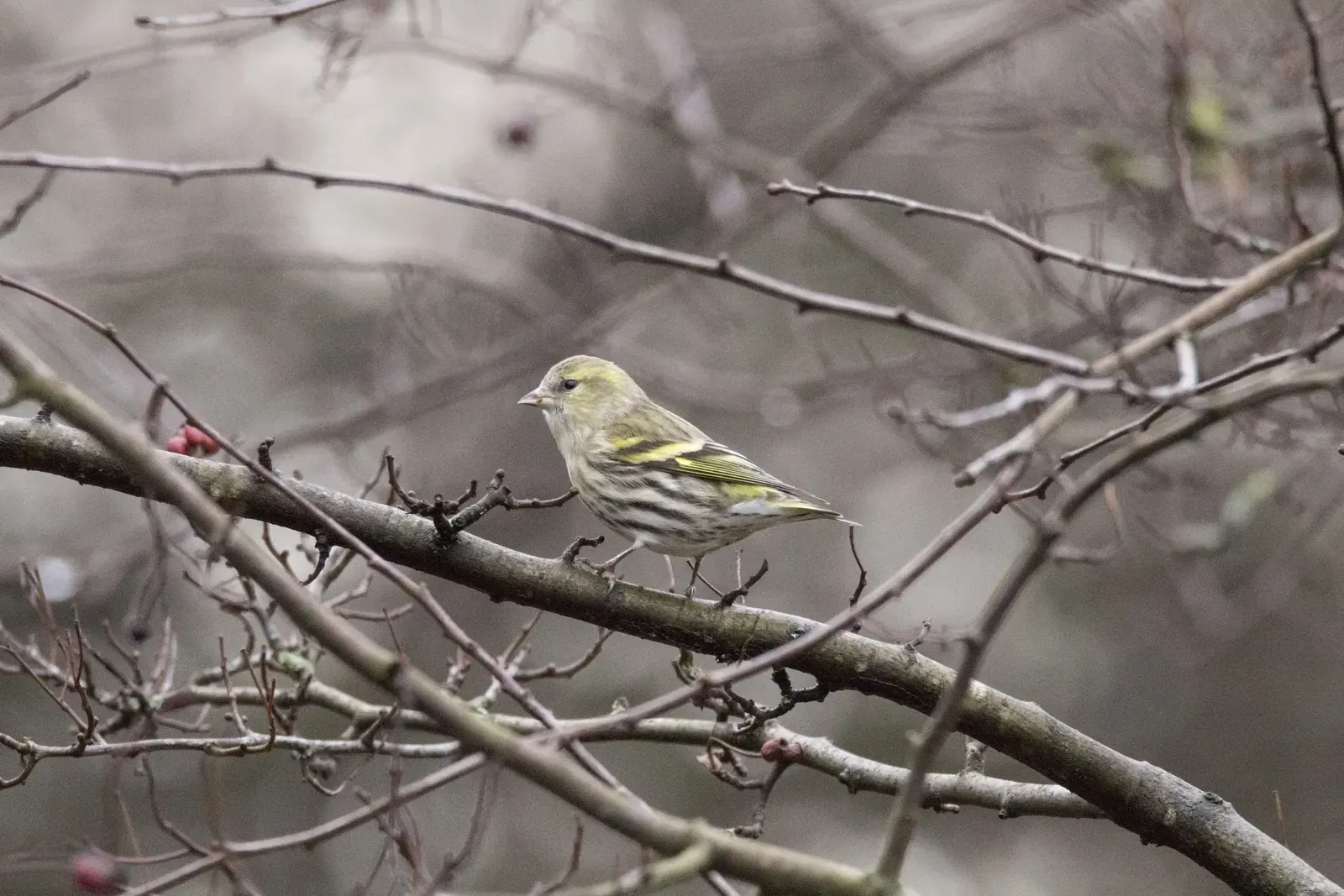
The Eurasian Siskin is a small finch that breeds throughout Sweden except in the mountains. It prefers to breed in tall conifer forest with alder and birch, and it visits bird feeders in gardens.
How to recognise it
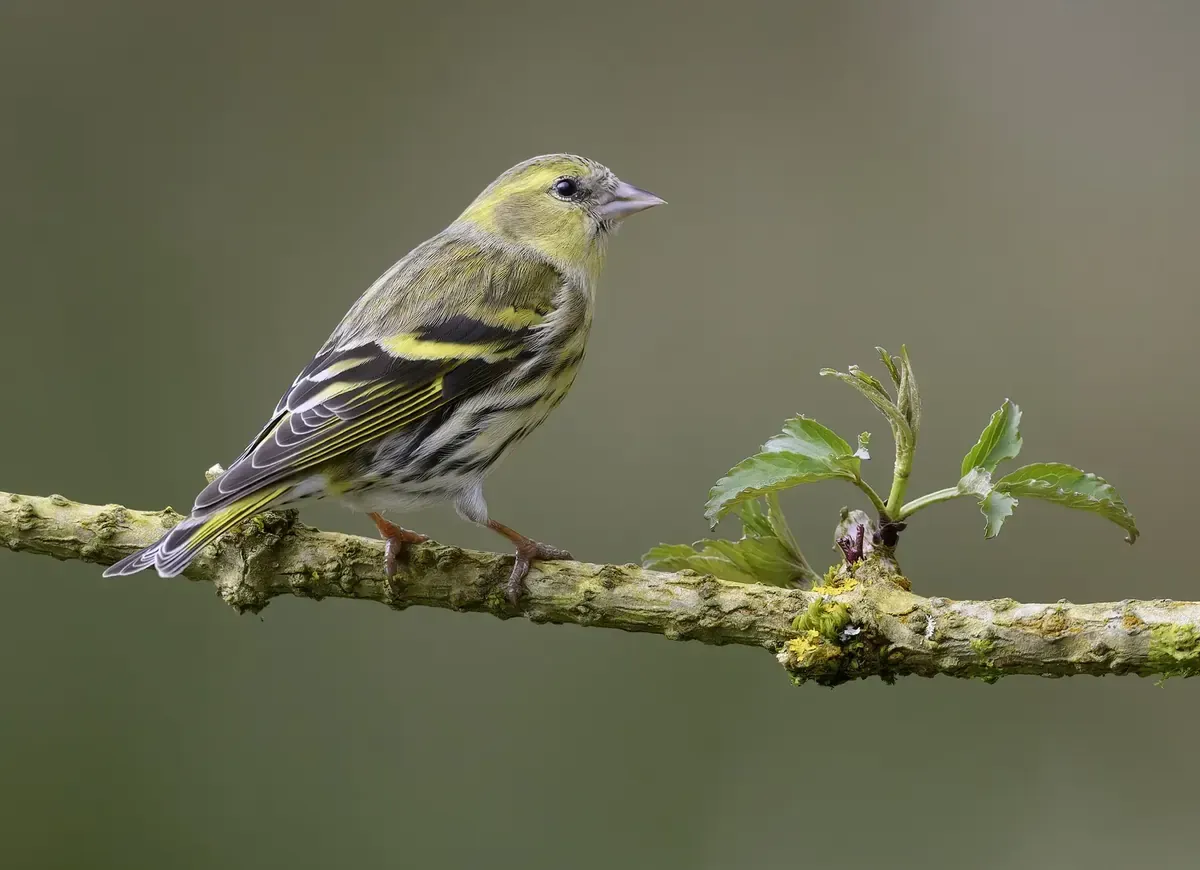
- Two pale yellow-green wing bars set in black, and a pale green rump in all plumages
- Male is green on back and breast, with black crown and black throat patch
- Female and young lack the male's black and are pale grey-green with dark streaking
- Short, conical, pointed bill and short, forked tail
Call and song
The calls are two-syllable whistles, one falling "tilö", the other rising "tluih". It also has a chattering soft call. The song is a twittering, trilling ramble with mimicry, repeatedly broken by a drawn-out, almost wheezing note. Siskins sing all year round, often in groups.
Where and when
The Eurasian Siskin is a partial migrant that breeds throughout Sweden except in the mountains, and it is common in southern and central Sweden. Some Swedish birds move south to Germany and France while others stay for the winter. It is reported from all 21 counties, most often in January, February and September. In winter it prefers stubble fields, farmland and areas with seed-bearing trees.
When is it seen in Sweden?
Where is it reported?
- No reports
- Small share
- Medium share
- Large share
Reported most in January, February and September. Reported from all 21 counties.
Food and behaviour
In winter it is often seen in large flocks, frequently mixed with redpolls, and then feeds mainly on alder seeds. It also eats seeds of herbs and grasses, and insects. It forages acrobatically, often hanging upside down like a tit. It wanders widely but is fairly tame, and its flight is fast and bounding.
More in the Fringillidae family
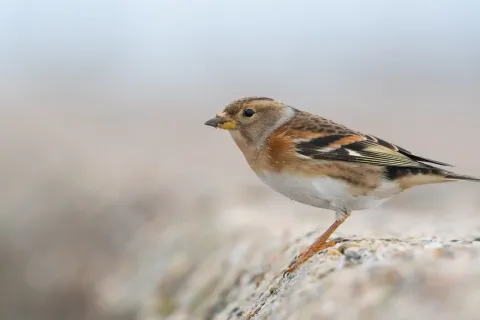
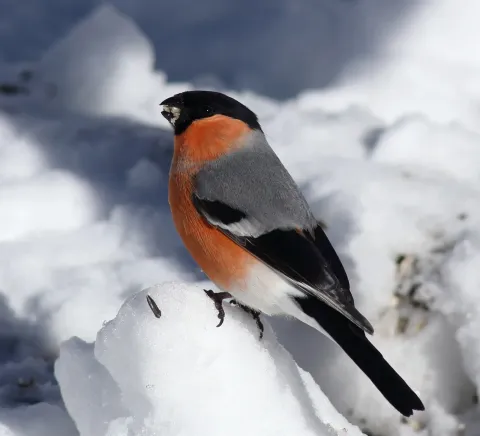
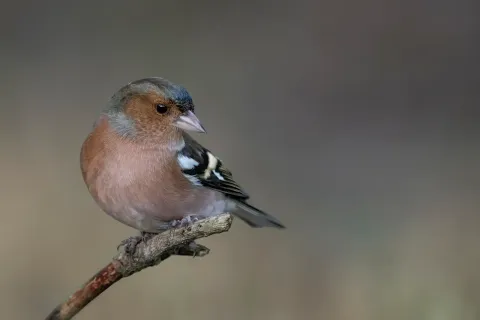
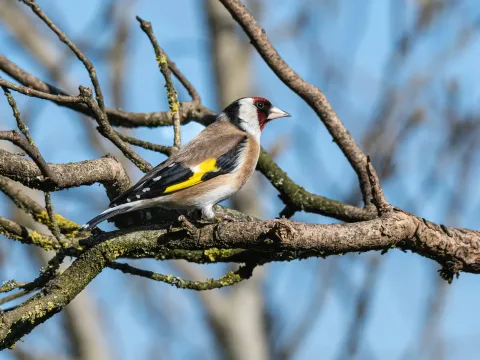
Photo: Rory, CC BY 2.0, via Wikimedia Commons, resized

Photo: cazalegg, CC BY 4.0, via Wikimedia Commons, resized

The text was written with AI from facts in Wikipedia and may be shared under CC BY-SA 4.0. Sources: Swedish article, English article, German article
Report data: Artportalen (SLU Swedish Species Information Centre) via GBIF.org, 2016 to 2025. Red list: The Swedish Red List 2025, SLU Swedish Species Information Centre via GBIF.org.
Checked against sources on . How we make these pages