Fringillidae
European Goldfinch
Carduelis carduelis
- Scientific name
- Carduelis carduelis
- Family
- Fringillidae
- In Sweden
- Partial migrant, breeds here
- Size
- 12 cm
- Swedish Red List 2025
- Not red-listed
- Global Red List (IUCN)
- Least concern (LC)
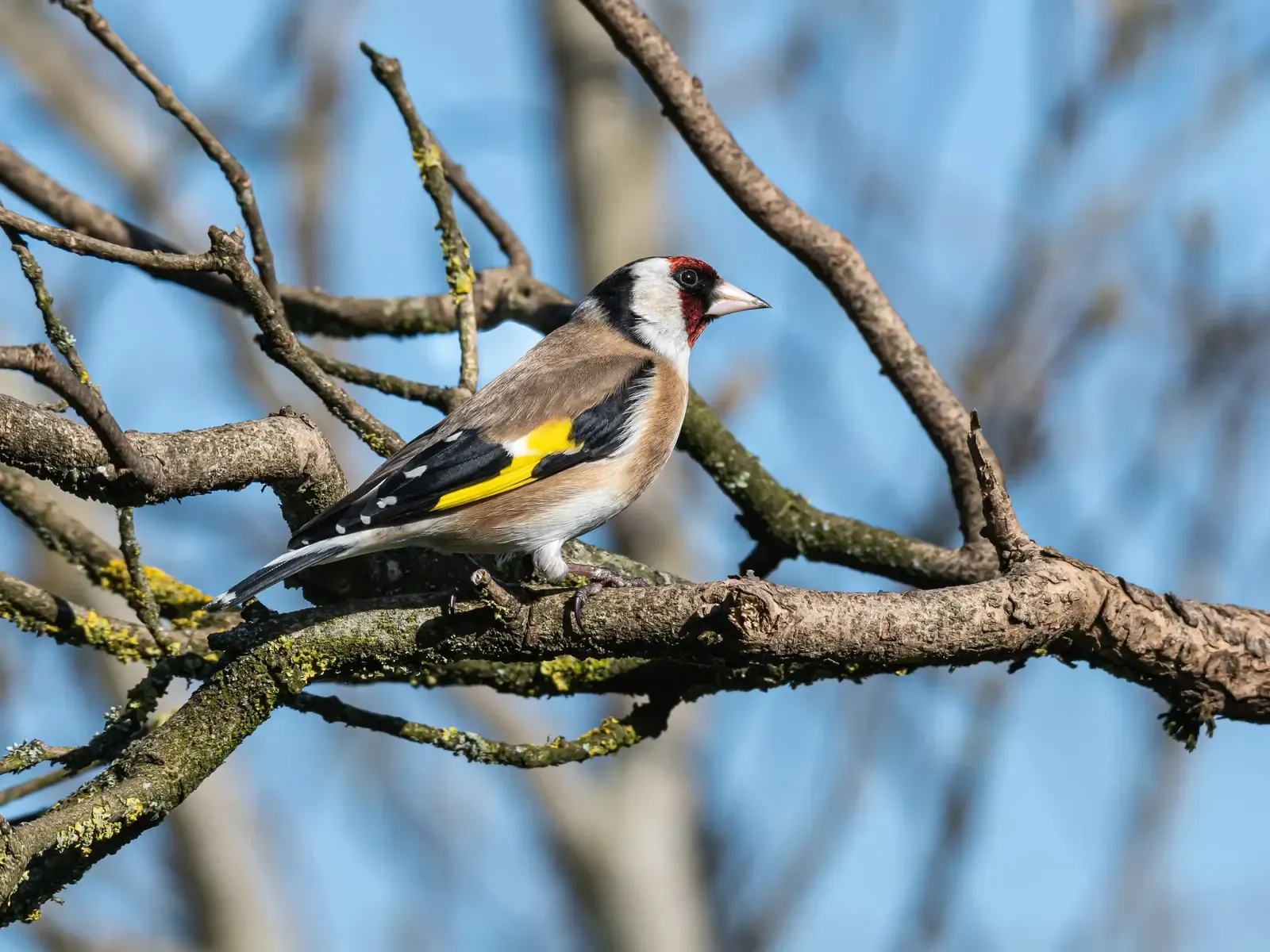
The European Goldfinch is a partly migratory finch that breeds in Sweden, in open landscapes with trees, gardens and orchards. In winter it regularly visits bird tables.
How to recognise it
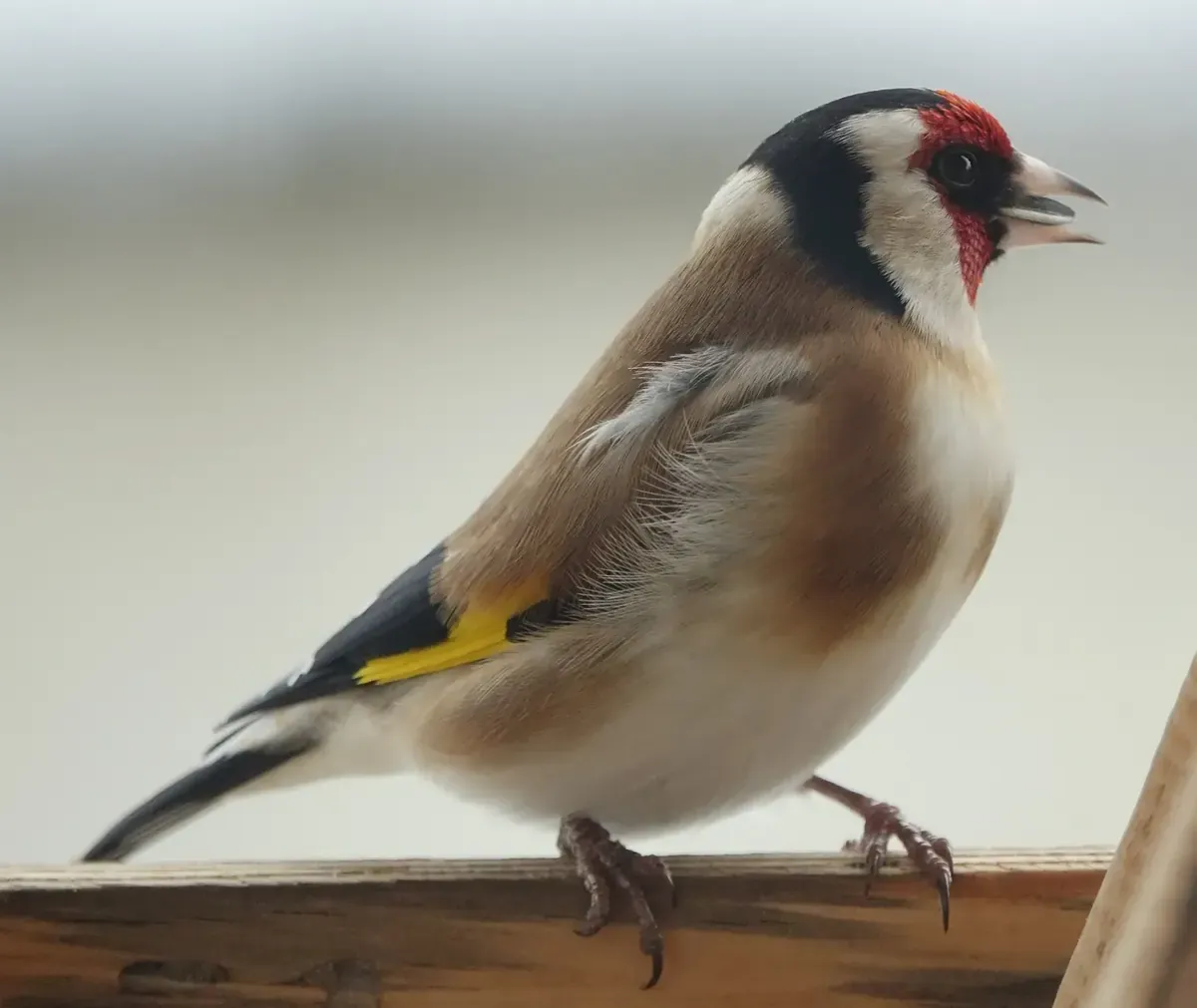
- Red forehead and throat, white head with white neck sides and black crown and nape
- Black wings with a broad, intense yellow band that shows clearly in flight
- Long, pointed ivory bill, black forked tail and white rump
- Male's red face mask reaches just behind the eye, female's does not pass it
Call and song
The call is a repeated “tick tickeli tickelitt”, which gave the species its Swedish name. The song resembles the Eurasian Siskin's: fast and twittering, with varied notes and bits of the call mixed in. The aggression call is a hard, snarling “tschrr”.
Where and when
In Sweden it occurs mainly in the south and centre, and along the Norrland coast to Norrbotten, and it is reported from all 21 counties. It is partly migratory: some leave in October to November for western and southern Europe and return in March to April, while others winter. It is reported all year and is now common, up 112 to 245 percent over the last ten years.
When is it seen in Sweden?
Where is it reported?
- No reports
- Small share
- Medium share
- Large share
Reported all year round. Reported from all 21 counties.
Food and behaviour
It lives mostly on seeds and is especially fond of seeds from thistles and burdocks. It is a skilled climber and often clambers on thistles to gather seeds. It breeds twice a year, the first time in May.
Easily confused with
-
Carduelis caniceps
Carduelis caniceps differs by lacking the black crown and the black vertical line behind the ear coverts.
More in the Fringillidae family
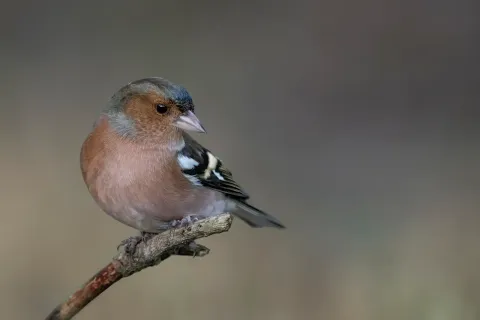
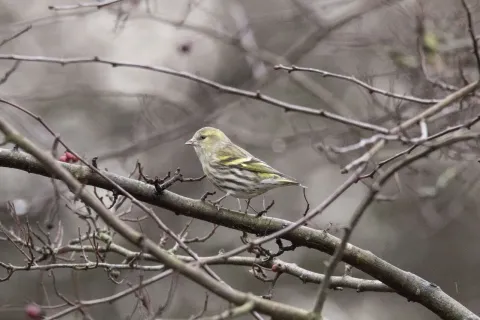
Photo: Isiwal, CC BY-SA 4.0, via Wikimedia Commons, resized

Photo: Gzen92, CC BY-SA 4.0, via Wikimedia Commons, resized

The text was written with AI from facts in Wikipedia and may be shared under CC BY-SA 4.0. Sources: Swedish article, English article, German article
Report data: Artportalen (SLU Swedish Species Information Centre) via GBIF.org, 2016 to 2025. Red list: The Swedish Red List 2025, SLU Swedish Species Information Centre via GBIF.org.
Checked against sources on . How we make these pages