Sittidae
Eurasian Nuthatch
Sitta europaea
- Scientific name
- Sitta europaea
- Family
- Sittidae
- In Sweden
- Resident all year
- Size
- 14 to 15 cm
- Swedish Red List 2025
- Not red-listed
- Global Red List (IUCN)
- Least concern (LC)
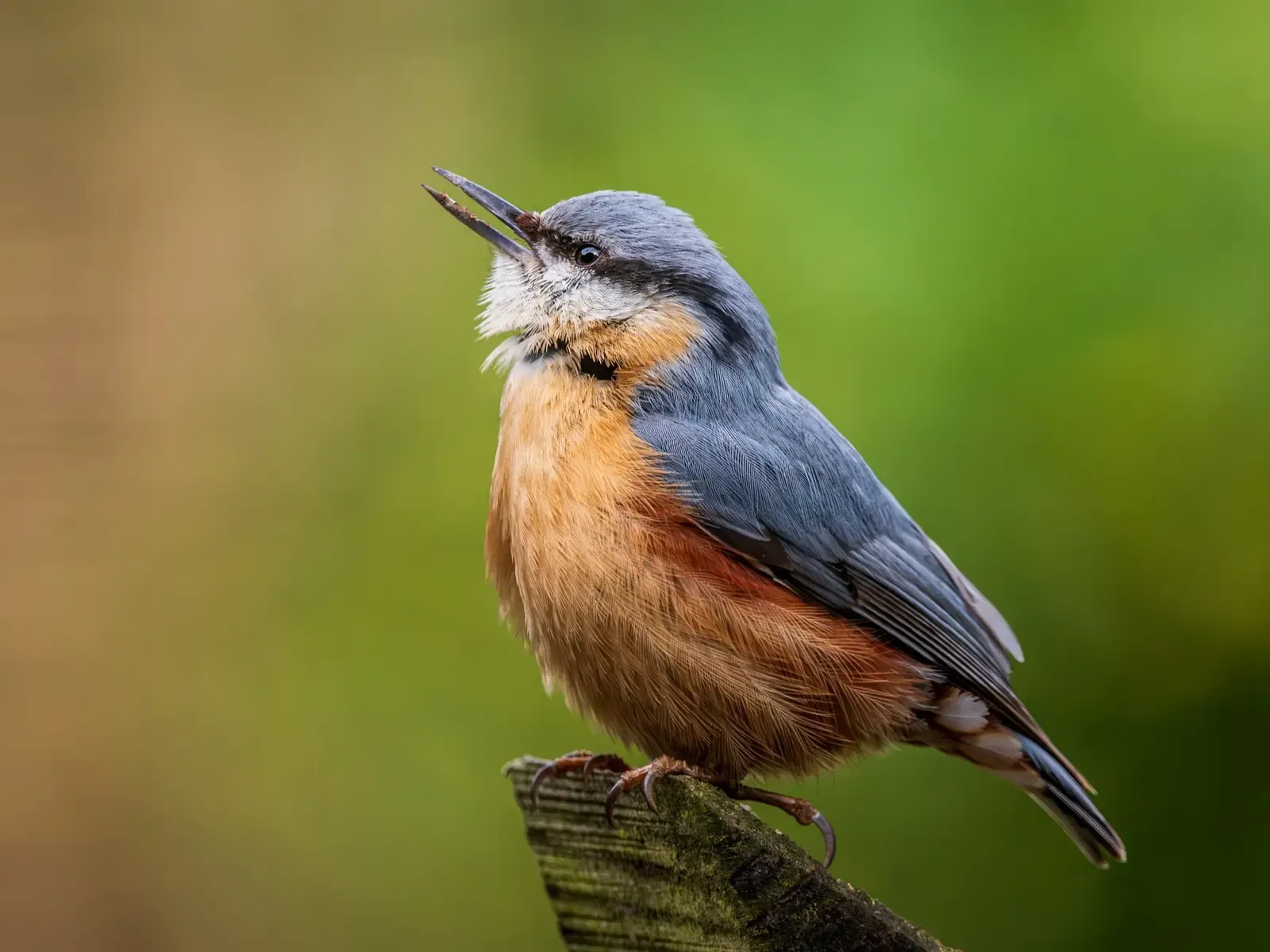
The Eurasian Nuthatch is a stocky bird with a large head, short tail and long pointed bill. It lives in woodland, comes into residential areas too, and in the winter half of the year it readily visits bird tables.
How to recognise it
- Blue-grey upperparts and white underparts with a faint rusty-yellow wash on breast and belly
- Black stripe through the eye and rust-red rear flanks
- Female has paler upperparts, browner eye stripe and duller flanks than the male
- Climbs down trees head first and does not prop itself on its tail
Call and song
The Eurasian Nuthatch is very loud and is usually noticed first by its call. The usual call is a high, sharp "dwip", mostly given twice and more times when excited. The song is a loud series of whistles, a slow "pii-pii-pii" with many variants, including a faster one.
Where and when
The Eurasian Nuthatch is a resident bird in Sweden and is reported from all 21 counties. It is reported most in November to February. In 2018 the Swedish population was estimated at 264 000 pairs, and the species is not red-listed in the Swedish Red List 2025. When cone crops are poor, Siberian nuthatches can move west to northern Sweden in autumn and sometimes stay to breed.
When is it seen in Sweden?
Where is it reported?
- No reports
- Small share
- Medium share
- Large share
Reported most in November to February. Reported from all 21 counties.
Food and behaviour
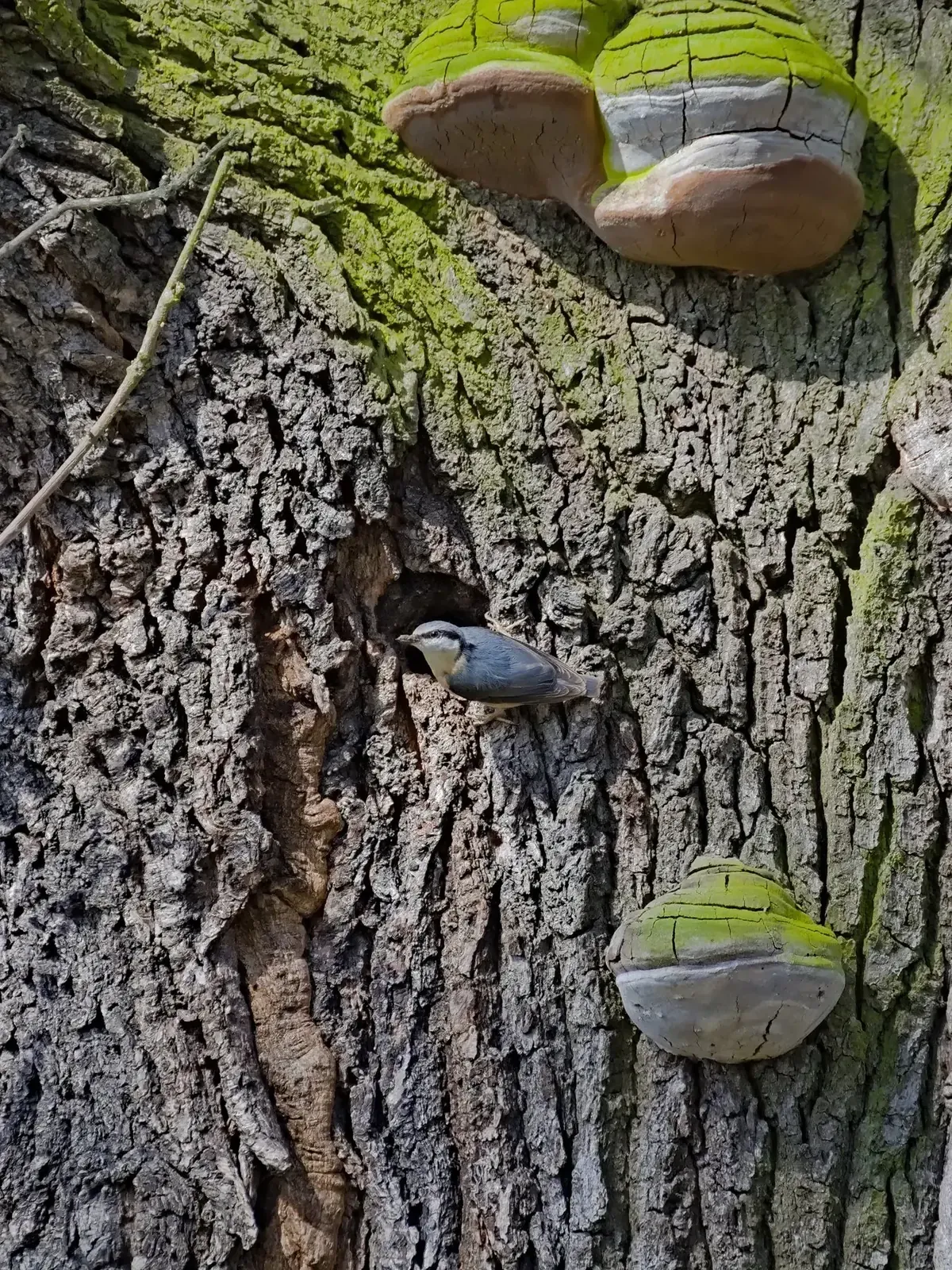
It moves through trees in short hops and searches bark crevices for insects. In autumn it also eats grain, oily seeds, nuts and acorns, and often roams with tits and treecreepers. Nuts and large insects are wedged into bark crevices and hammered apart with the strong bill. For winter it stores food in several places, for example in hollow trees and crevices.
More songbirds
Photo: Stephan Sprinz, CC BY 4.0, via Wikimedia Commons, resized

Photo: Mr. Lvíčátko, CC BY 4.0, via Wikimedia Commons, resized

The text was written with AI from facts in Wikipedia and may be shared under CC BY-SA 4.0. Sources: Swedish article, English article, German article
Report data: Artportalen (SLU Swedish Species Information Centre) via GBIF.org, 2016 to 2025. Red list: The Swedish Red List 2025, SLU Swedish Species Information Centre via GBIF.org.
Checked against sources on . How we make these pages