Alaudidae
Eurasian Skylark
Alauda arvensis
- Scientific name
- Alauda arvensis
- Family
- Alaudidae
- In Sweden
- Partial migrant, breeds here
- Size
- 16 to 18 cm
- Swedish Red List 2025
- Not red-listed
- Global Red List (IUCN)
- Least concern (LC)
The Eurasian Skylark is a lark that breeds on fields, plains, heaths and steppe, and is often closely tied to the farmed landscape. In Sweden it breeds commonly right up into Lapland.
How to recognise it
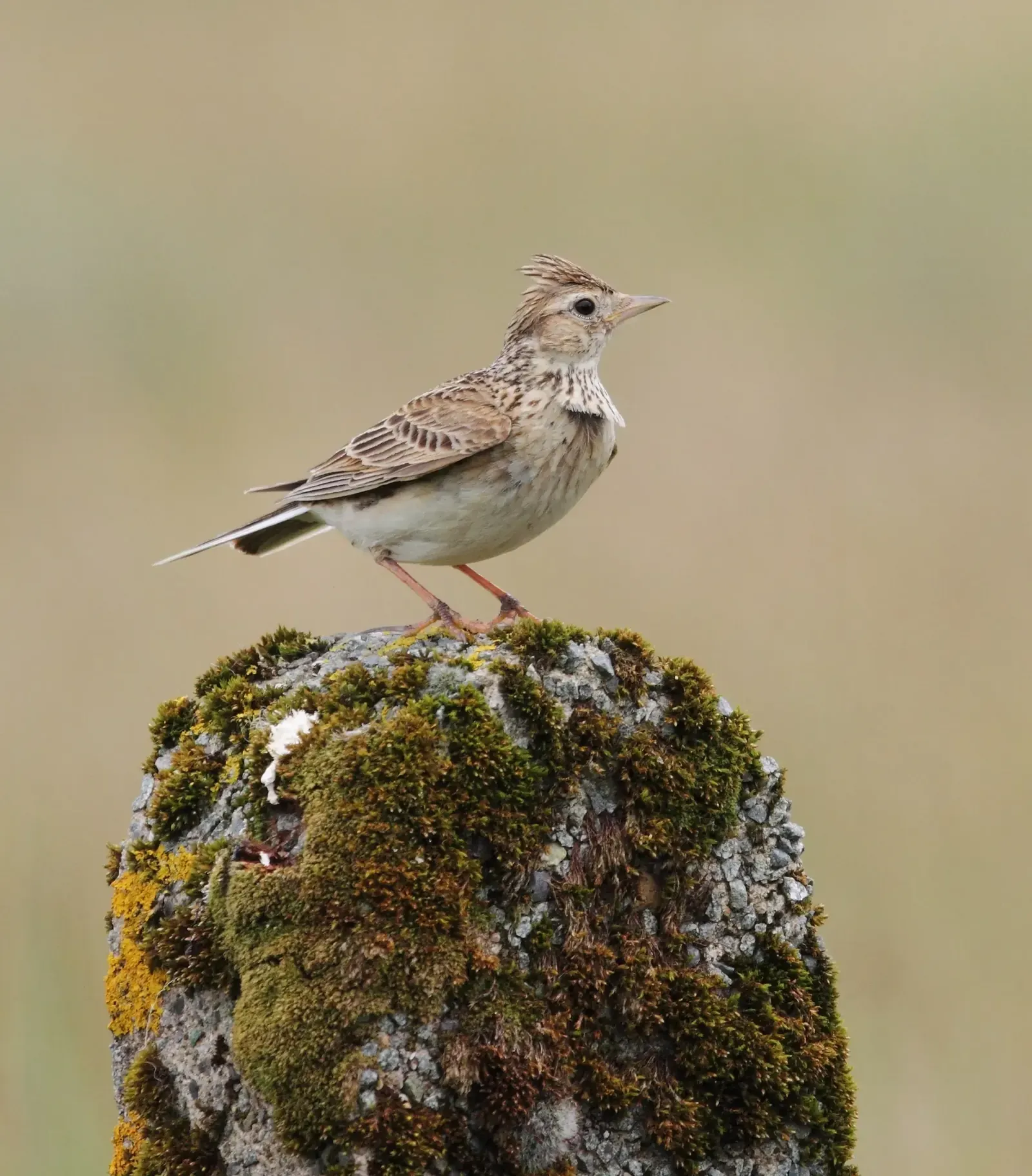
- Grey-brown speckled upperparts, short blunt crest, bold yellowish-white eyebrow ending behind the ear coverts
- Yellowish-white breast with dense blackish spots ending sharply against the unstreaked belly
- In flight: short tail, short broad wings, white edges visible as it flies away
- Male and female look alike, but the male has broader wings than the female
Call and song
The trilling song is delivered in a song flight, the male hovering 50 to 100 metres up, where it can look like a dot in the sky. The phrases are frantically fast, with twittering, whistles, rolling notes and mimicry, and can last between three and 15 minutes. Calls are a dry trilling "prrit", more piping "p(riih" when alarmed.
Where and when
A partial migrant, it breeds commonly in Sweden up into Lapland, mainly on clover leys and grass meadows, so it is scarcer north of the cultivation limit. It often arrives in February to March and is reported most in March. In September to November Swedish breeders leave for western Europe, but a few winter in southern Sweden. It is reported from all 21 counties, but rarely in December and January.
When is it seen in Sweden?
Where is it reported?
- No reports
- Small share
- Medium share
- Large share
Reported most in March. Rarely reported in December and January. Reported from all 21 counties.
Food and behaviour
In summer it eats mainly insects, in winter mostly seeds, sprouts, fresh grass shoots and small leaves. It walks on the ground, searching the surface for food. The grass nest is on the ground, and the female alone incubates three to six eggs for about eleven days. The young leave the nest after ten days, before they can fly. After breeding, skylarks often gather in large flocks.
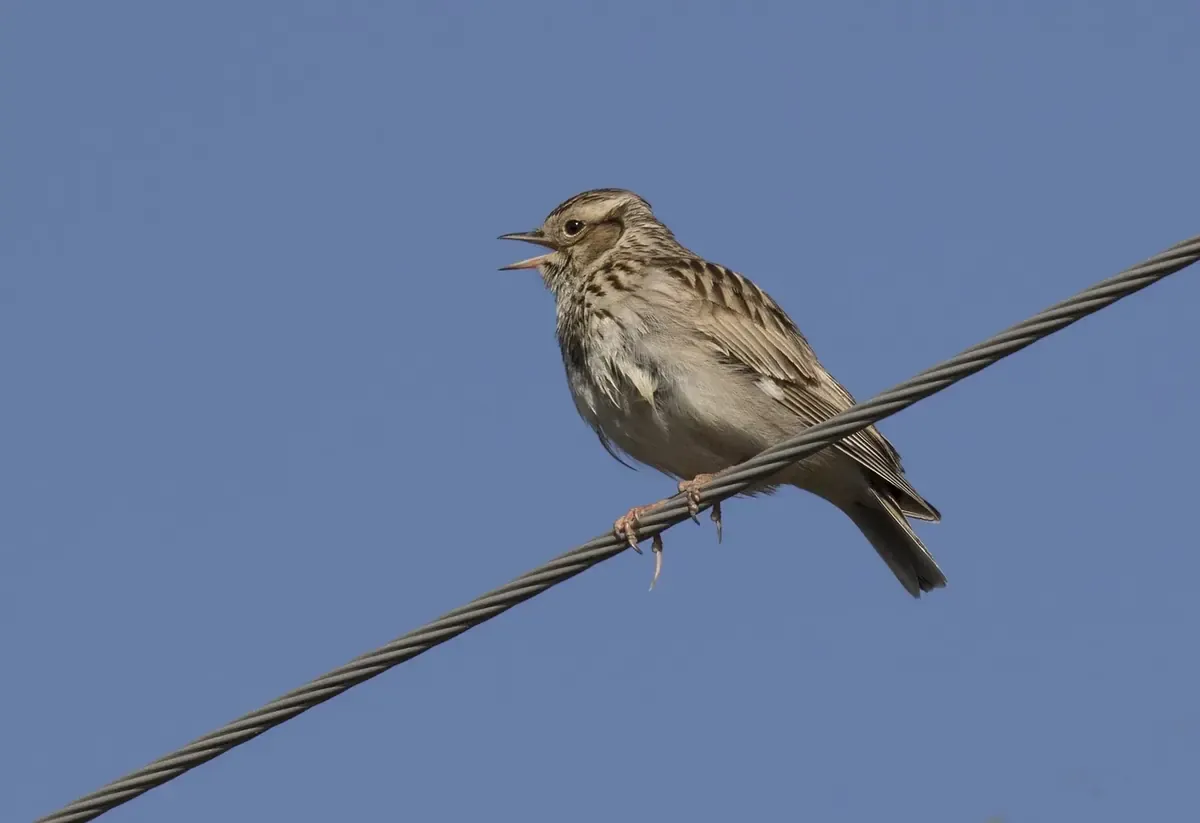
More songbirds
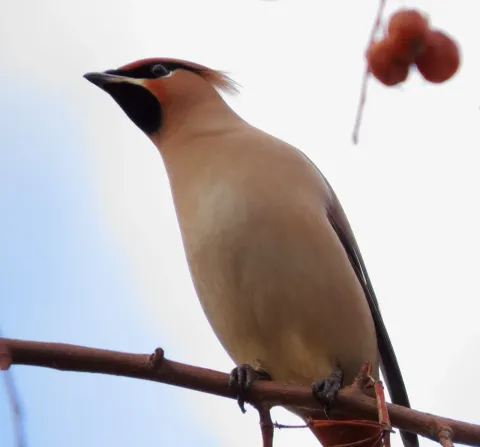
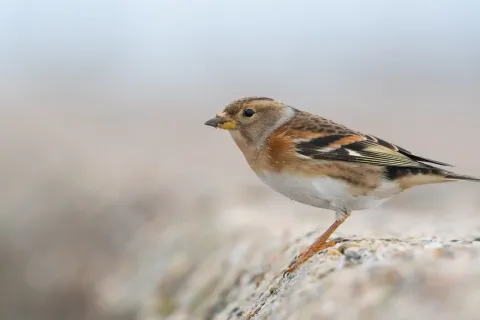
Photo: Alun Williams333, CC BY-SA 4.0, via Wikimedia Commons, resized

Photo: Zeynel Cebeci, CC BY-SA 4.0, via Wikimedia Commons, resized

The text was written with AI from facts in Wikipedia and may be shared under CC BY-SA 4.0. Sources: Swedish article, English article, German article
Report data: Artportalen (SLU Swedish Species Information Centre) via GBIF.org, 2016 to 2025. Red list: The Swedish Red List 2025, SLU Swedish Species Information Centre via GBIF.org.
Checked against sources on . How we make these pages