Passeridae
Eurasian Tree Sparrow
Passer montanus
- Scientific name
- Passer montanus
- Family
- Passeridae
- Size
- 12.5 to 14 cm
- Swedish Red List 2025
- Not red-listed
- Global Red List (IUCN)
- Least concern (LC)
The Eurasian Tree Sparrow is a sparrow that is common in southern and central Sweden. In autumn and winter it is often seen in flocks around towns, villages and farms.
How to recognise it
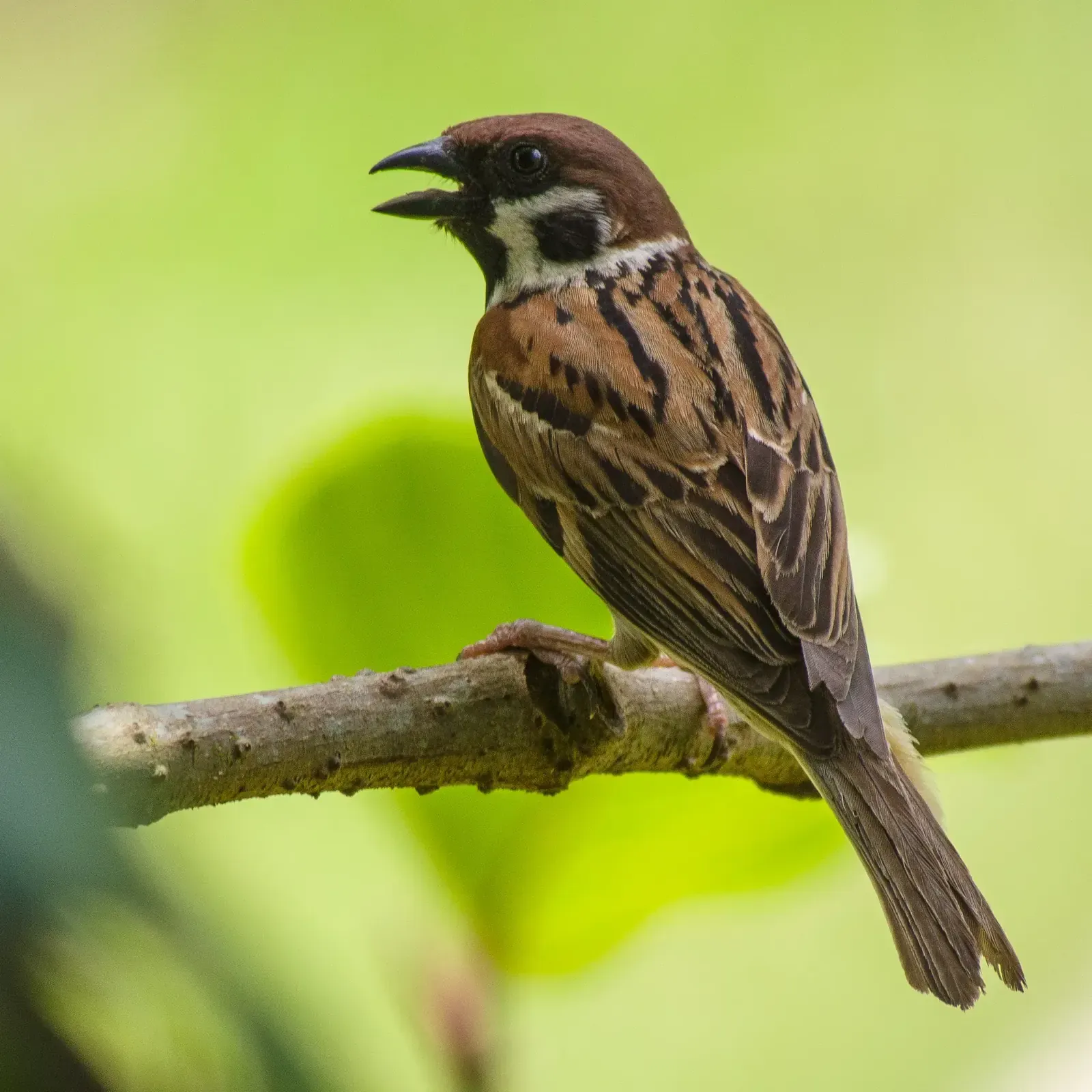
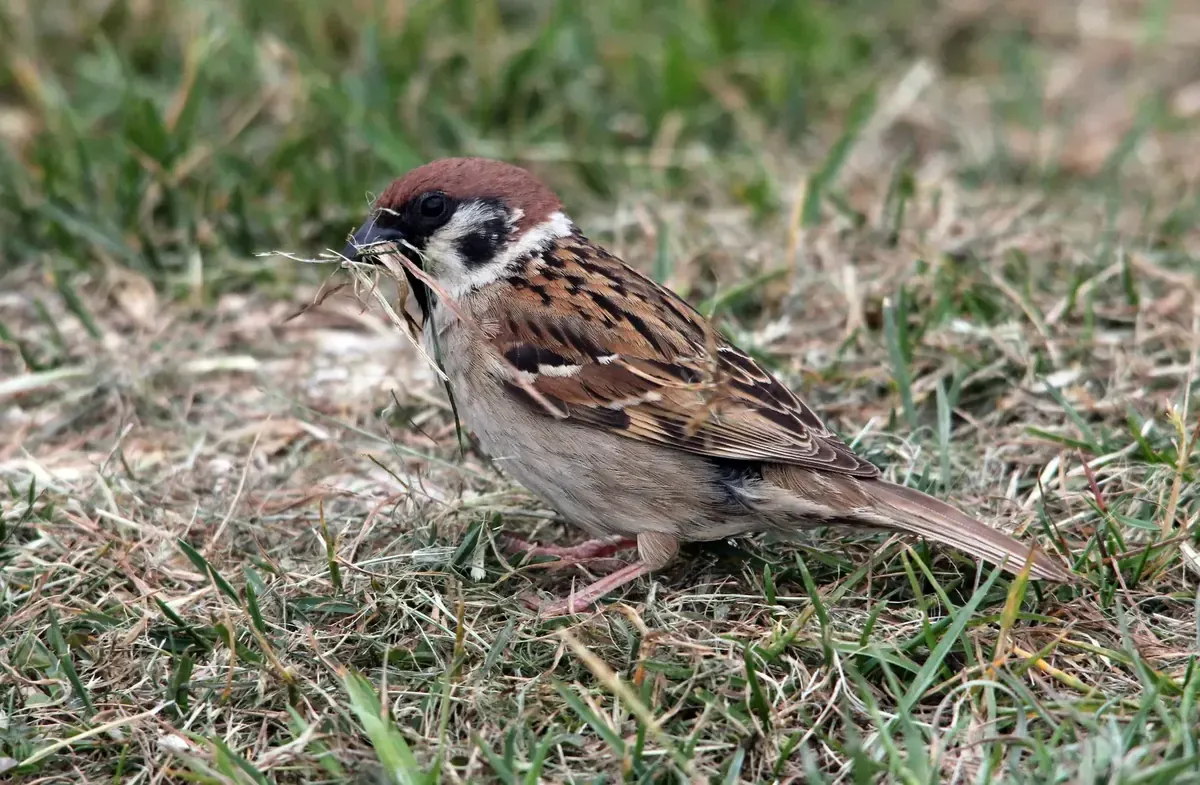
- Chestnut crown and nape, with a black spot on the white cheek
- Black chin and throat, and black between the bill and the throat
- Brown wings with two clear, narrow white wing bars
- Male and female look alike, juveniles are paler with sooty grey cheek and throat spots
Call and song
The Eurasian Tree Sparrow has no real song, but unpaired or courting males give an excited series of tschip calls. Typical calls are a wooden tek tek tek and high zwit calls, and the flight call is a harsh teck. The calls resemble the House Sparrow's but are weaker and often softer.
Where and when
It is common in southern and central Sweden, with density decreasing further north. It has expanded its range in Fennoscandia and is reported from all 21 counties. It is reported most in December and January. Where it occurs alongside the House Sparrow, it breeds in the countryside, preferably near wetlands. It is not red-listed in the Swedish Red List 2025.
When is it seen in Sweden?
Where is it reported?
- No reports
- Small share
- Medium share
- Large share
Reported most in December and January. Reported from all 21 counties.
Food and behaviour
It feeds mainly on seeds and grain, foraging on the ground in flocks and moving about by hopping. The young are fed largely on insects and spiders. It visits bird tables and is especially fond of peanuts. It is more peaceable than the House Sparrow, does not chase other birds away and often takes long dust baths. It often nests in holes in old trees and readily uses nest boxes.
Easily confused with
-
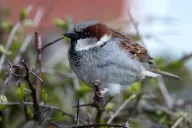
The Eurasian Tree Sparrow is smaller than the male House Sparrow and has an all chestnut crown and nape and a black spot on the white cheek. Its calls are weaker and often softer.
More songbirds
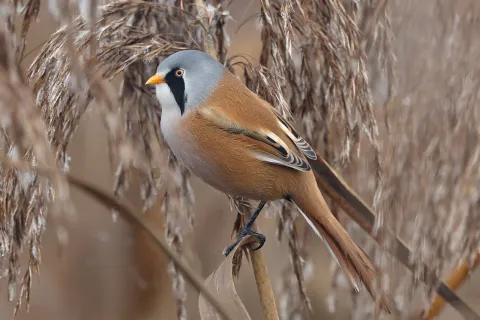
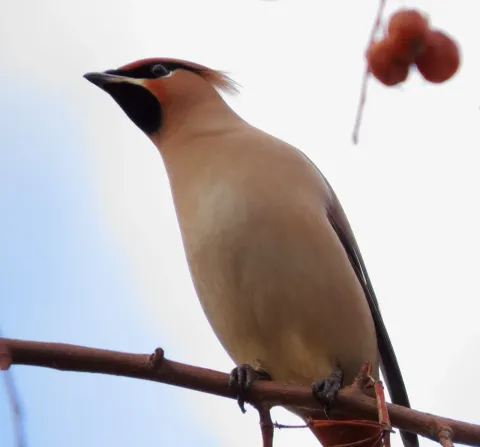
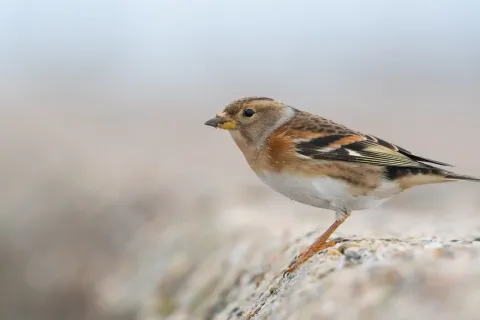
Photo: Mike Prince, CC BY 2.0, via Wikimedia Commons, resized

Photo: Joe Pell, CC BY 2.0, via Wikimedia Commons, resized

The text was written with AI from facts in Wikipedia and may be shared under CC BY-SA 4.0. Sources: Swedish article, English article, German article
Report data: Artportalen (SLU Swedish Species Information Centre) via GBIF.org, 2016 to 2025. Red list: The Swedish Red List 2025, SLU Swedish Species Information Centre via GBIF.org.
Checked against sources on . How we make these pages