Certhiidae
Eurasian Treecreeper
Certhia familiaris
- Scientific name
- Certhia familiaris
- Family
- Certhiidae
- Size
- 12.5 cm
- Swedish Red List 2025
- Not red-listed
- Global Red List (IUCN)
- Least concern (LC)
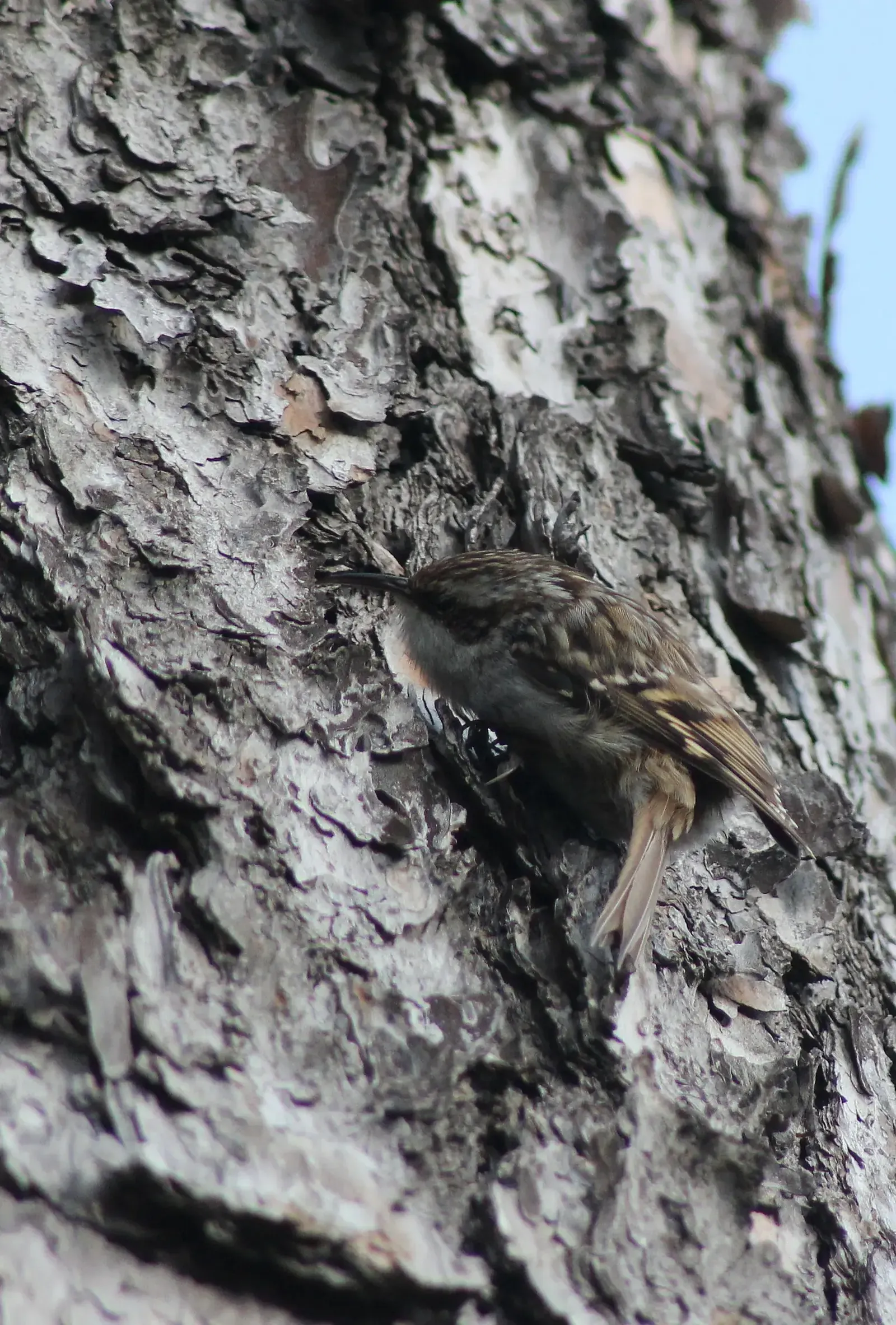
The Eurasian Treecreeper is a songbird with a curved bill that hops up tree trunks in short jumps. In Sweden it is common in coniferous and mixed forest across most of the country.
How to recognise it
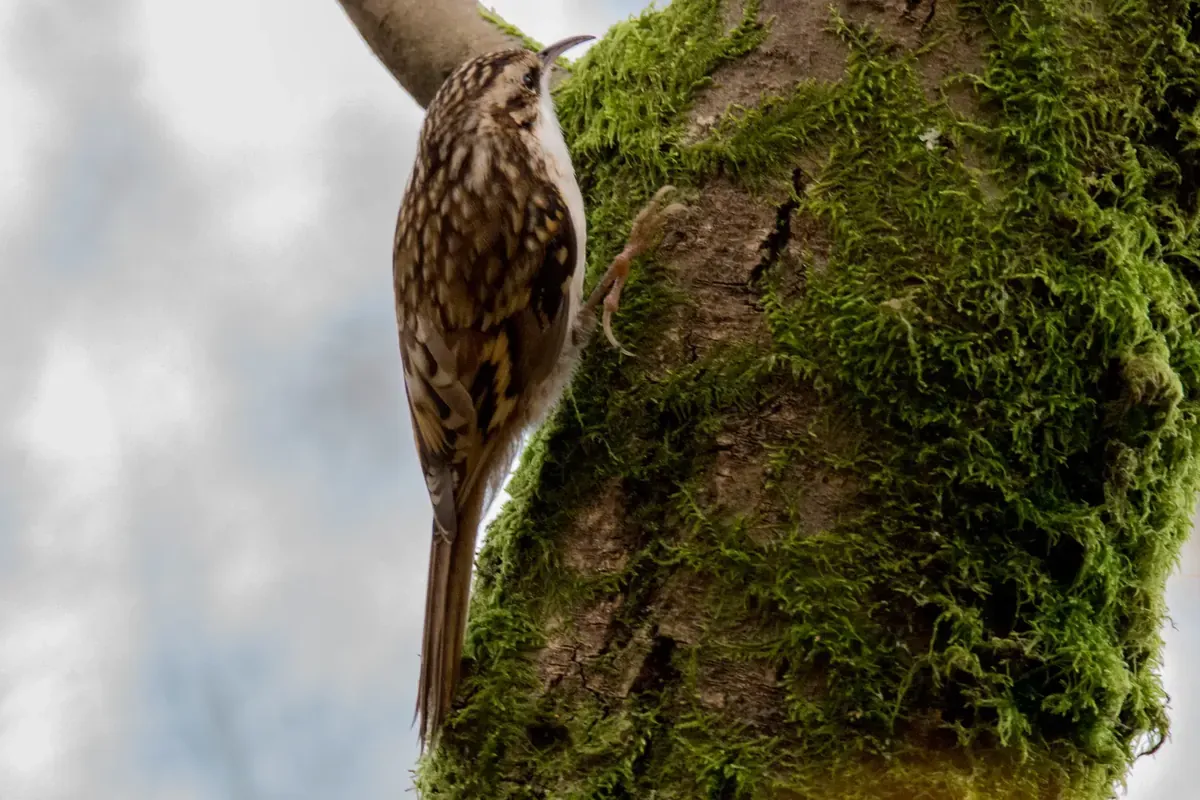
- Curved bill and bark-coloured brown upperparts, finely patterned in black, buff and white
- White underparts with a buff tone on the belly, flanks and vent
- White eyebrow and long stiff tail feathers in plain brown
- Sexes alike, juveniles duller with fine dark spots on the flanks
Call and song
The contact call is a very quiet, thin, high "sit". The most distinctive call is a piercing "tsri", sometimes repeated in a series. The male's song starts with "srrih, srrih", followed by twittering, a falling ripple and a whistle that falls and then rises. The short phrase recalls calls of Blue Tit and Willow Warbler.
Where and when
In Sweden the Eurasian Treecreeper is common in coniferous and mixed forest across most of the country and is reported from all 21 counties. It prefers mature trees and also occurs in parks and large gardens. It is reported most in November to February. The population was estimated in 2018 at about 1.1 million pairs, and it is not red-listed in the Swedish Red List 2025.
When is it seen in Sweden?
Where is it reported?
- No reports
- Small share
- Medium share
- Large share
Reported most in November to February. Reported from all 21 counties.
Food and behaviour
With its long thin bill it pulls insects and spiders out of cracks in the bark, and in colder months it may eat conifer seeds. It hops up the trunk like a mouse, braced on its tail, then flies to the base of another tree. It is not shy, sometimes joins tit flocks in winter and in cold weather a dozen or more may roost together in a sheltered hole.
More songbirds
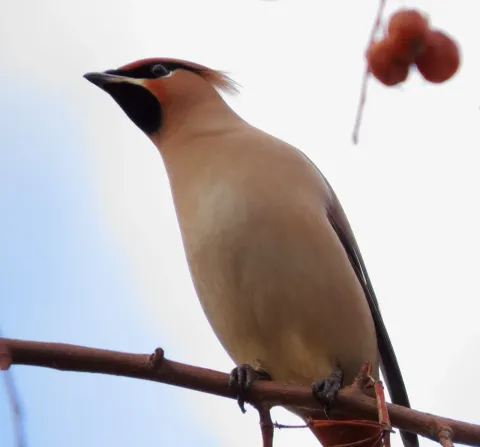
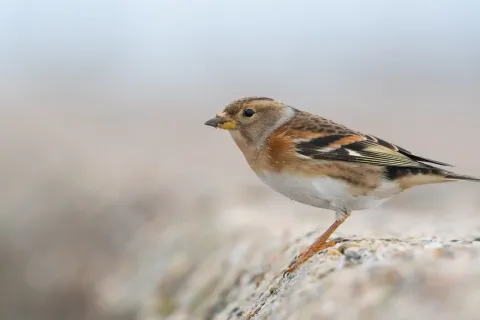
Photo: Estormiz, CC0, via Wikimedia Commons, resized

Photo: Rory, CC BY 2.0, via Wikimedia Commons, resized

The text was written with AI from facts in Wikipedia and may be shared under CC BY-SA 4.0. Sources: Swedish article, English article, German article
Report data: Artportalen (SLU Swedish Species Information Centre) via GBIF.org, 2016 to 2025. Red list: The Swedish Red List 2025, SLU Swedish Species Information Centre via GBIF.org.
Checked against sources on . How we make these pages