Troglodytidae
Eurasian Wren
Troglodytes troglodytes
- Scientific name
- Troglodytes troglodytes
- Family
- Troglodytidae
- In Sweden
- Partial migrant, breeds here
- Size
- 9 to 10.5 cm
- Swedish Red List 2025
- Not red-listed
- Global Red List (IUCN)
- Least concern (LC)
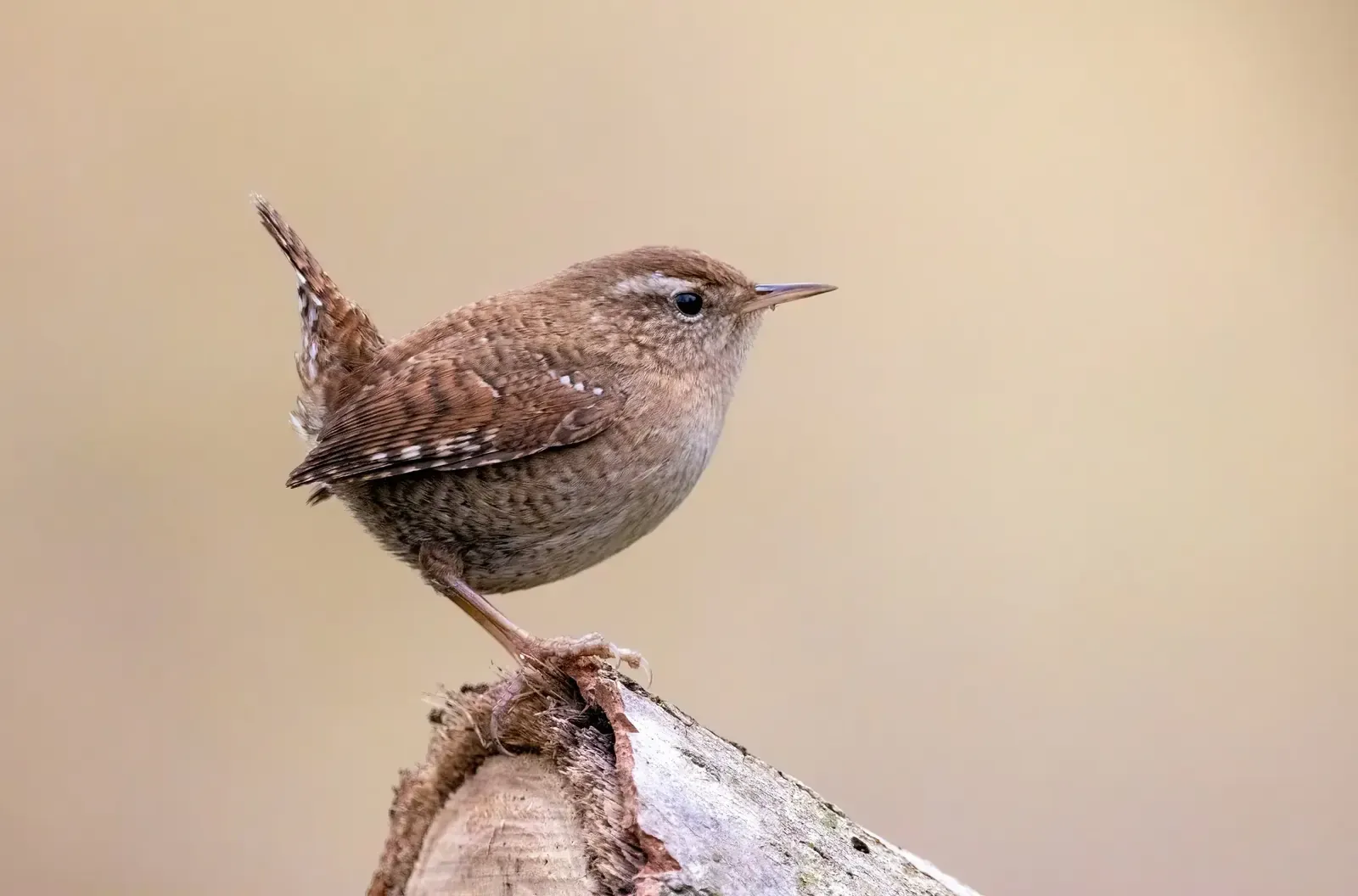
The Eurasian Wren is a very small brown songbird with a short tail that is often held cocked. It stays where it can easily hide, such as in hedges, brush piles, thickets and holes.
How to recognise it
- Very small and brown, with a short neck and a short, often cocked tail
- Rufous-brown above, brownish white below, with fine dark barring over much of the bird
- Pale eyebrow, dark loral stripe and a fairly long, pointed, slightly down-curved bill
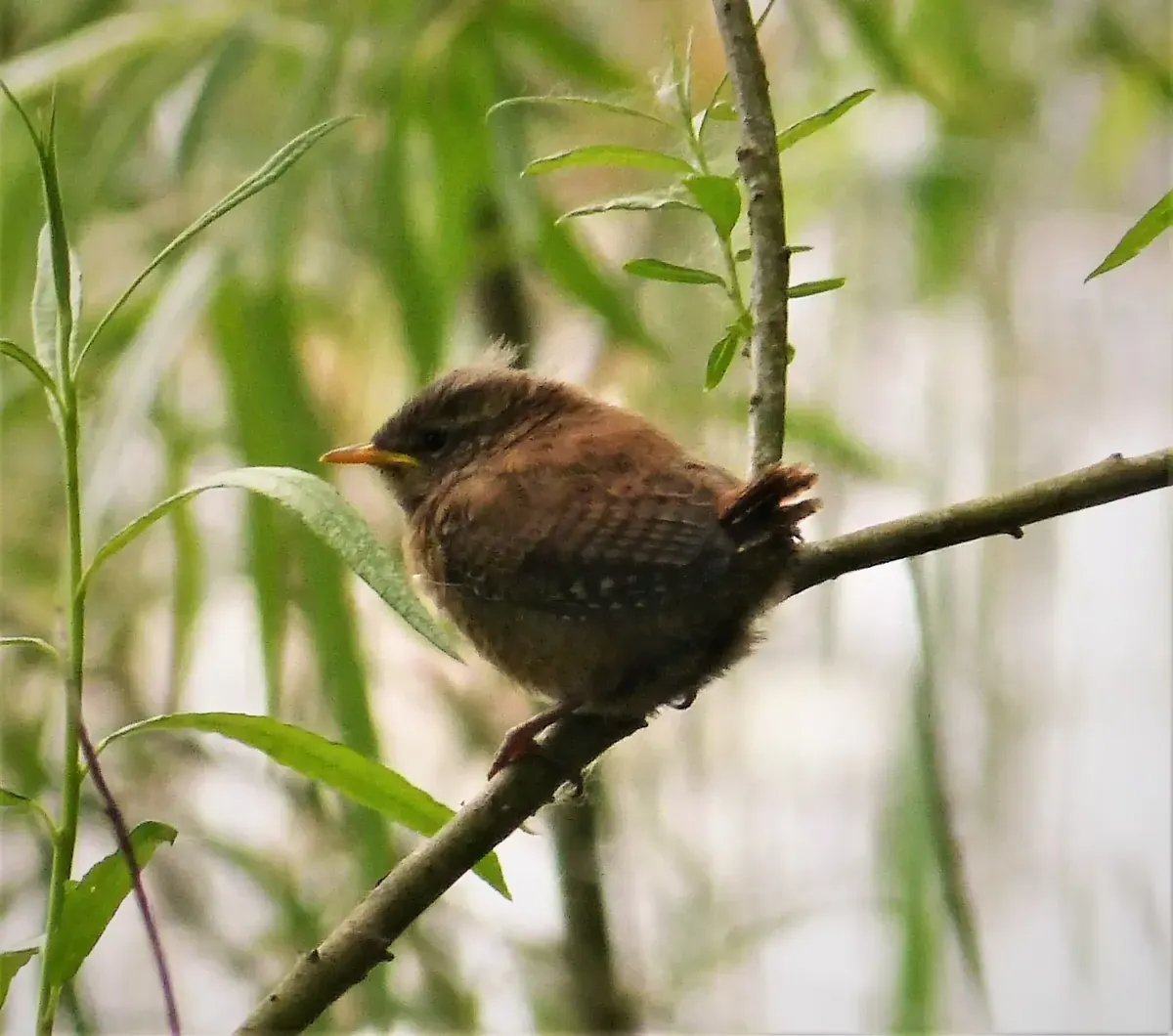
- Sexes look alike, young birds have spotted underparts and less distinct barring
Call and song
The most frequent call is a sharp, repeated ”tic-tic-tic”, like a robin's but faster. When the bird is agitated it turns into an emphatic whirring, like clockwork running down. The song is powerful, long and complex, with trills and long passages of metallic, ringing notes, and is heard in both summer and winter.
Where and when
The Eurasian Wren breeds fairly commonly in the southern half of Sweden and more sparsely north to Jämtland and Norrbotten. Most Swedish birds move south for the winter, but some stay and then often wander about. It lives in forest with dense undergrowth, farmland, gardens with lush herbaceous growth and bare islands with scattered thickets. It is reported from all 21 counties, most often in November and December.
When is it seen in Sweden?
Where is it reported?
- No reports
- Small share
- Medium share
- Large share
Reported most in November and December. Reported from all 21 counties.
Food and behaviour
It feeds mostly on insects and spiders, but in winter also takes pupae and seeds. It moves in quick jerks, searching crevices and hopping up onto fallen logs. Flight is short, fast and straight on small, rounded, whirring wings. At night, especially in winter, it roosts in small cavities, dark nooks or abandoned bird nests. The male builds several nests, up to six or seven.
More songbirds
Photo: Alexis Lours, CC BY 4.0, via Wikimedia Commons, resized

Photo: gailhampshire, CC BY 2.0, via Wikimedia Commons, resized

The text was written with AI from facts in Wikipedia and may be shared under CC BY-SA 4.0. Sources: Swedish article, English article, German article
Report data: Artportalen (SLU Swedish Species Information Centre) via GBIF.org, 2016 to 2025. Red list: The Swedish Red List 2025, SLU Swedish Species Information Centre via GBIF.org.
Checked against sources on . How we make these pages