Fringillidae
Hawfinch
Coccothraustes coccothraustes
- Scientific name
- Coccothraustes coccothraustes
- Family
- Fringillidae
- Size
- 18 to 19 cm
- Swedish Red List 2025
- Not red-listed
- Global Red List (IUCN)
- Least concern (LC)
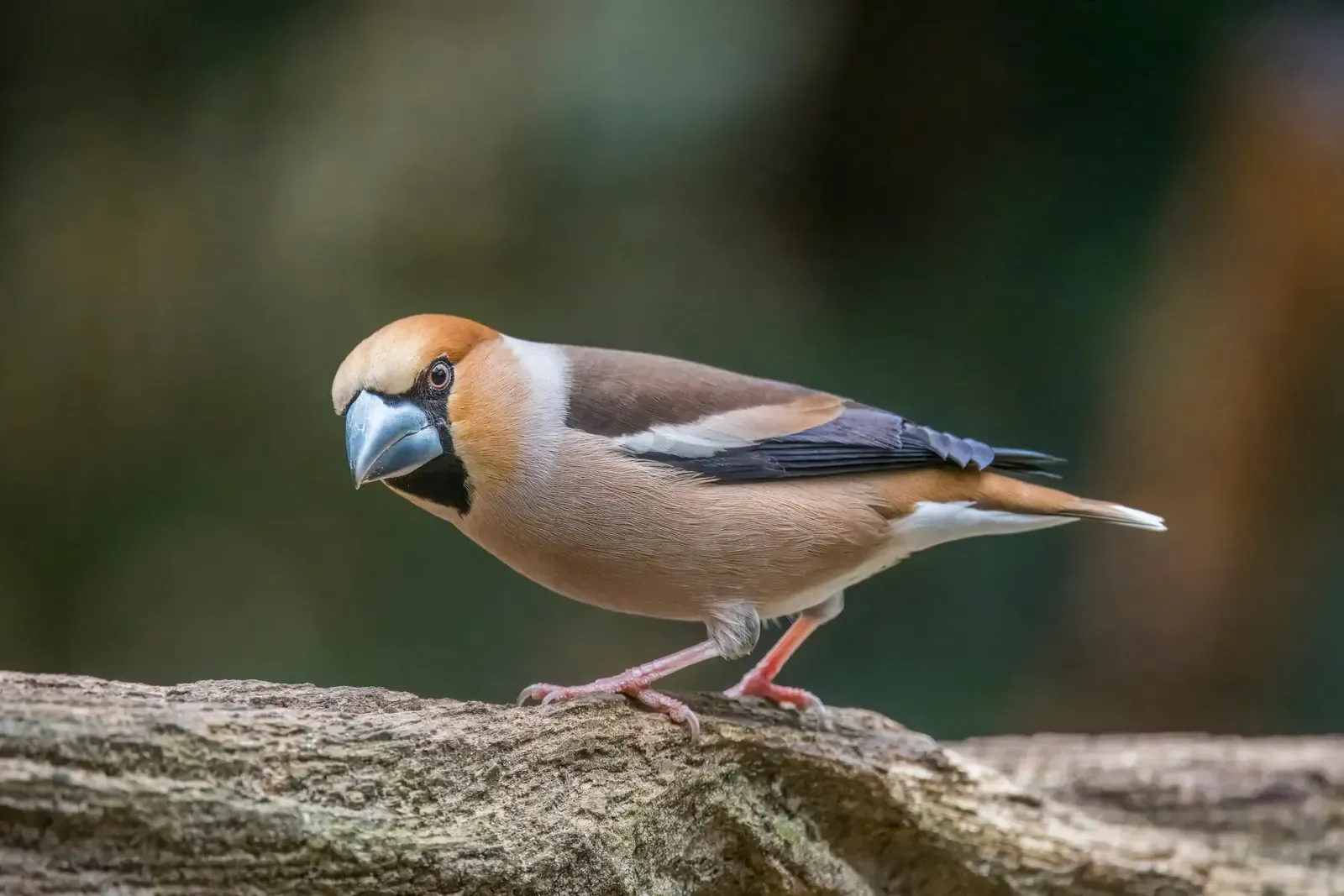
The Hawfinch has a very heavy triangular bill, a big head, a thick neck and a short tail. In the breeding season it is found in deciduous and mixed woodland, parks and orchards.
How to recognise it
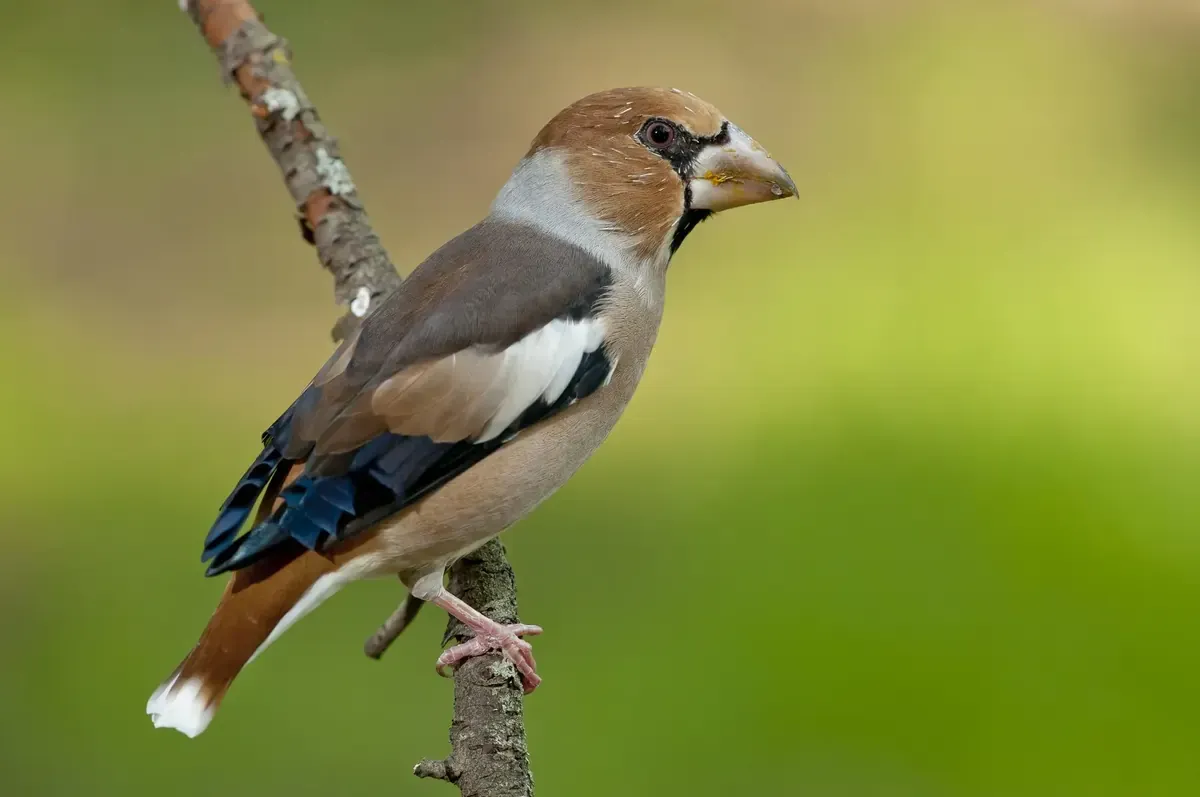
- Very heavy triangular bill, blue-black in summer and bone-white or pale yellowish brown in winter
- Orange-brown head with a black mask around the eye, black bib and grey nape
- In flight, a clear white wing bar on blue-black wings and a very short tail
- The female is paler than the male, with a grey panel along the secondaries
Call and song
The call is an explosive clicking "zick" or "pix", and also a soft "srri" that recalls a Blackbird. The contact call is a hard "zicks", often heard in flight too. The song is heard mostly in spring and is quiet, with zick notes mixed with creaking and grating sounds.
Where and when
In Sweden the northern limit runs from southern Värmland via southern Dalarna to northern Uppland, and it breeds locally along the Norrland coast north to Norrbotten. It is especially numerous in leafy areas of Skåne, Småland, Blekinge, Västergötland, Öland and the Mälaren provinces. The Swedish population was estimated in 2012 at 17 000 pairs. It is reported from all 21 counties, most often in December and January.
When is it seen in Sweden?
Where is it reported?
- No reports
- Small share
- Medium share
- Large share
Reported most in December and January. Reported from all 21 counties.
Food and behaviour
In autumn the Hawfinch is very fond of cherry stones, and it also eats the seeds of rowan and whitebeam berries and various other seeds. It often feeds in flocks, especially in winter. It is shy and hard to observe, spending most of the day high up in the branches of trees. The nest is built in a fork between branches, usually high up in a deciduous tree.
More in the Fringillidae family
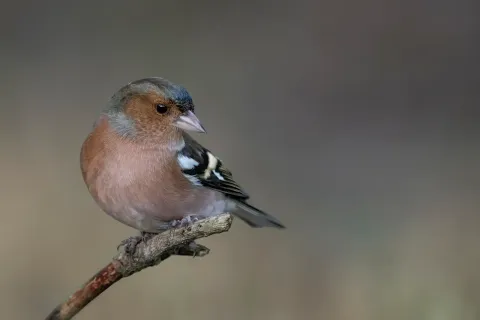
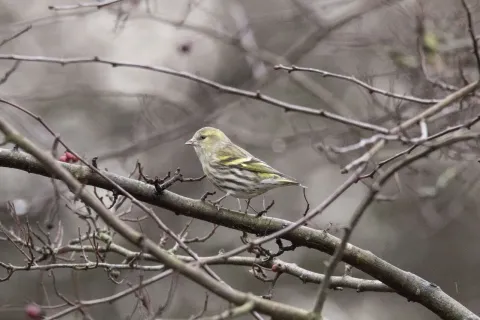
Photo: Charles J. Sharp, CC BY-SA 4.0, via Wikimedia Commons, resized

Photo: Бусел В.А., CC BY-SA 4.0, via Wikimedia Commons, resized

The text was written with AI from facts in Wikipedia and may be shared under CC BY-SA 4.0. Sources: Swedish article, English article, German article
Report data: Artportalen (SLU Swedish Species Information Centre) via GBIF.org, 2016 to 2025. Red list: The Swedish Red List 2025, SLU Swedish Species Information Centre via GBIF.org.
Checked against sources on . How we make these pages