Calcariidae
Lapland Longspur
Calcarius lapponicus
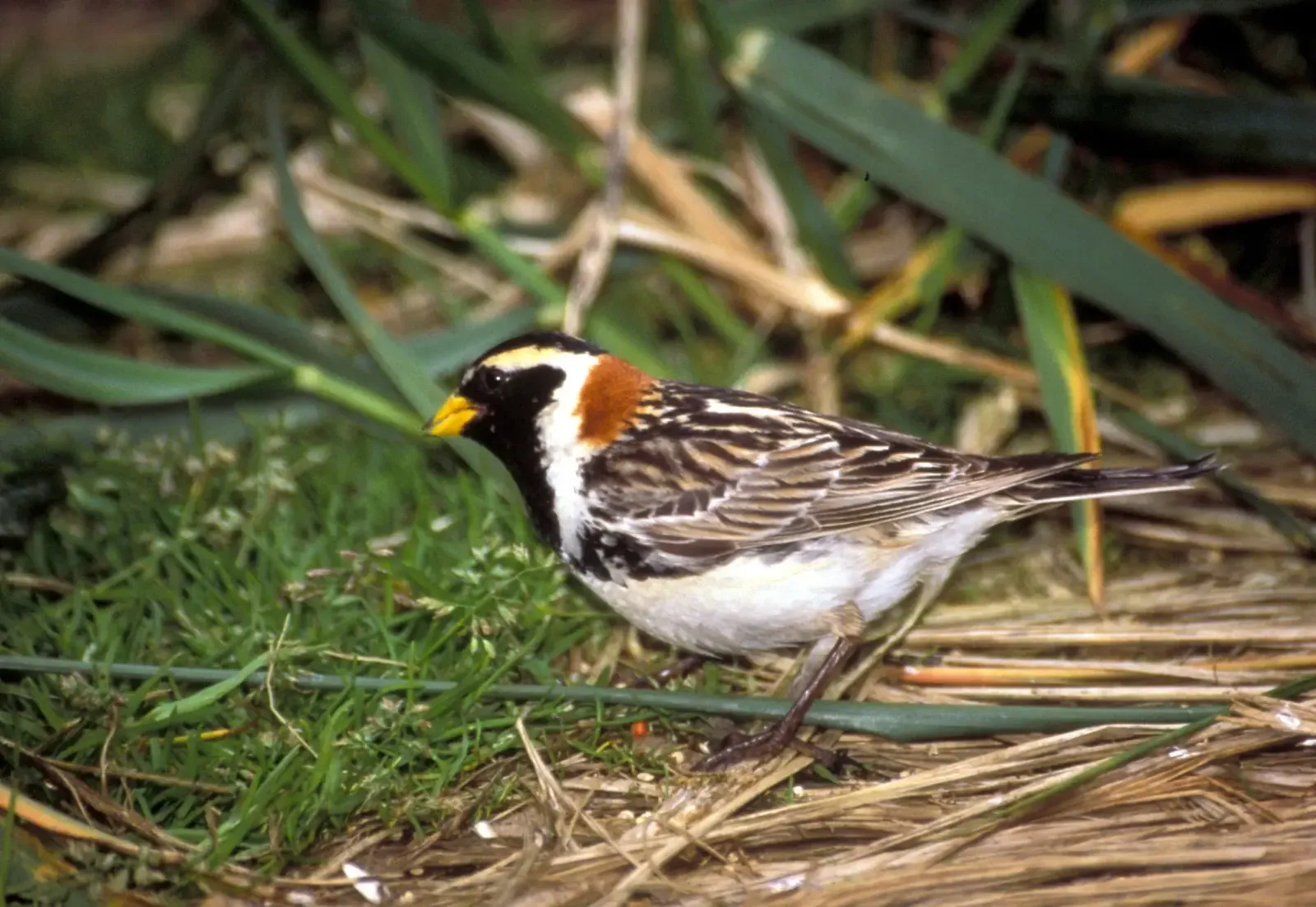
- Scientific name
- Calcarius lapponicus
- Family
- Calcariidae
- In Sweden
- Summer visitor, breeds here
- Size
- 14 to 15.5 cm
- Swedish Red List 2025
- Not red-listed
- Global Red List (IUCN)
- Least concern (LC)
The Lapland Longspur is a stocky songbird that breeds on mountain heaths above the tree line in Sweden's mountain chain. On migration it likes to stop on stubble fields.
How to recognise it
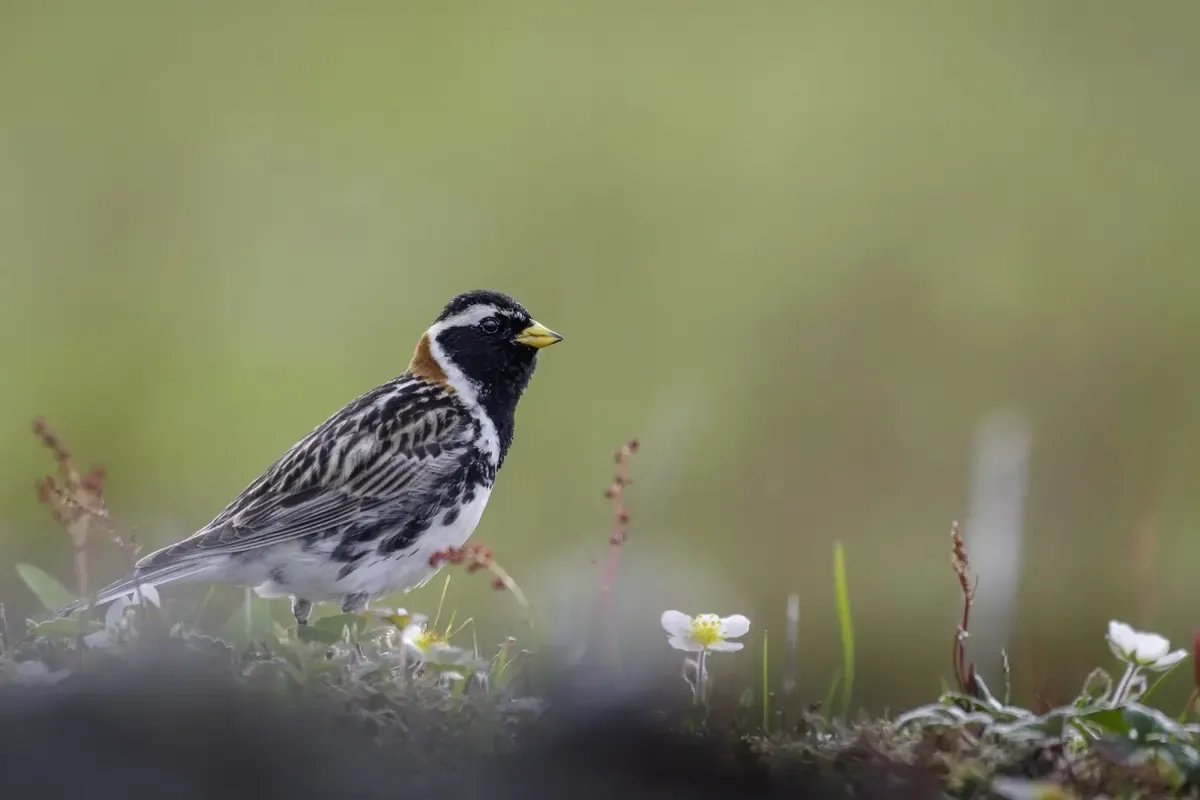
- Adult male has an all-black crown, cheek, throat and upper breast, and a rufous nape
- Pale supercilium runs behind the black ear coverts and down onto the neck
- Straw-yellow bill with a black tip, and a rufous wing panel between two white bars
- Female lacks the black on the head and is paler, with a pale, black-spotted breast
Call and song
In flight and when flushed it gives a dry "pr'r'r'rt", harder and drier than the Snow Bunting's call. It also gives short whistled "tju" or harsh "tjyb" notes. The song is a short phrase with a desolate ring, somewhat like the Horned Lark's song but without its halting start.
Where and when
A migrant, it breeds in the mountains from northern Dalarna to Torne lappmark, above the tree line. It arrives in late April or early May and leaves in August and early September, most Swedish birds heading southeast. In spring it stops in fair numbers on the Västerbotten and Norrbotten coasts but is scarce in southern Sweden. It is reported most in June and September and rarely in December.
When is it seen in Sweden?
Where is it reported?
- No reports
- Small share
- Medium share
- Large share
Reported most in June and September. Rarely reported in December. Its share of all bird reports is highest in Jämtland and Västerbotten.
Food and behaviour
In summer it eats mainly insects, and on migration mostly seeds. In winter it often forms mixed flocks with Horned Larks and Snow Buntings. It sometimes sings in a hovering song flight with its tail spread, and the phrases then get longer. The nest is placed in damp spots on the ground.
More songbirds
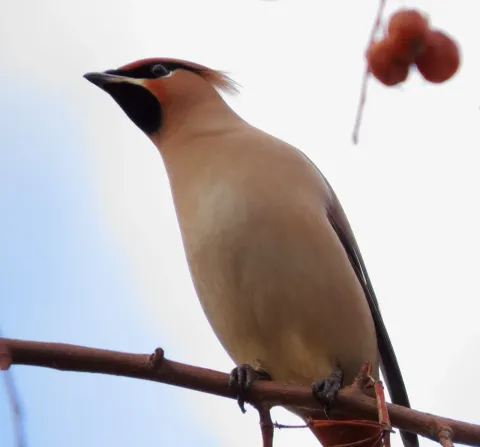
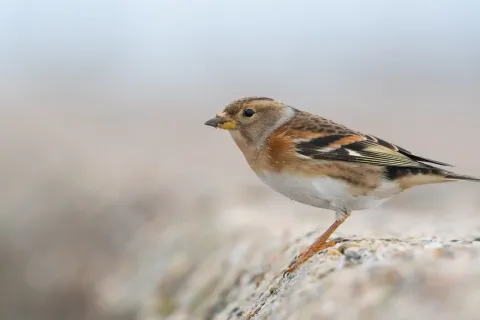
Photo: USFWS, public domain, via Wikimedia Commons, resized

Photo: TRinaud, CC BY 4.0, via Wikimedia Commons, resized

The text was written with AI from facts in Wikipedia and may be shared under CC BY-SA 4.0. Sources: Swedish article, English article, German article
Report data: Artportalen (SLU Swedish Species Information Centre) via GBIF.org, 2016 to 2025. Red list: The Swedish Red List 2025, SLU Swedish Species Information Centre via GBIF.org.
Checked against sources on . How we make these pages