Aegithalidae
Long-tailed Tit
Aegithalos caudatus
- Scientific name
- Aegithalos caudatus
- Family
- Aegithalidae
- Size
- 13 to 15 cm
- Swedish Red List 2025
- Not red-listed
- Global Red List (IUCN)
- Least concern (LC)
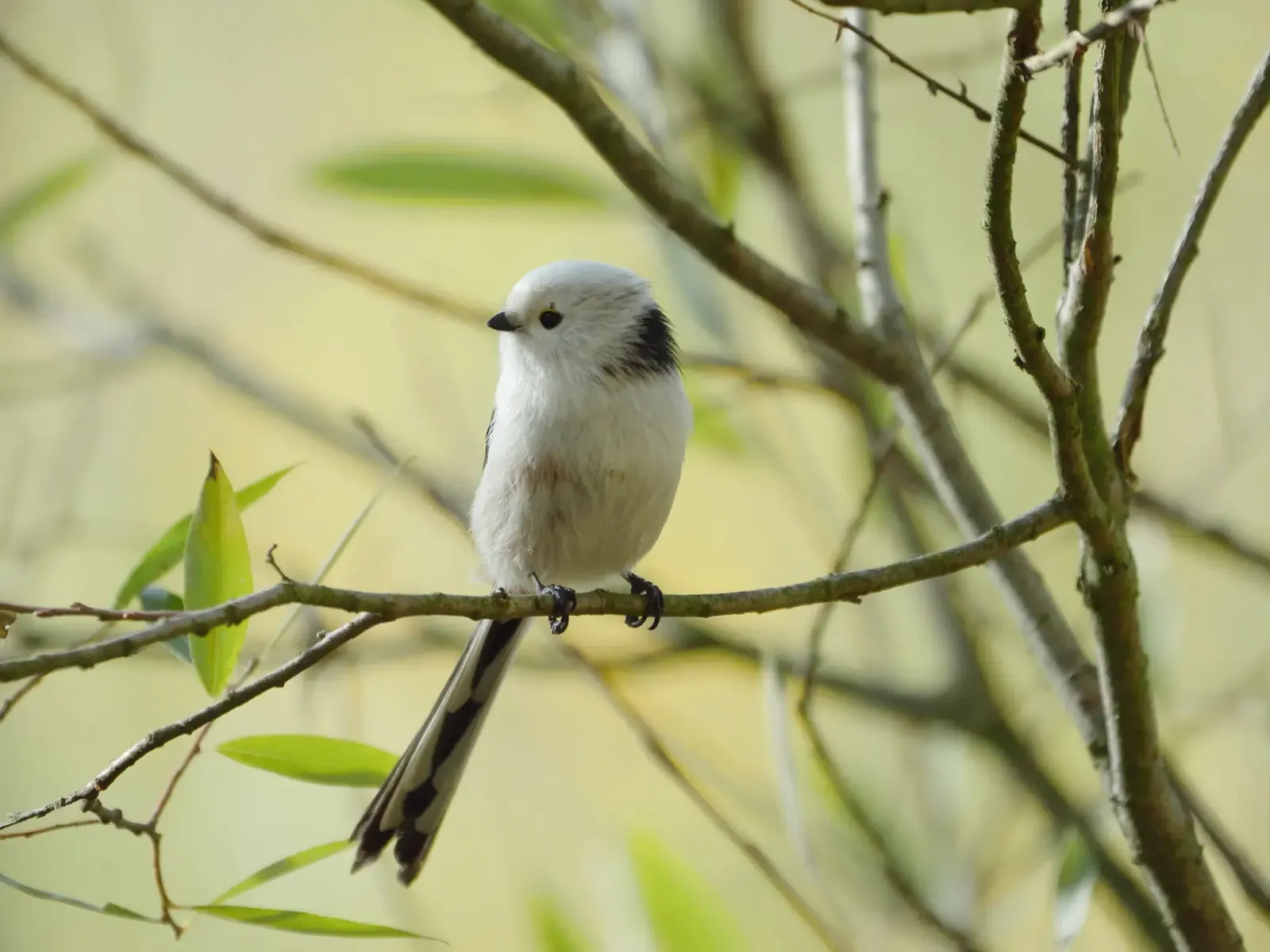
The Long-tailed Tit is a very small, round bird with a long tail. It breeds in deciduous and mixed woodland with rich undergrowth and also turns up in parks and gardens.
How to recognise it
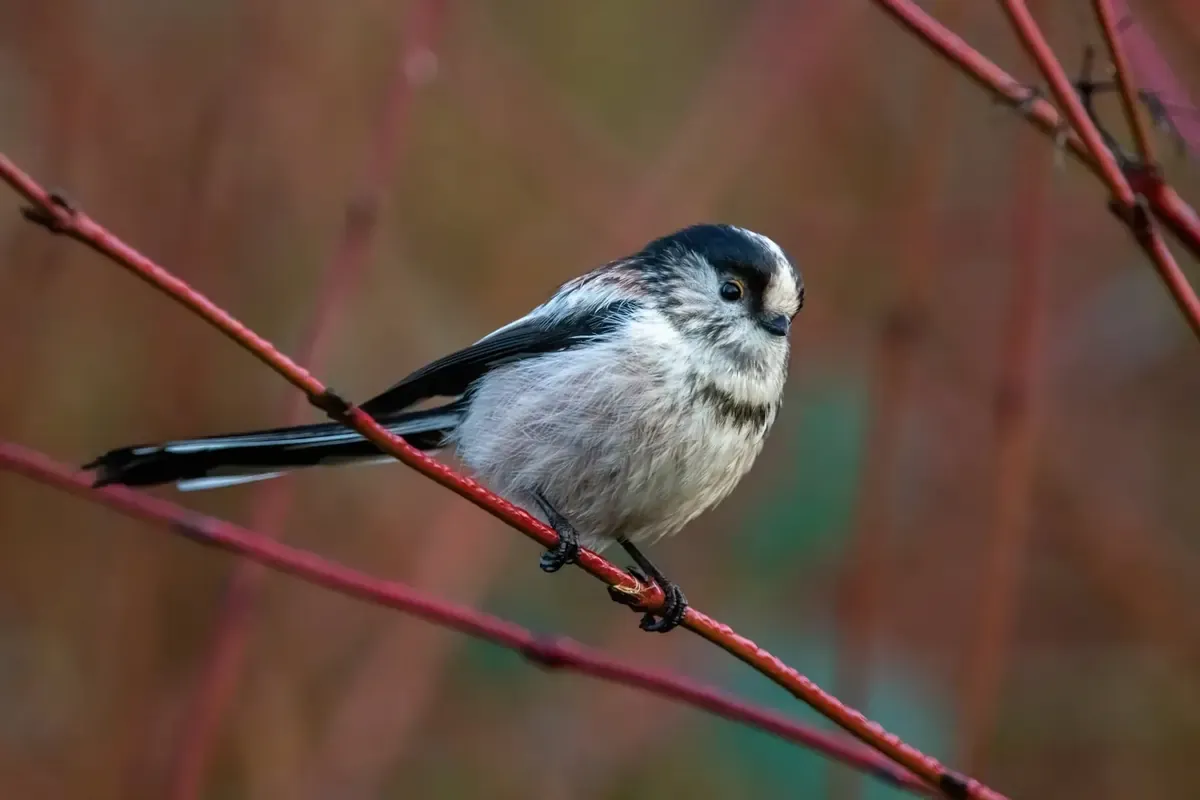
- Small round body with a tail making up more than half its length
- Black back, wine-red or reddish-brown shoulders and a white-edged black tail
- Short bill and black eye with a yellow-orange upper eyelid
- Northern birds have an all-white head without dark eyebrow stripes, sexes look alike
Call and song
Flocks call constantly, so Long-tailed Tits are often heard before they are seen. The three main calls are a single high pit, a three-syllable trill eez-eez-eez and a rattling schnuur. Passing flocks give a three-syllable sii-sii-siih alternating with a buzzing tserr tserr. The song is rarely heard and is soft and twittering.
Where and when
In Sweden it occurs in the south and centre, north to southern Värmland, Dalarna and Hälsingland, and along the Norrland coast to Norrbotten. It is reported from all 21 counties, most in November to February and rarely in July. The Swedish population was estimated at 34 000 pairs in 2018 and is considered viable but thought to be declining. It is not on the Swedish Red List 2025.
When is it seen in Sweden?
Where is it reported?
- No reports
- Small share
- Medium share
- Large share
Reported most in November to February. Rarely reported in July. Reported from all 21 counties.
Food and behaviour
The Long-tailed Tit clings nimbly to thin twigs, often upside down. It eats insects all year, mainly arthropods, and prefers the eggs and larvae of butterflies and moths. At winter feeders it takes small pieces of nuts, suet, breadcrumbs and cheese. Outside the breeding season it forms compact flocks of three to 30 birds, which huddle together on cold winter nights to keep warm.
More songbirds
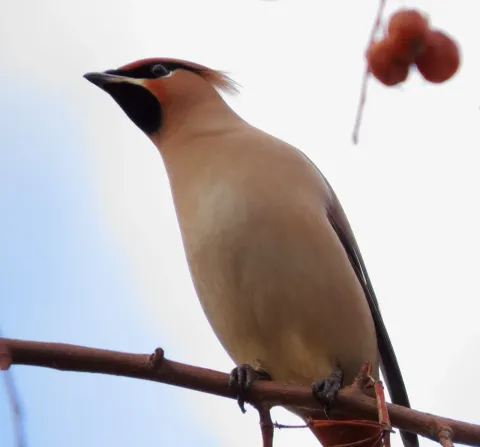
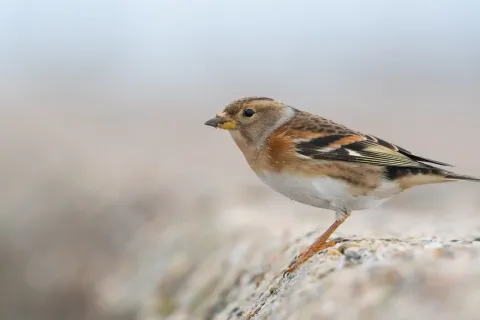
Photo: Membeth, CC0, via Wikimedia Commons, resized

Photo: Alexis Lours, CC BY 4.0, via Wikimedia Commons, resized

The text was written with AI from facts in Wikipedia and may be shared under CC BY-SA 4.0. Sources: Swedish article, English article, German article
Report data: Artportalen (SLU Swedish Species Information Centre) via GBIF.org, 2016 to 2025. Red list: The Swedish Red List 2025, SLU Swedish Species Information Centre via GBIF.org.
Checked against sources on . How we make these pages