Anatidae
Northern Pintail
Anas acuta
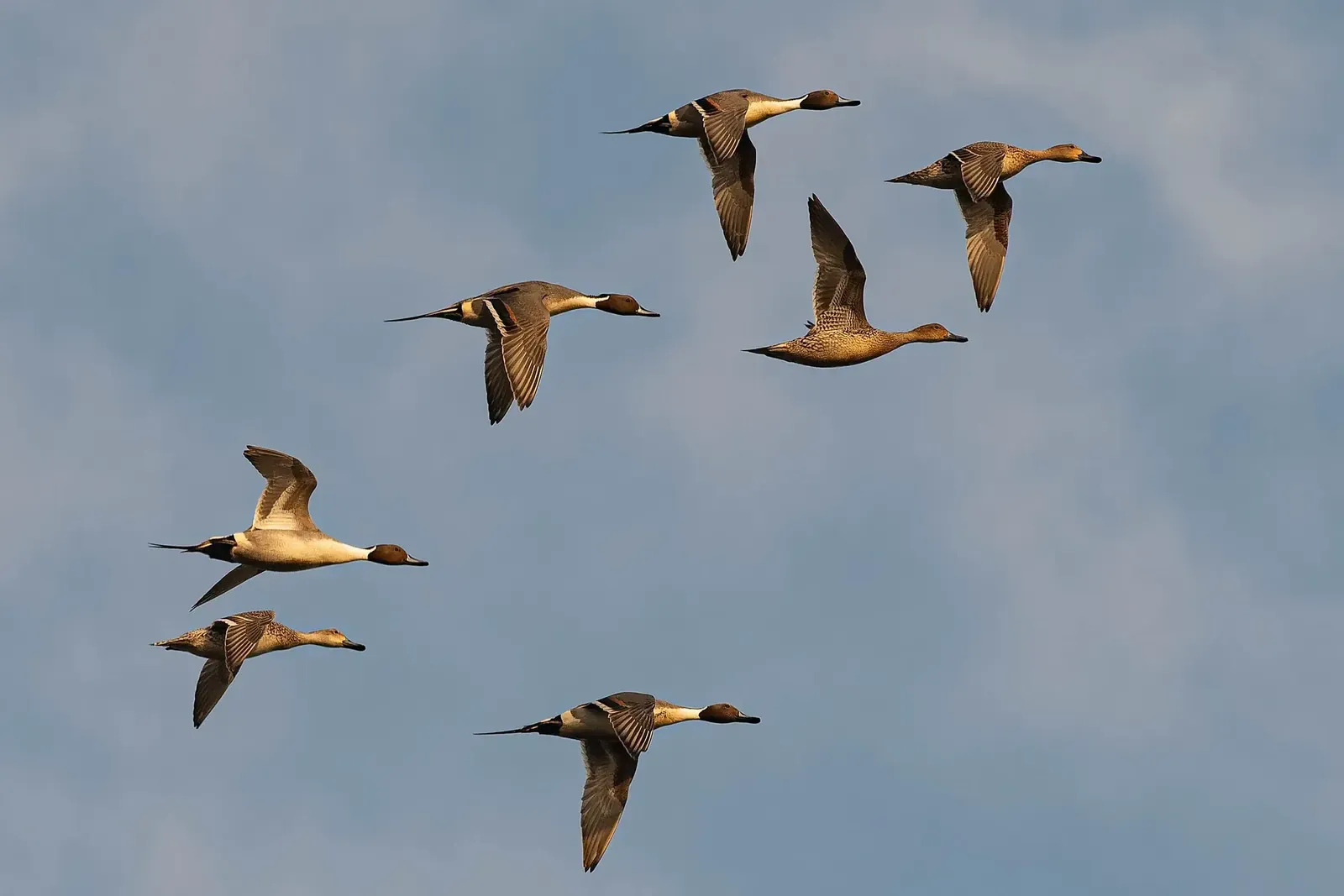
- Scientific name
- Anas acuta
- Family
- Anatidae
- In Sweden
- Summer visitor, breeds here
- Size
- Male 59 to 76 cm, female 51 to 64 cm
- Swedish Red List 2025
- Endangered (EN)
- Global Red List (IUCN)
- Least concern (LC)
The Northern Pintail is a fairly large duck with a long, pointed tail. It breeds in open treeless wetlands, and in Sweden it is found mainly in northern Lapland.
How to recognise it
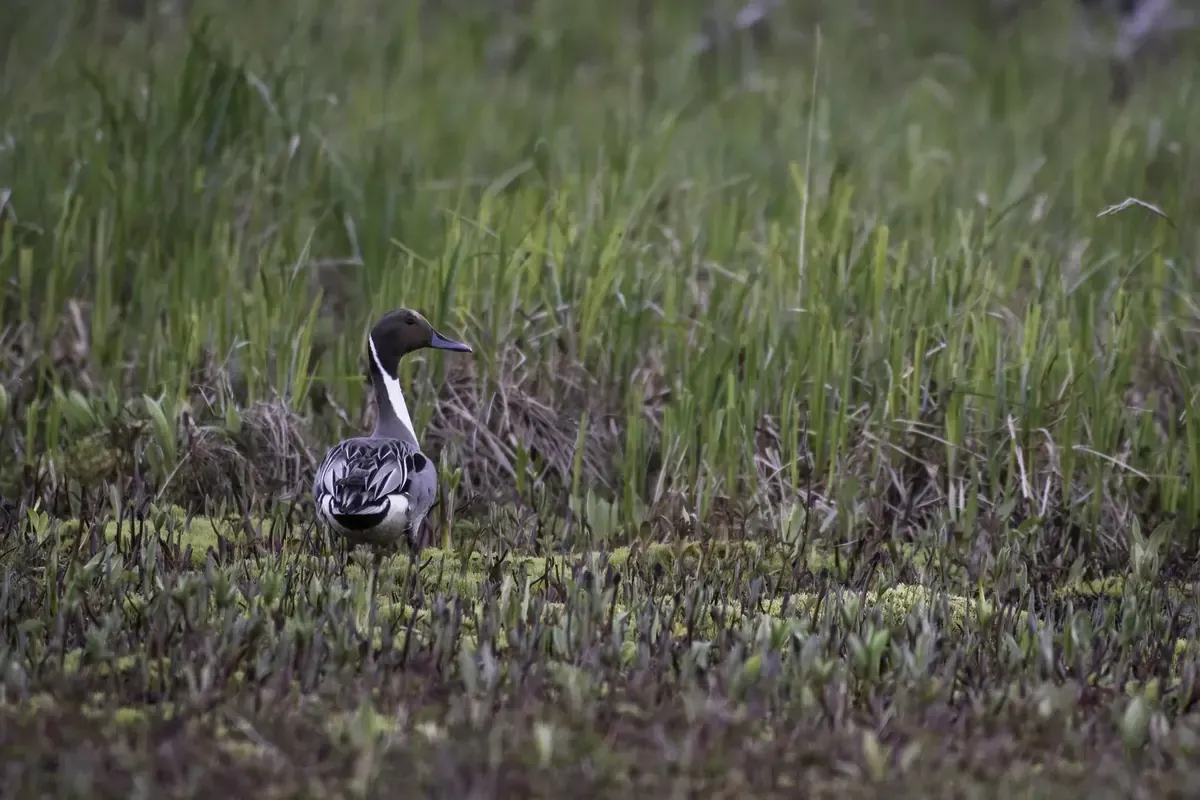
- Male has a chocolate-brown head and white breast, with a white stripe up the neck side
- Slightly smaller and much slimmer than a Mallard, with a long, pointed tail
- Female is mottled pale brown with a greyish-brown head, long neck and long grey bill
- Male's central tail feathers can grow up to ten centimetres long
Call and song
The male gives a soft whistled proop-proop, similar to a Teal's. The female has a falling, Mallard-like quack and a low croak when flushed.
Where and when
The Northern Pintail is a migrant that breeds in Sweden, mainly in northern Lapland and nearby parts of Norrbotten and Västerbotten. In southern Sweden it is very rare, with small populations on Öland and Gotland. The breeding population is estimated at about 780 individuals, and the species is listed as Endangered on the Swedish Red List 2025. It is reported from all 21 counties, most often in September and October.
When is it seen in Sweden?
Where is it reported?
- No reports
- Small share
- Medium share
- Large share
Reported most in September and October. Rarely reported in June and July. Reported from all 21 counties.
Food and behaviour
It upends in shallow water for plant material and small invertebrates. It feeds mostly in the evening or at night, resting much of the day. Outside the breeding season it forms very large mixed flocks with other ducks. It flies very fast, wings slightly swept back, and takes off from water without a run-up. It nests on the ground, and the female alone incubates seven to nine eggs.
More in the Anatidae family
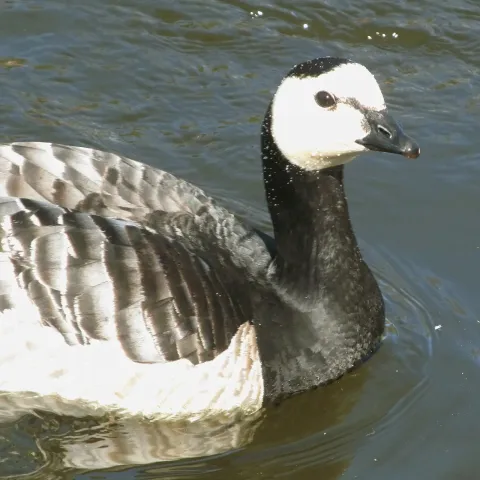
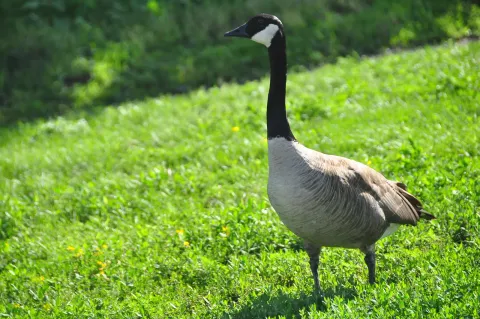
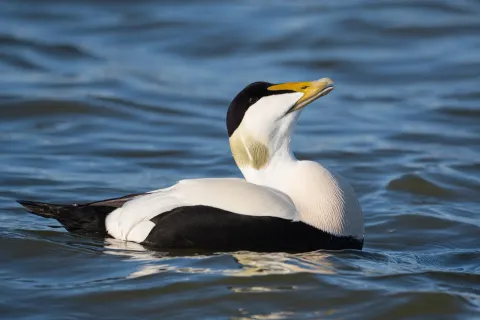
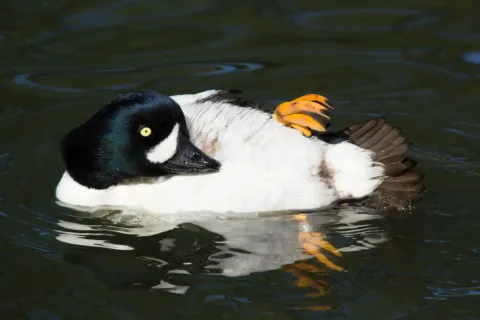
Photo: Hobbyfotowiki, CC0, via Wikimedia Commons, resized

Photo: TRinaud, CC BY 4.0, via Wikimedia Commons, resized

The text was written with AI from facts in Wikipedia and may be shared under CC BY-SA 4.0. Sources: Swedish article, English article, German article
Report data: Artportalen (SLU Swedish Species Information Centre) via GBIF.org, 2016 to 2025. Red list: The Swedish Red List 2025, SLU Swedish Species Information Centre via GBIF.org.
Checked against sources on . How we make these pages