Fringillidae
Pine Grosbeak
Pinicola enucleator
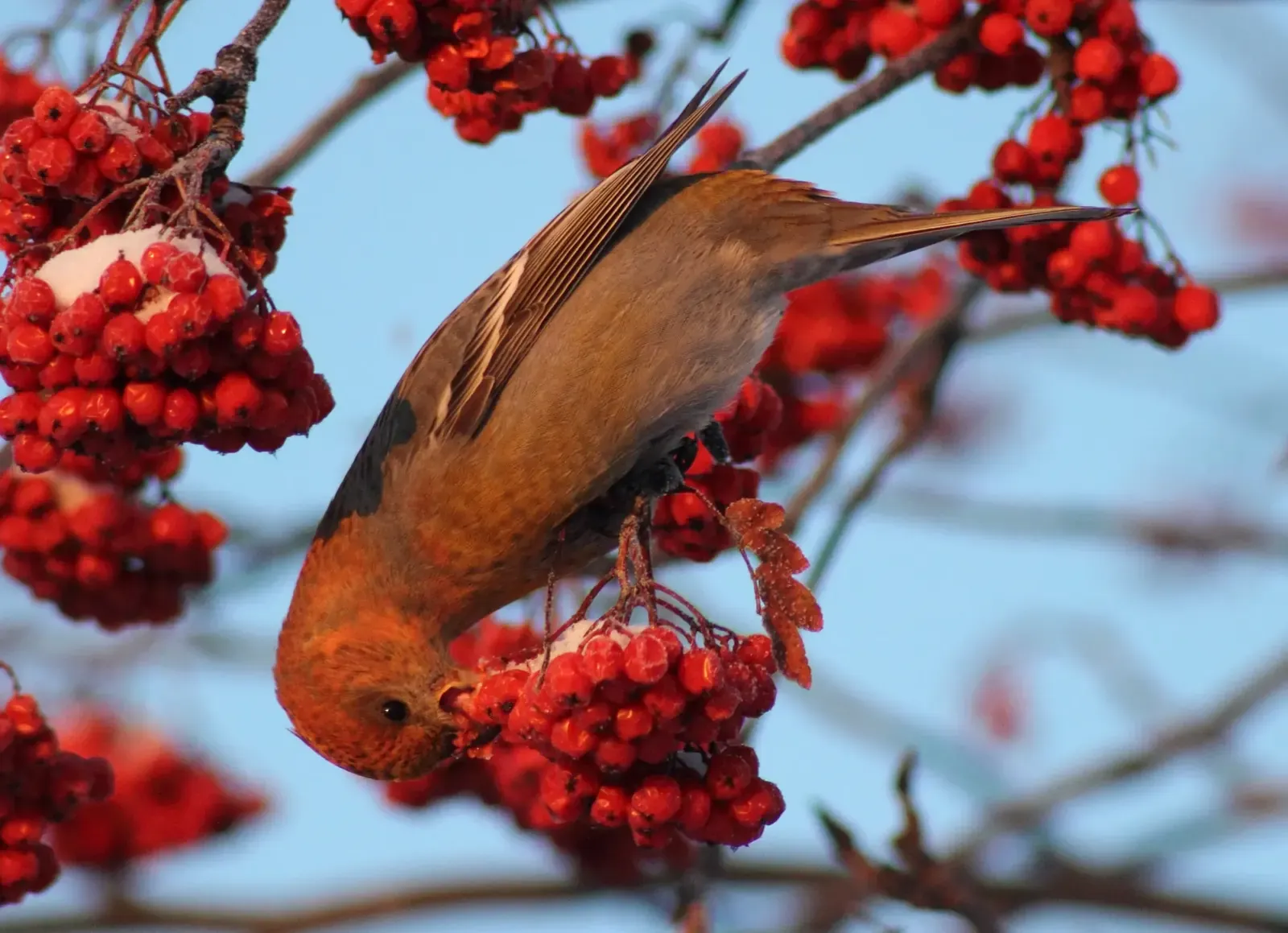
- Scientific name
- Pinicola enucleator
- Family
- Fringillidae
- Size
- 19 to 22 cm
- Swedish Red List 2025
- Not red-listed
- Global Red List (IUCN)
- Least concern (LC)
The Pine Grosbeak is a large, thrush-like finch that breeds in old, undisturbed conifer forest with some birch and berry shrubs. Despite its name it is not tied to pine and is more often seen in spruce forest.
How to recognise it
- Heavy body, long tail and a stout bill with a curved ridge
- Two white wing bars and white tertial edges on a blackish wing in all plumages
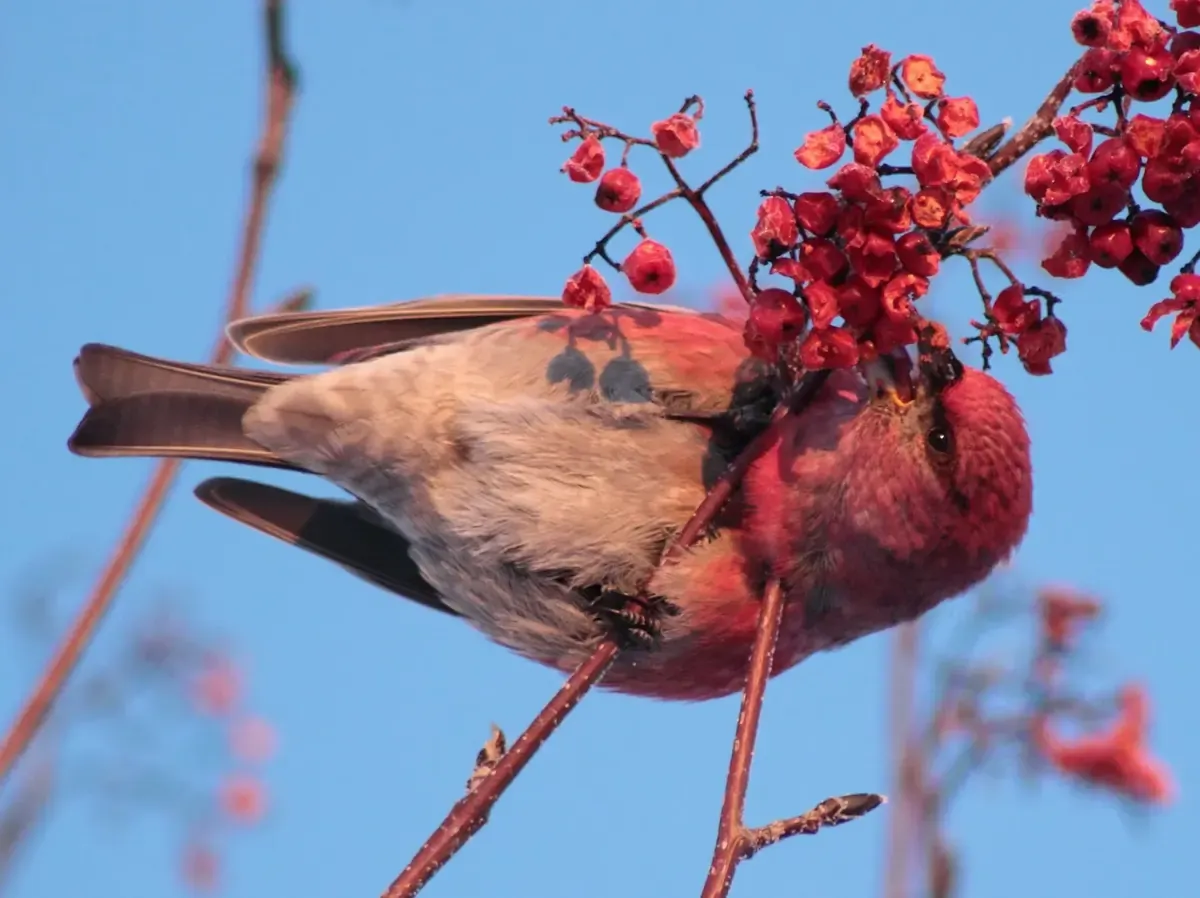
- Male usually dark rose red with grey and black areas
- Female mostly greyish yellow, older females and young males show orange or brownish colouring
Call and song
In flight it gives fluty, clear "plyit" and "dju-djy" calls, while flocks give a softer "bytt-bytt-bytt". The song has a desolate ring: a short phrase of a couple of notes, somewhat like the display call of the Wood Sandpiper.
Where and when
Its normal southern limit in Sweden probably lies at the level of Siljan in Dalarna. It seems to be regular in western Medelpad, Ångermanland and Västerbotten, and in Norrbotten it occurs over almost the whole province but is rare near the coast. In some invasion years it turns up further south than usual. It is reported most in December and rarely reported from March to September.
When is it seen in Sweden?
Where is it reported?
- No reports
- Small share
- Medium share
- Large share
Reported most in December. Rarely reported in March to September. Its share of all bird reports is highest in Norrbotten, Västerbotten and Dalarna.
Food and behaviour
It feeds on seeds, buds, shoots and berries such as rowan berries, lingonberries and bilberries. Outside the breeding season it often feeds in flocks, and in winter it can be completely fearless while eating rowan berries, sometimes right inside towns and villages. Its flight is fast, powerful and bounding. During breeding both sexes develop throat pouches where they store seeds for the young.
More in the Fringillidae family
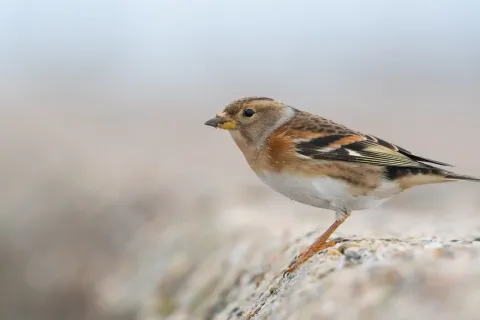
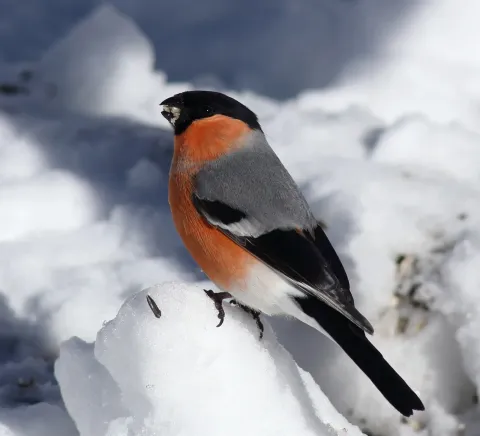
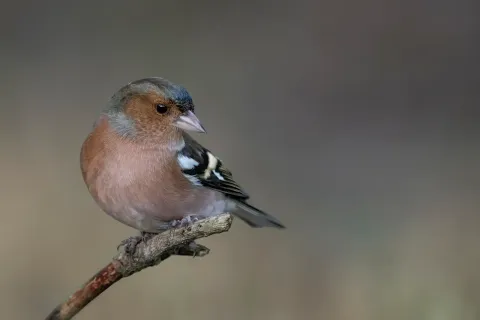
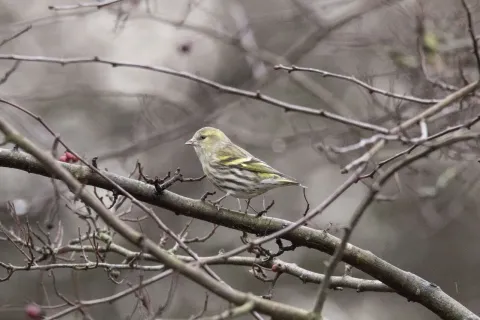
Photo: Estormiz, CC0, via Wikimedia Commons, resized

Photo: Estormiz, CC0, via Wikimedia Commons, resized

The text was written with AI from facts in Wikipedia and may be shared under CC BY-SA 4.0. Sources: Swedish article, English article, German article
Report data: Artportalen (SLU Swedish Species Information Centre) via GBIF.org, 2016 to 2025. Red list: The Swedish Red List 2025, SLU Swedish Species Information Centre via GBIF.org.
Checked against sources on . How we make these pages