Corvidae
Siberian Jay
Perisoreus infaustus
- Scientific name
- Perisoreus infaustus
- Family
- Corvidae
- In Sweden
- Resident all year
- Size
- 26 to 29 cm
- Swedish Red List 2025
- Near threatened (NT)
- Global Red List (IUCN)
- Least concern (LC)
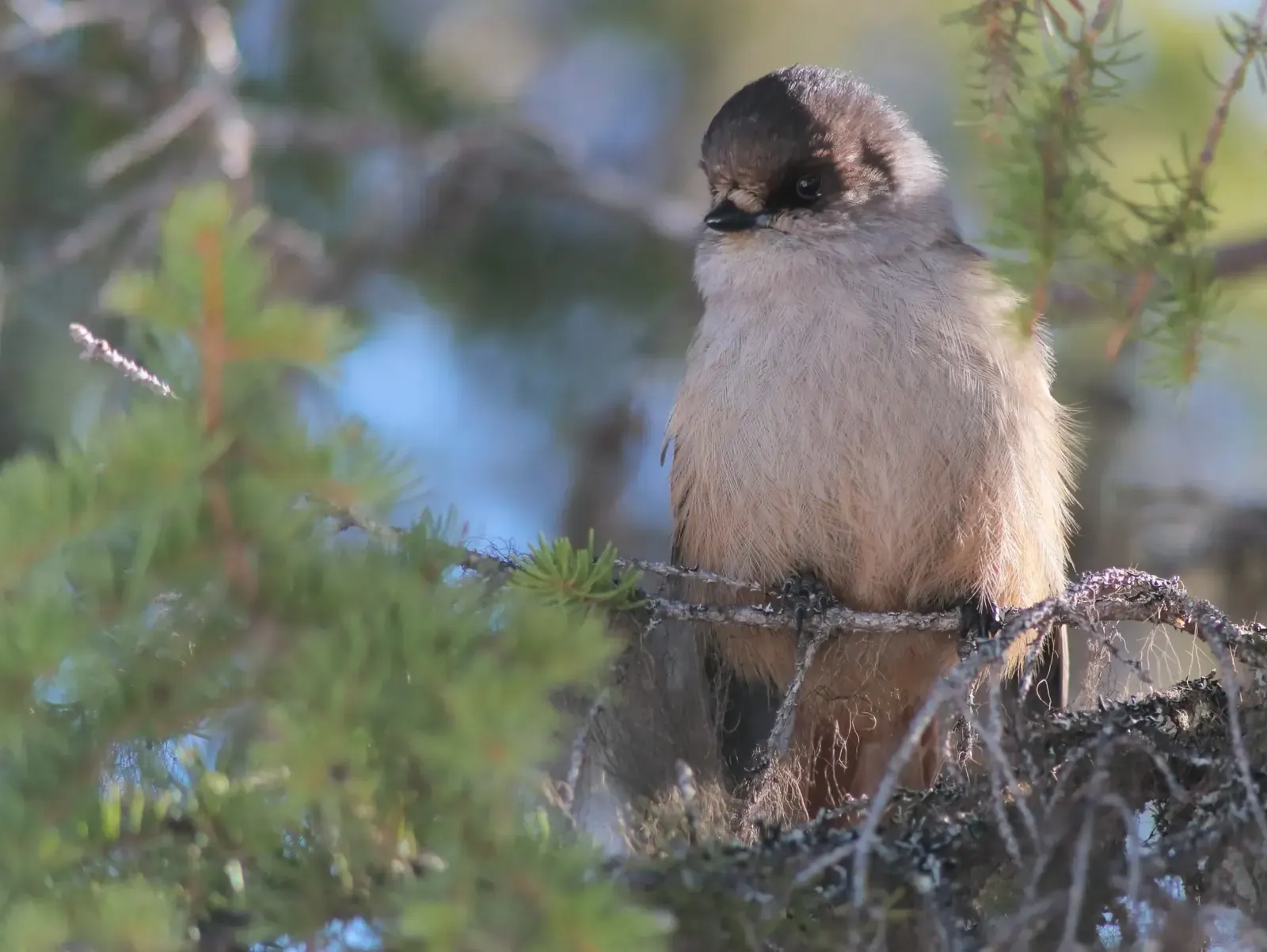
The Siberian Jay is a fluffy grey-brown member of the crow family, slightly larger than a Fieldfare, and a resident bird in Sweden. It lives in old spruce forest rich in tree lichens, from northern Värmland and Dalarna up to the Finnish border.
How to recognise it
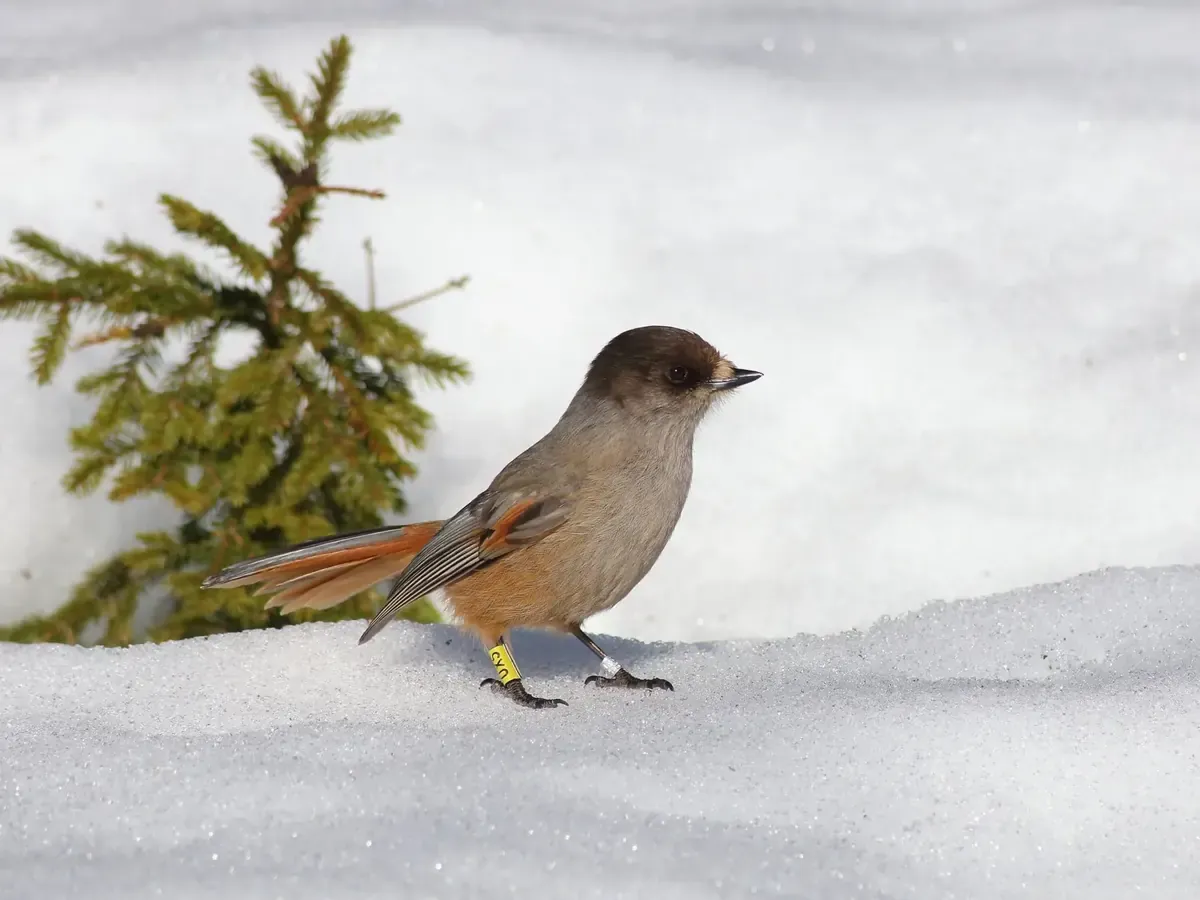
- Fluffy grey-brown plumage with a brownish-black crown and rusty-red rump and tail sides
- Rusty-red wing bends on the upperside, clearest in flight
- Small, fairly short black bill with a little buff tuft at the forehead
- Sexes alike, but the female is slightly smaller and young birds have a browner back
Call and song
The Siberian Jay is mostly quiet but has a wide repertoire. Sometimes a short mewing "geä", a rising "kui" and a slightly thinner "kiij" are heard. When agitated it gives a loud "krääh" or "gäääh", like the Jay's but weaker. The song is soft and can only be heard within about 20 metres.
Where and when
The Siberian Jay is resident and occurs from northern Värmland and Dalarna up to the Finnish border, most densely in the inland of northern Norrland. Along the Norrland coast it is very rare. It is reported most in February and from September to November, and its share of all bird reports is highest in Norrbotten and Jämtland. It is red-listed as Near Threatened (NT).
When is it seen in Sweden?
Where is it reported?
- No reports
- Small share
- Medium share
- Large share
Reported most in February and September to November. Its share of all bird reports is highest in Norrbotten and Jämtland.
Food and behaviour
The Siberian Jay is omnivorous and eats mostly berries, especially bilberries, as well as small mammals, insects, nestlings and fungi. From July until the first snow it stores food in many different places for the winter. It lives in small flocks of 2 to 7 birds, is fearless and can be fed by hand. In the branches it clambers up and down like a large tit.
More in the Corvidae family
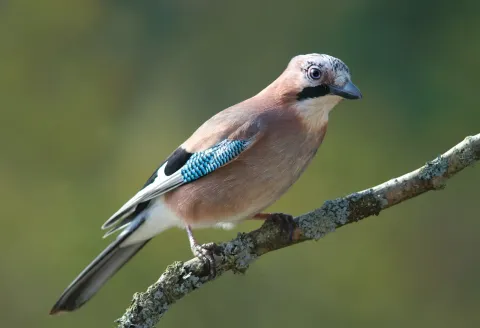
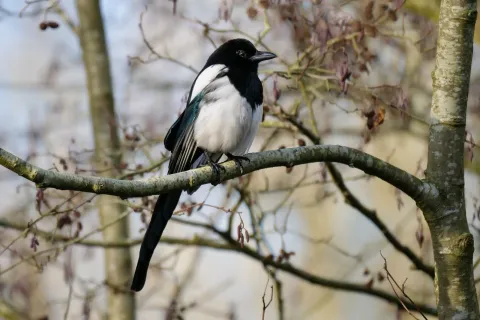
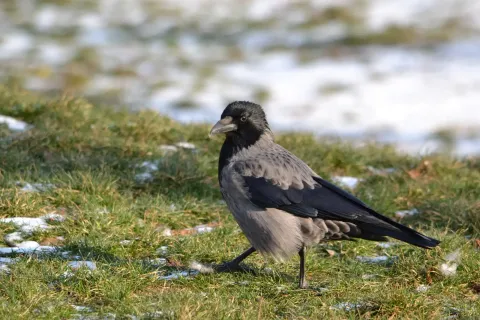
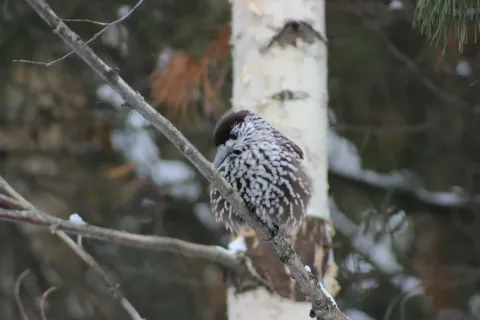
Photo: Estormiz, CC0, via Wikimedia Commons, resized

Photo: Estormiz, CC0, via Wikimedia Commons, resized

The text was written with AI from facts in Wikipedia and may be shared under CC BY-SA 4.0. Sources: Swedish article, English article, German article
Report data: Artportalen (SLU Swedish Species Information Centre) via GBIF.org, 2016 to 2025. Red list: The Swedish Red List 2025, SLU Swedish Species Information Centre via GBIF.org.
Checked against sources on . How we make these pages