Calcariidae
Snow Bunting
Plectrophenax nivalis
- Scientific name
- Plectrophenax nivalis
- Family
- Calcariidae
- In Sweden
- Partial migrant, breeds here
- Size
- 15.5 to 18 cm
- Swedish Red List 2025
- Not red-listed
- Global Red List (IUCN)
- Least concern (LC)
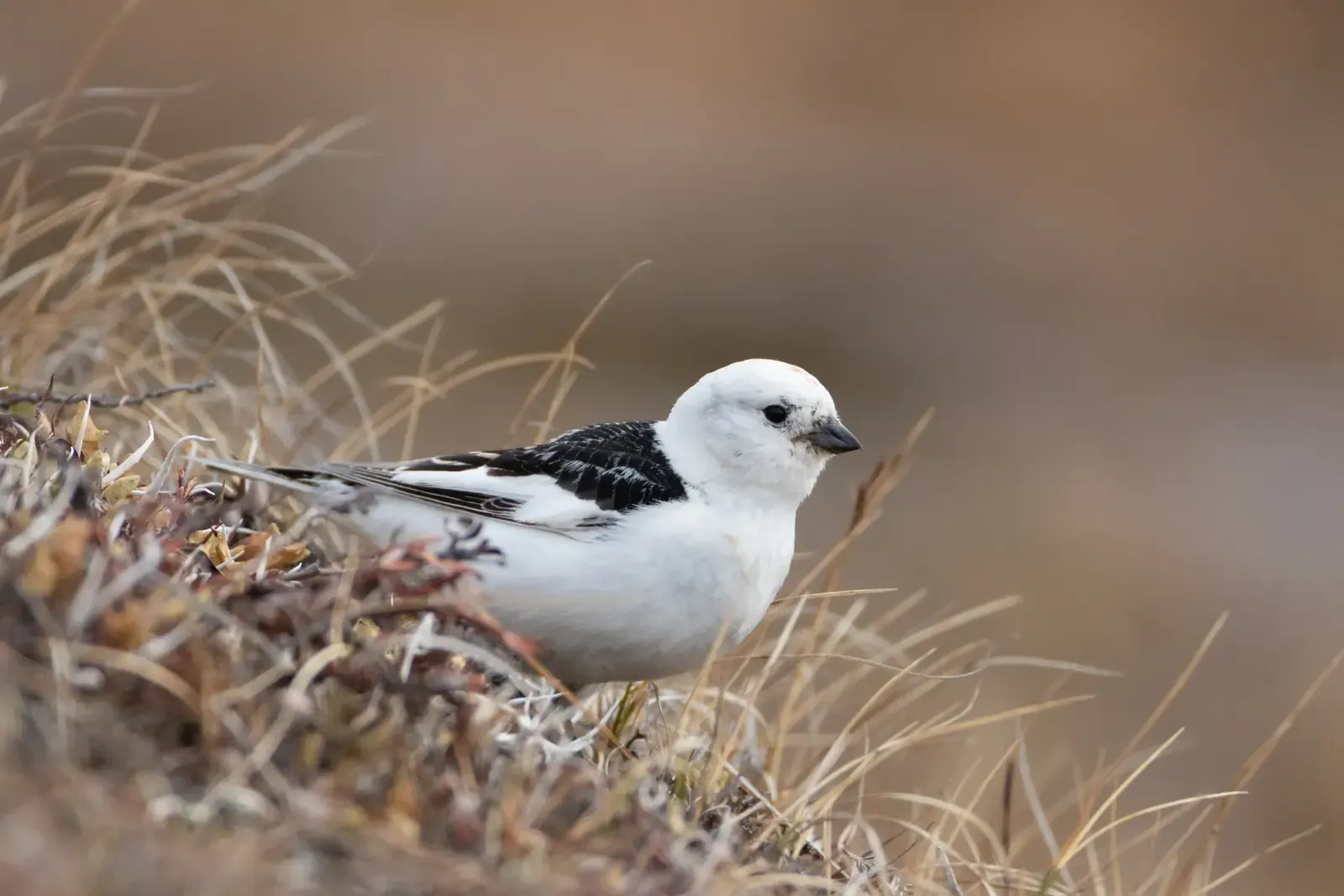
The Snow Bunting is a plump, long-winged songbird with contrasting plumage in black, white, brown and grey. It breeds on tundra and bare mountains and in winter is seen in flocks, often on sandy coasts.
How to recognise it
- Breeding male has a white head, throat, rump and underparts
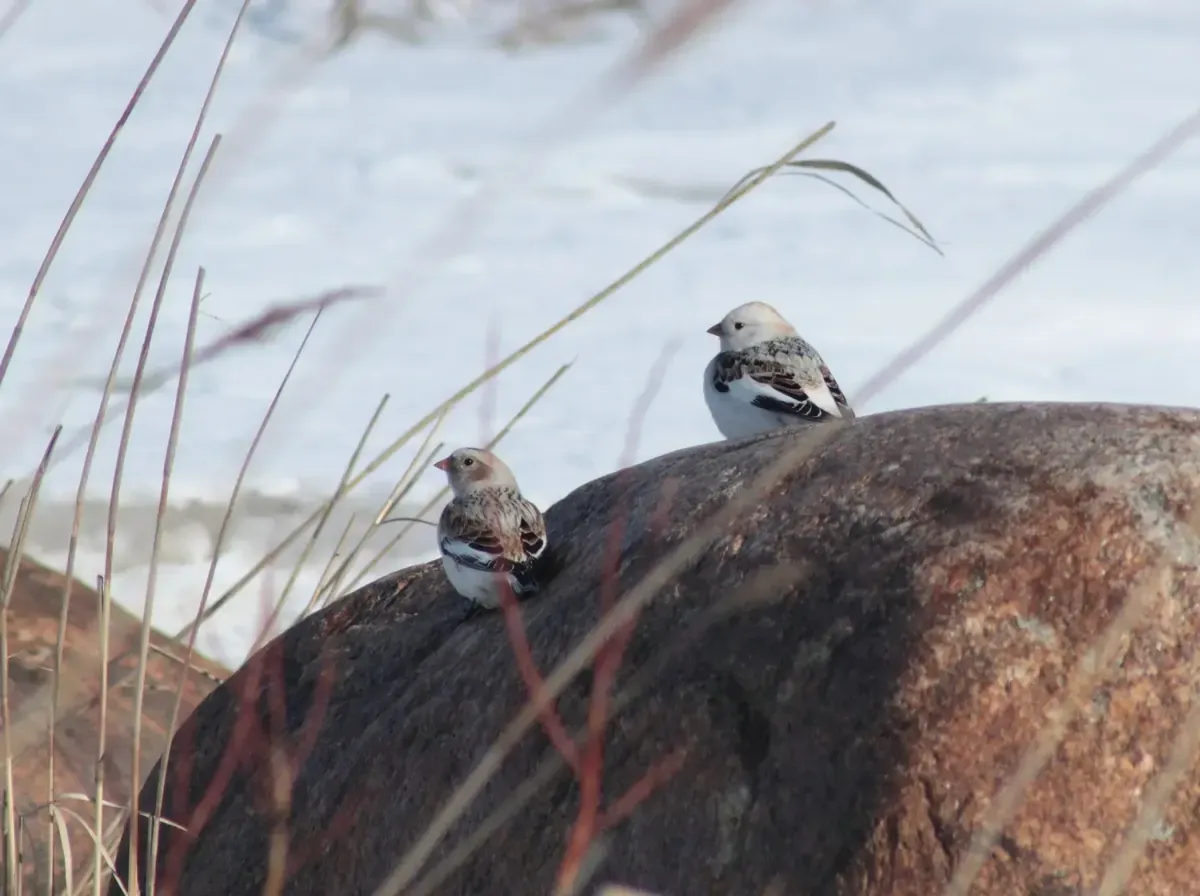
- Breeding female has a grey-brown crown and nape and a brownish wash on the breast
- Bill is black in breeding plumage, yellow with a black tip in winter
- In flight, large white wing patches contrast with dark primaries
Call and song
Calls include a rippling “per'r'r'rit” like a Crested Tit and a soft whistled “pjyu” recalling Little Ringed Plover. Flocks give trilling calls such as “tirr”, “diüh” or “tsrr”. The song is short and twittering, with a clear voice and a lonely ring, like that of Lapland Bunting.
Where and when
The Snow Bunting is a partial migrant that breeds in Sweden, in the mountains. In southern Sweden it is a winter visitor, often on sandy coasts and less often on stubble fields. It is reported most in November and rarely in August and September. Its share of all bird reports is highest in Norrbotten, Västerbotten and Halland.
When is it seen in Sweden?
Where is it reported?
- No reports
- Small share
- Medium share
- Large share
Reported most in November. Rarely reported in May to September. Its share of all bird reports is highest in Norrbotten, Västerbotten and Halland.
Food and behaviour
It feeds on seeds, and in summer also on insects. In winter it searches for food in the snow and picks seeds from low stems. It lives on the ground, where it walks, runs and hops when needed. Males arrive first on the breeding grounds and females follow four to six weeks later.
More songbirds
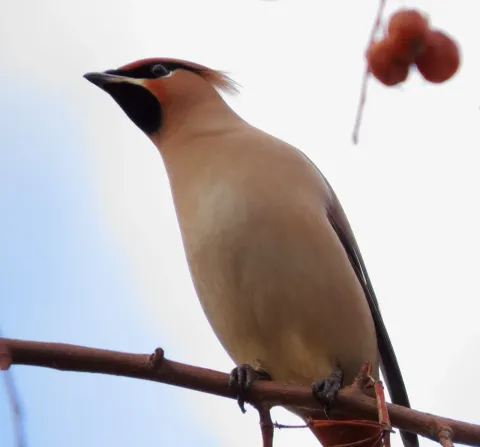
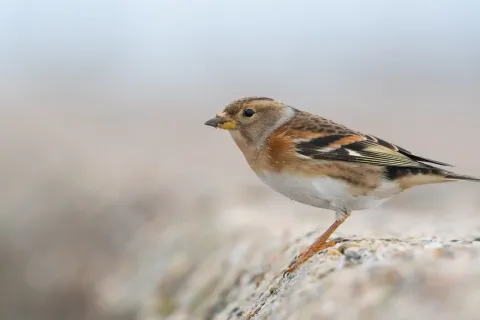
Photo: USFWSAlaska, public domain, via Wikimedia Commons, resized

Photo: Estormiz, CC0, via Wikimedia Commons, resized

The text was written with AI from facts in Wikipedia and may be shared under CC BY-SA 4.0. Sources: Swedish article, English article, German article
Report data: Artportalen (SLU Swedish Species Information Centre) via GBIF.org, 2016 to 2025. Red list: The Swedish Red List 2025, SLU Swedish Species Information Centre via GBIF.org.
Checked against sources on . How we make these pages