Anatidae
Tufted Duck
Aythya fuligula
- Scientific name
- Aythya fuligula
- Family
- Anatidae
- In Sweden
- Partial migrant, breeds here
- Size
- 40 to 47 cm
- Swedish Red List 2025
- Not red-listed
- Global Red List (IUCN)
- Least concern (LC)
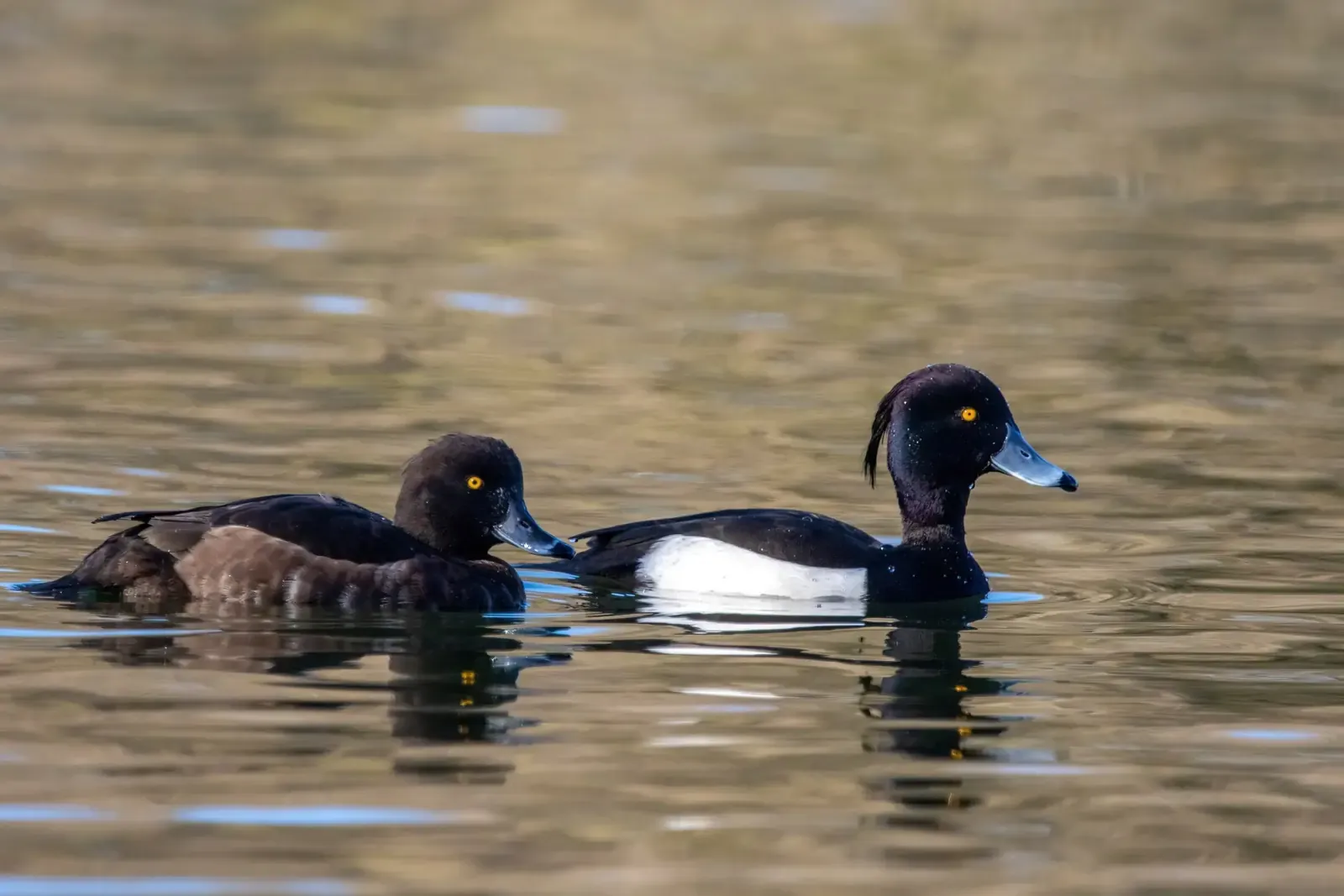
The Tufted Duck is a duck with a tuft on the nape that breeds on forest lakes, slow rivers and park ponds, and also on sea coasts. In Sweden it breeds across almost the whole country.
How to recognise it
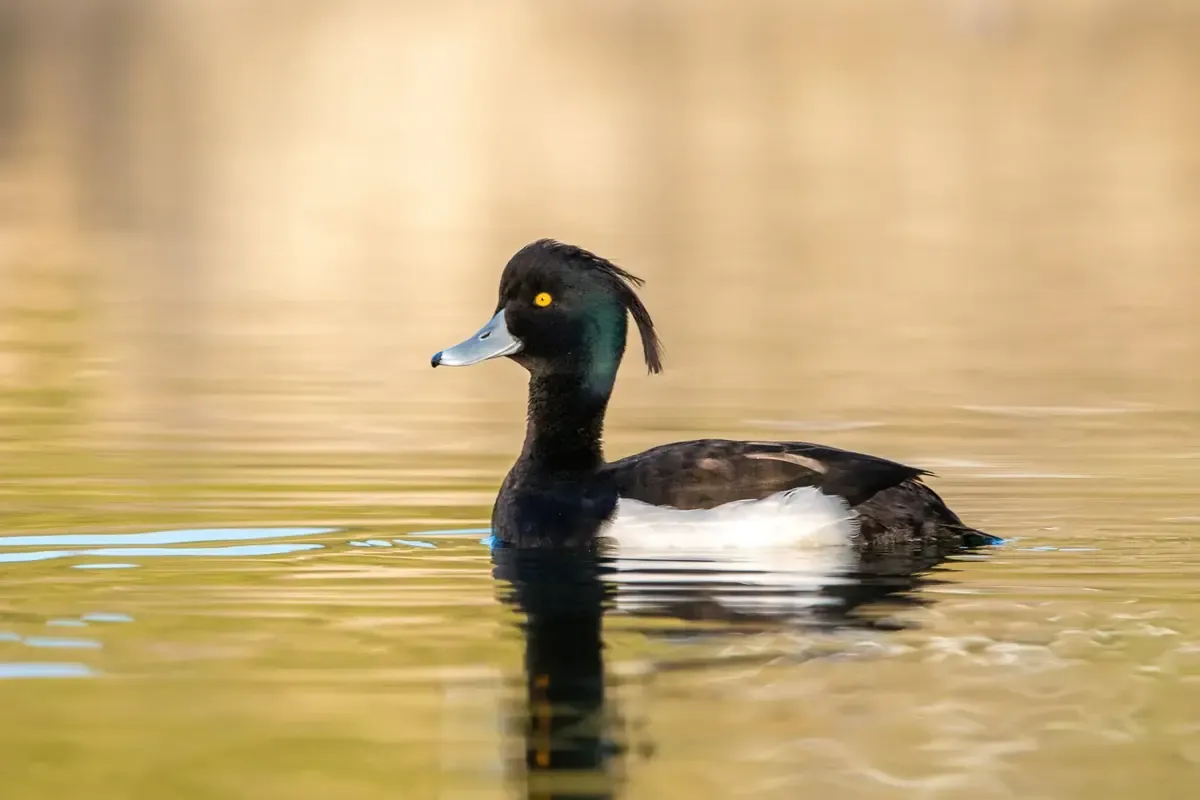
- Tuft on the nape, long and drooping in breeding males, less obvious in females
- The adult male is black with white flanks and a white belly
- The female is dark brown on back and head, paler brown on the flanks
- Yellow eye, pale grey-blue bill with a black nail, white wing bar in flight
Call and song
The courting male, and birds in flight, give an almost turkey-like giggling call that falls in pitch and speeds up: "vip vi-vivyvyp". The female has a grating series, "krr krr krr krr", faster than the Common Pochard's and higher than the Greater Scaup's. Outside courtship the males are mostly silent.
Where and when
The Tufted Duck is a partial migrant that breeds in Sweden, across almost the whole country. In summer it is commonest in Norrland and eastern Sweden. Most leave Sweden in winter, but some winter in southern Sweden. It is reported all year round and from all 21 counties. It prefers to breed on shallow, nutrient-rich lakes and bays, in the archipelago often in shallow coastal lagoons.
When is it seen in Sweden?
Where is it reported?
- No reports
- Small share
- Medium share
- Large share
Reported all year round. Reported from all 21 counties.
Food and behaviour
It mostly feeds in shallow water, rarely dives deeper than three metres and stays under for 15 seconds on average. Important food is snails, mussels, crustaceans, small fish, water insects and water plants. It likes to breed among gulls and terns, which give it some protection. In winter Tufted Ducks can gather in flocks of thousands of birds.
More in the Anatidae family
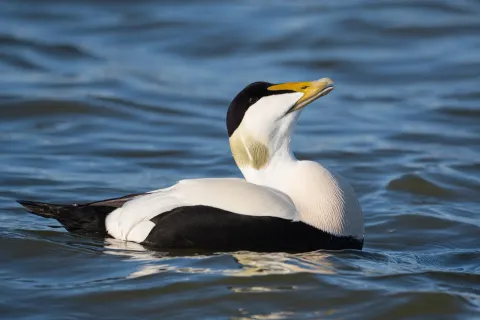
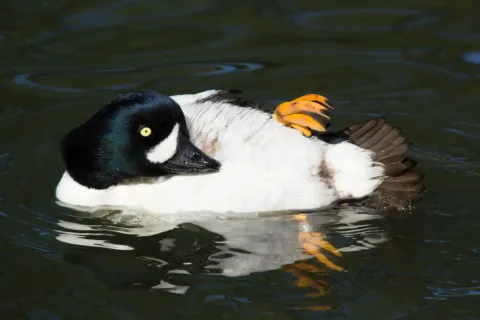
Photo: Alexis Lours, CC BY 4.0, via Wikimedia Commons, resized

Photo: Alexis Lours, CC BY 4.0, via Wikimedia Commons, resized

The text was written with AI from facts in Wikipedia and may be shared under CC BY-SA 4.0. Sources: Swedish article, English article, German article
Report data: Artportalen (SLU Swedish Species Information Centre) via GBIF.org, 2016 to 2025. Red list: The Swedish Red List 2025, SLU Swedish Species Information Centre via GBIF.org.
Checked against sources on . How we make these pages