Fringillidae
Twite
Linaria flavirostris
- Scientific name
- Linaria flavirostris
- Family
- Fringillidae
- In Sweden
- Partial migrant, breeds here
- Size
- 12.5 to 14 cm
- Swedish Red List 2025
- Near threatened (NT)
- Global Red List (IUCN)
- Least concern (LC)
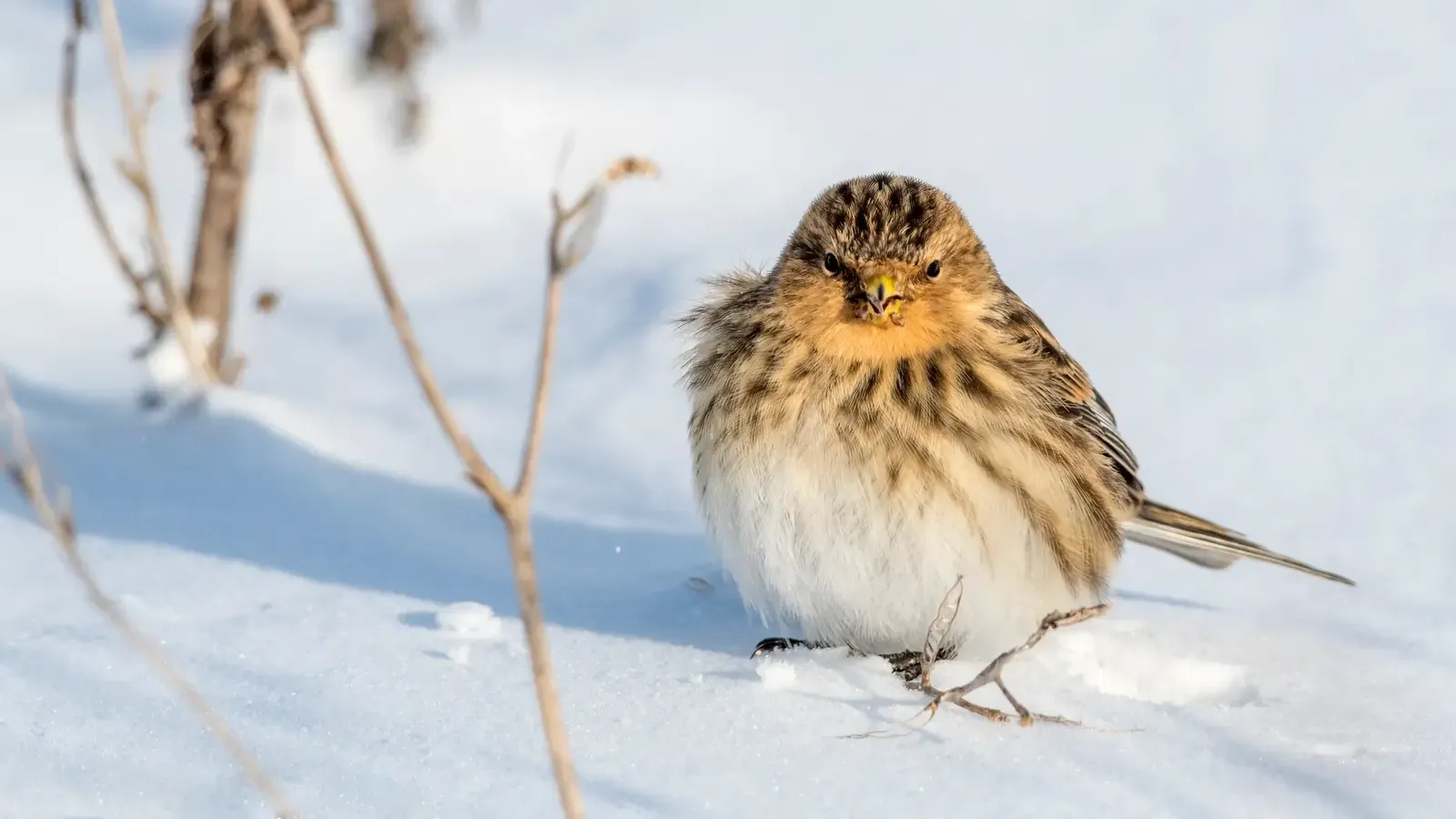
The Twite is a finch that breeds rarely in the Swedish mountains and winters regularly in southern and central Sweden.
How to recognise it
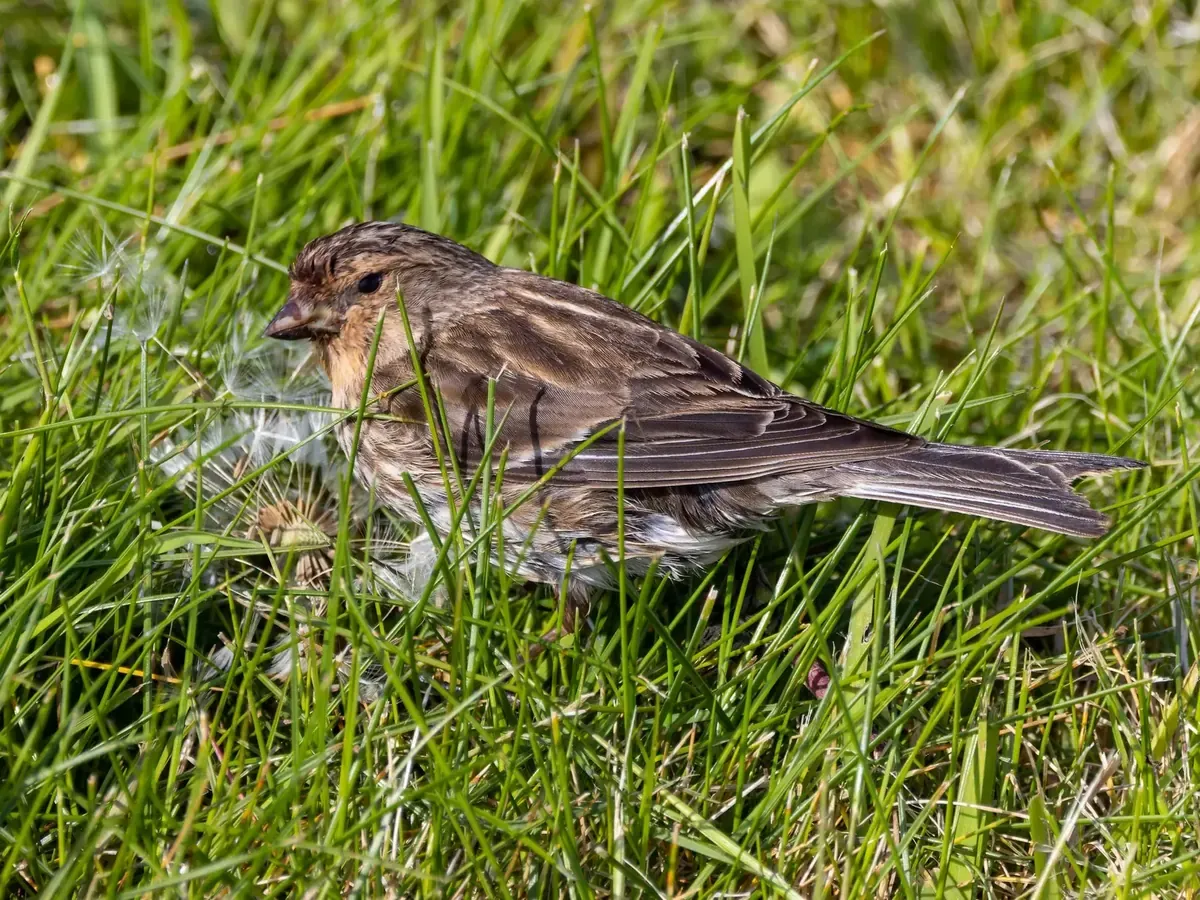
- Rusty-buff head and unspotted throat, dark brown-black back and white to dirty white underparts
- Short bill much like a siskin's, yellow in winter and grey-brown in summer
- Lacks the Linnet's red crown and breast; smaller head, slightly longer, more forked tail
- Adult male: pink rump, pink on breast and forehead; female: brown rump
Call and song
The call is a slightly metallic, grumpy "tweeht" or "dreeht". The flight call usually has three syllables, "tjip-ep-ep", and is harder than the Linnet's. The song is most like a Citril Finch's, with fast trills and buzzing sounds, and is recognised by woven-in rattling "trrrrrrr" notes and frequent hints of the call.
Where and when
A partial migrant, it breeds rarely in Sweden, on cliffs in the western mountains and upper willow zone. It winters regularly in southern and central Sweden, heading north in April and May. It is reported most in October and November, rarely in August and September. Its share of all bird reports is highest in Halland, Östergötland and Skåne. It is Near Threatened (NT) on the 2025 Swedish Red List.
When is it seen in Sweden?
Where is it reported?
- No reports
- Small share
- Medium share
- Large share
Reported most in October and November. Rarely reported in May to September. Its share of all bird reports is highest in Halland, Östergötland and Skåne.
Food and behaviour
It feeds mainly on seeds picked from the ground, and in winter it often looks for seeds on waste ground. Outside the breeding season it often forms large flocks, sometimes mixed with other finches on coasts and shore meadows. On migration it is very active and not very shy. The female builds the nest on the ground or low in a bush, often in small loose colonies.
More in the Fringillidae family
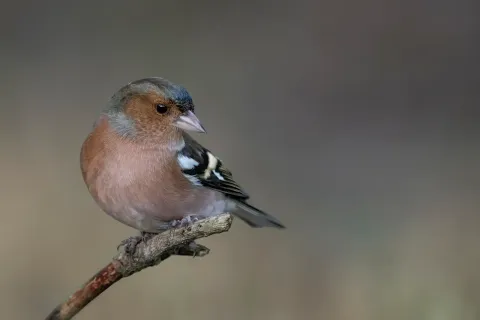
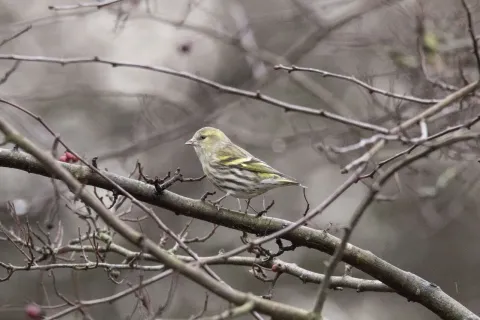
Photo: Hans Norelius, CC BY 2.0, via Wikimedia Commons, resized

Photo: William Stephens, CC BY 4.0, via Wikimedia Commons, resized

The text was written with AI from facts in Wikipedia and may be shared under CC BY-SA 4.0. Sources: Swedish article, English article, German article
Report data: Artportalen (SLU Swedish Species Information Centre) via GBIF.org, 2016 to 2025. Red list: The Swedish Red List 2025, SLU Swedish Species Information Centre via GBIF.org.
Checked against sources on . How we make these pages