Strigidae
Eurasian Pygmy Owl
Glaucidium passerinum
- Scientific name
- Glaucidium passerinum
- Family
- Strigidae
- Size
- 15 to 19 cm
- Swedish Red List 2025
- Near threatened (NT)
- Global Red List (IUCN)
- Least concern (LC)
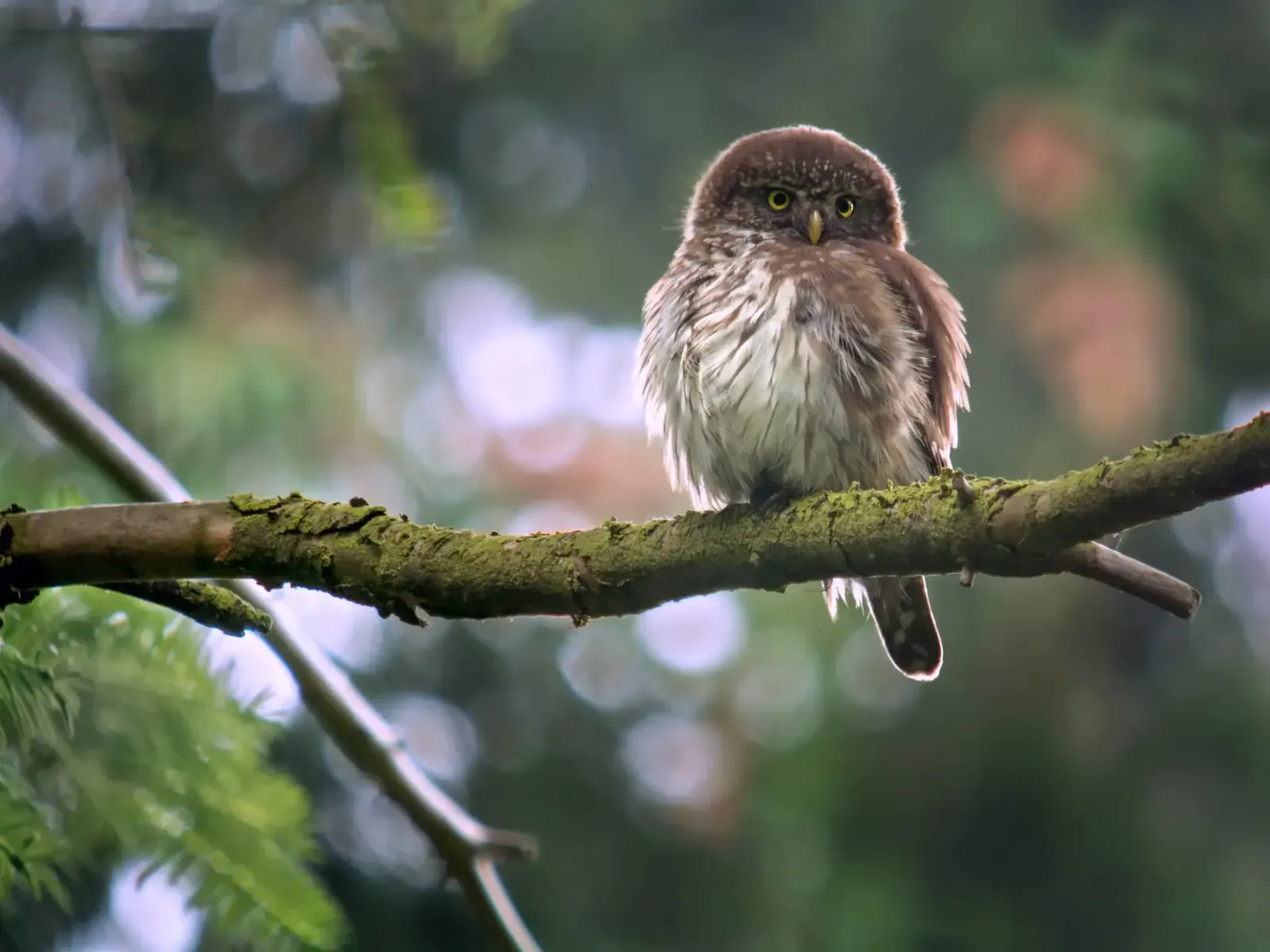
The Eurasian Pygmy Owl is an owl about the size of a Starling that breeds in coniferous and mixed forest from northern Skåne and northern Blekinge to Norrbotten. Together with Tawny Owl and Tengmalm's Owl it is one of the commonest owls in Sweden.
How to recognise it
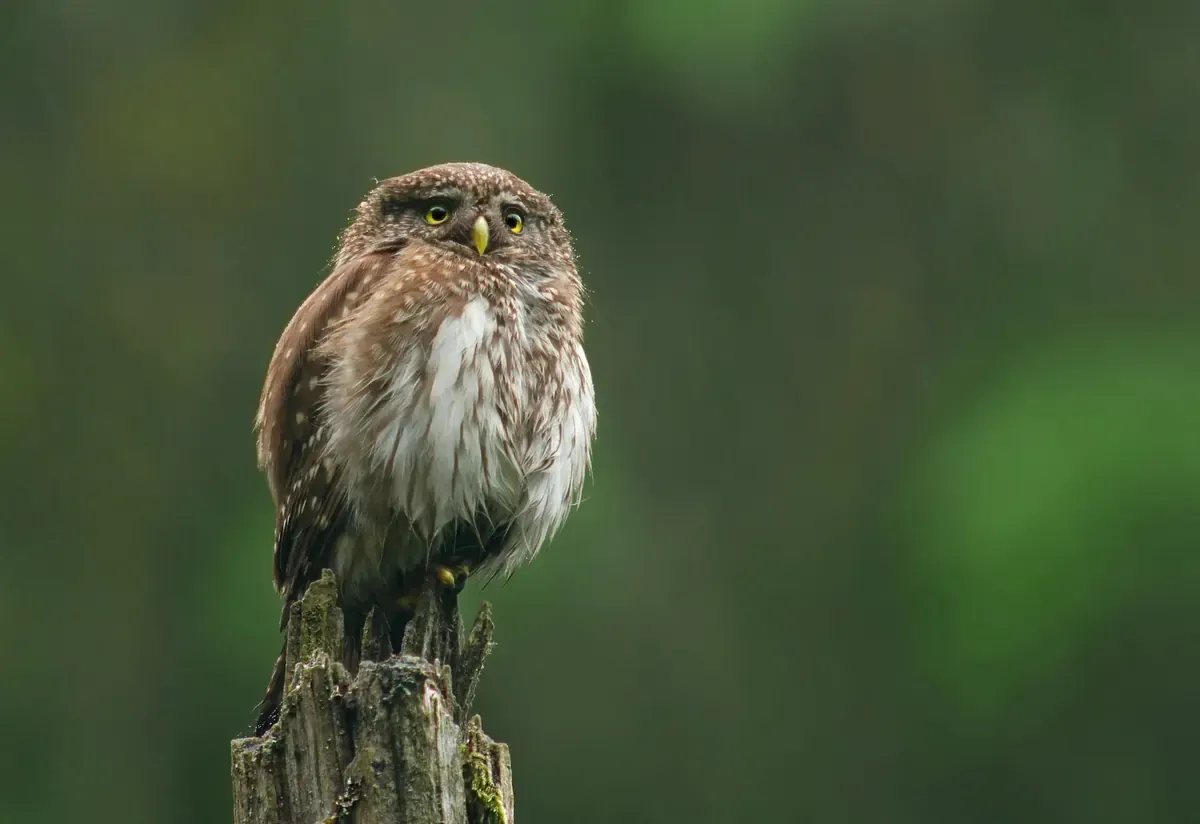
- About the size of a Starling, female larger than male, with no ear tufts
- Grey-brown upperparts with whitish spots, white underparts with brown lengthwise streaks
- Small head with yellow eyes, white to grey eyebrows and a white half-collar
- White bars across the tail, which is often flicked sideways or cocked steeply
Call and song
The song is a steady series of soft, monotone whistles about one second apart. It carries 500 metres to a kilometre. The female sounds like the male but higher. Before and after the mating season both sexes give a rising series of five to seven notes. In February to April it holds territory, often singing from a spruce top.
Where and when
It lives mainly in larger, older mixed conifer forests with many deciduous trees such as aspen and birch. It is absent from small, isolated woods, Öland, Gotland, the mountains and forests near them. It is reported most in February and rarely in May to August. Its share of all bird reports is highest in Västmanland, Västernorrland and Jämtland. It is Near Threatened on the Swedish Red List 2025.
When is it seen in Sweden?
Where is it reported?
- No reports
- Small share
- Medium share
- Large share
Reported most in February. Rarely reported in May to August. Its share of all bird reports is highest in Västmanland, Västernorrland and Jämtland.
Food and behaviour
It feeds mainly on voles and shrews, but while the young are growing, small birds up to thrush size make up a large part. It often stores food in holes in trees. It is fairly tame and most active at dawn and dusk, but is also seen by day. It flies in soft undulations like a woodpecker. Small birds, especially Coal Tits, react to its call with loud alarm.
Easily confused with
-
Tengmalm's Owl is the species the Eurasian Pygmy Owl is most easily confused with.
-
Athene noctua
In flight the Eurasian Pygmy Owl can be mistaken for a dark Little Owl.
More in the Strigidae family
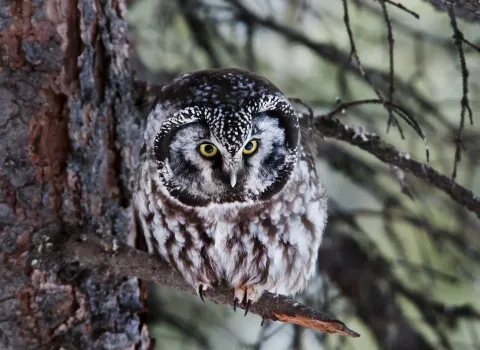
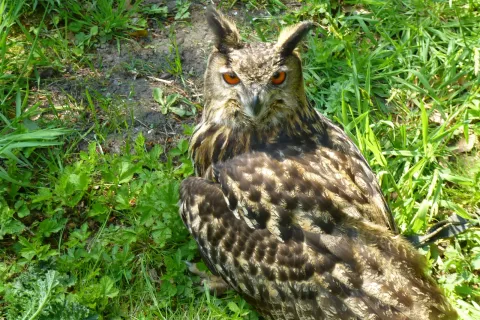
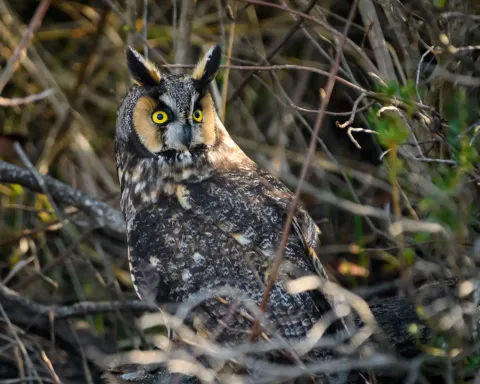
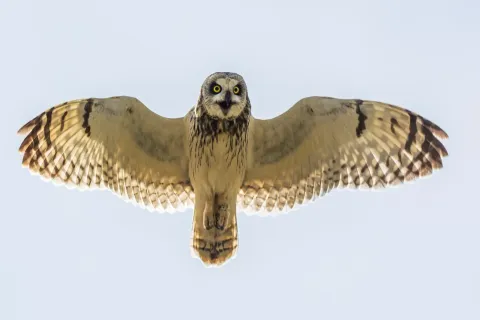
Photo: Frank Vassen, CC BY 2.0, via Wikimedia Commons, resized

Photo: Frank Vassen, CC BY 2.0, via Wikimedia Commons, resized

The text was written with AI from facts in Wikipedia and may be shared under CC BY-SA 4.0. Sources: Swedish article, English article, German article
Report data: Artportalen (SLU Swedish Species Information Centre) via GBIF.org, 2016 to 2025. Red list: The Swedish Red List 2025, SLU Swedish Species Information Centre via GBIF.org.
Checked against sources on . How we make these pages