Strigidae
Eurasian Eagle-Owl
Bubo bubo
- Scientific name
- Bubo bubo
- Family
- Strigidae
- In Sweden
- Resident all year
- Size
- 59 to 73 cm
- Swedish Red List 2025
- Vulnerable (VU)
- Global Red List (IUCN)
- Least concern (LC)
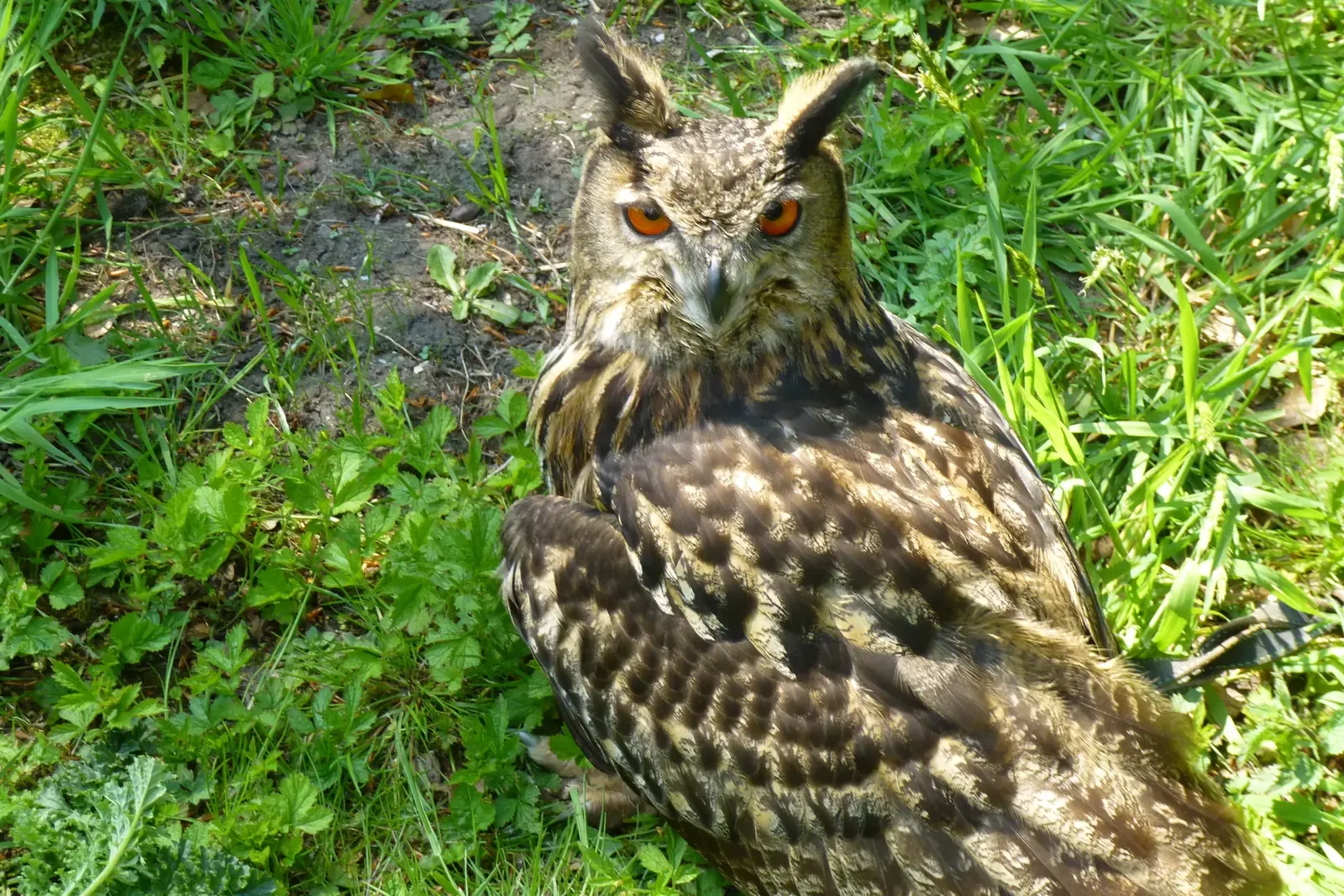
The Eurasian Eagle-Owl is an owl with clear ear tufts, orange-yellow eyes and a big head. It lives in hilly forest country, on steep cliffs and rocky archipelago islands, and also turns up in towns, mainly in industrial areas or near rubbish tips.
How to recognise it
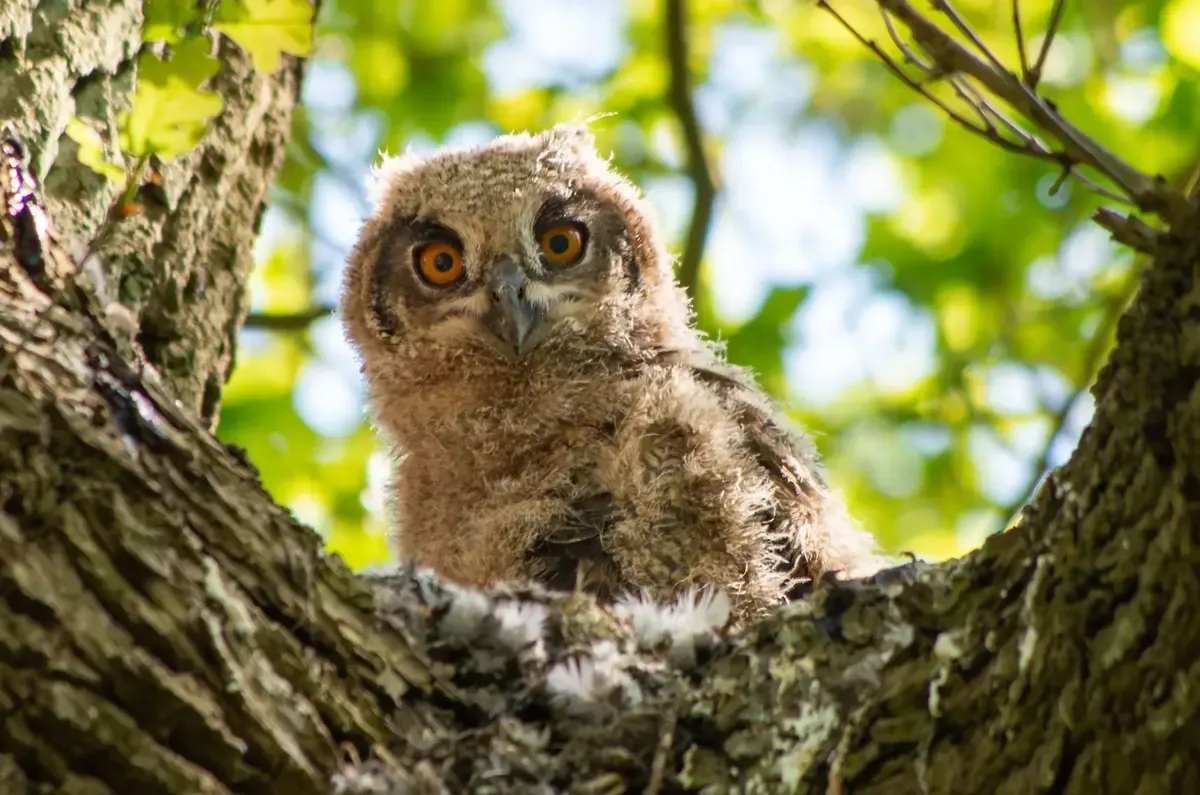
- Clear ear tufts, orange-yellow iris and a big head, tufts not visible in flight
- Breast heavily streaked black on yellowish brown, belly rusty yellow with fine black streaks
- Dark brown upperparts with coarse spots and black barring, black bill and feet
- Female clearly larger than male, young birds have fairly small tufts and down on the head
Call and song
The male's song is a very deep two-syllable hooting, the second syllable clearly lower. It is heard mainly in late winter, sometimes in autumn, and can carry up to 4 kilometres in good weather. The female's call is a hoarse barking rhäeff. Young birds beg for food with a loud tju-ysch heard on August nights.
Where and when
It is resident in Sweden, breeding locally in southern and central Sweden, on Gotland and in much of Norrland, mainly near the coast. In the early 2000s the population was estimated at about 500 free-breeding pairs. It is listed as Vulnerable (VU) on the Swedish Red List. It is reported most in January and rarely in August. Its share of all bird reports is highest in Dalarna and Skåne.
When is it seen in Sweden?
Where is it reported?
- No reports
- Small share
- Medium share
- Large share
Reported most in January. Rarely reported in August. Its share of all bird reports is highest in Dalarna and Skåne.
Food and behaviour
It is active at night and by day may sit still in some hidden spot. It feeds mainly on rodents such as brown rats and water voles, and also takes hares, rabbits, ducks, corvids and gulls. Its ear tufts are held low to the sides when relaxed and raised when it calls or is agitated. The nest is often on a cliff ledge.
Easily confused with
-
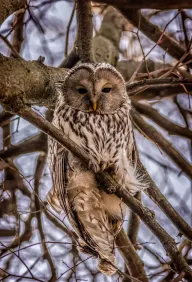
The Ural Owl has no ear tufts and a distinctly round head, while the Eurasian Eagle-Owl has ear tufts and an angular head.
-
The Long-eared Owl has similar plumage but is much smaller than the Eurasian Eagle-Owl.
More in the Strigidae family
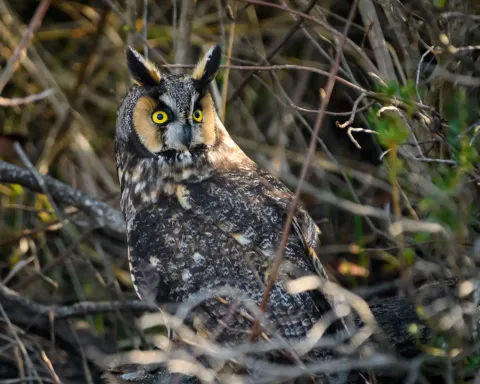
Photo: JarroNevsbaru, CC BY 4.0, via Wikimedia Commons, resized

Photo: Hobbyfotowiki, CC0, via Wikimedia Commons, resized

The text was written with AI from facts in Wikipedia and may be shared under CC BY-SA 4.0. Sources: Swedish article, English article, German article
Report data: Artportalen (SLU Swedish Species Information Centre) via GBIF.org, 2016 to 2025. Red list: The Swedish Red List 2025, SLU Swedish Species Information Centre via GBIF.org.
Checked against sources on . How we make these pages