Paridae
Grey-headed Chickadee
Poecile cinctus
- Scientific name
- Poecile cinctus
- Family
- Paridae
- In Sweden
- Resident all year
- Size
- 12 to 14 cm
- Swedish Red List 2025
- Near threatened (NT)
- Global Red List (IUCN)
- Least concern (LC)
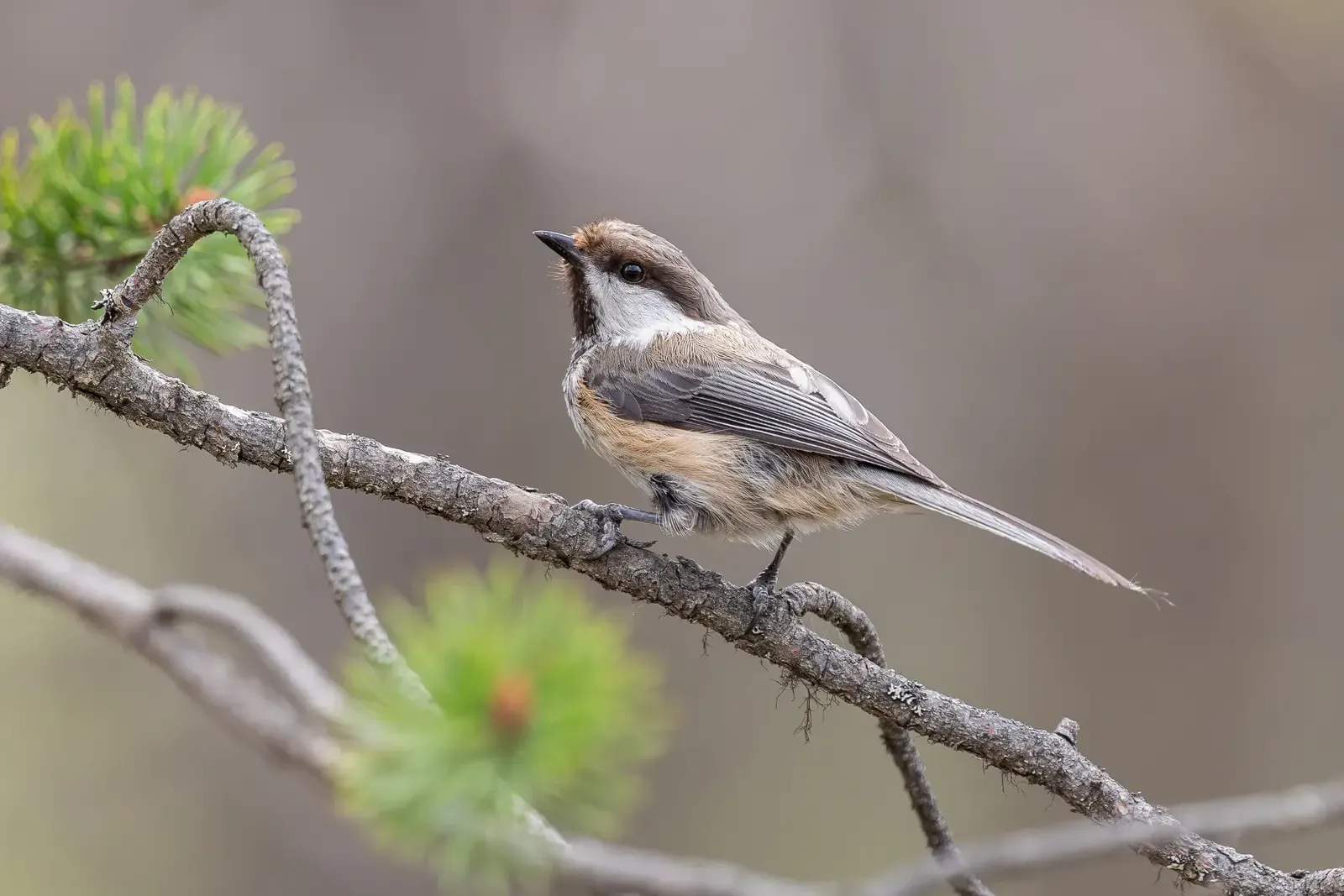
The Grey-headed Chickadee is a fairly long-tailed, large tit. It is found mainly in old, open conifer forest, and to some extent in mountain birch forest.
How to recognise it
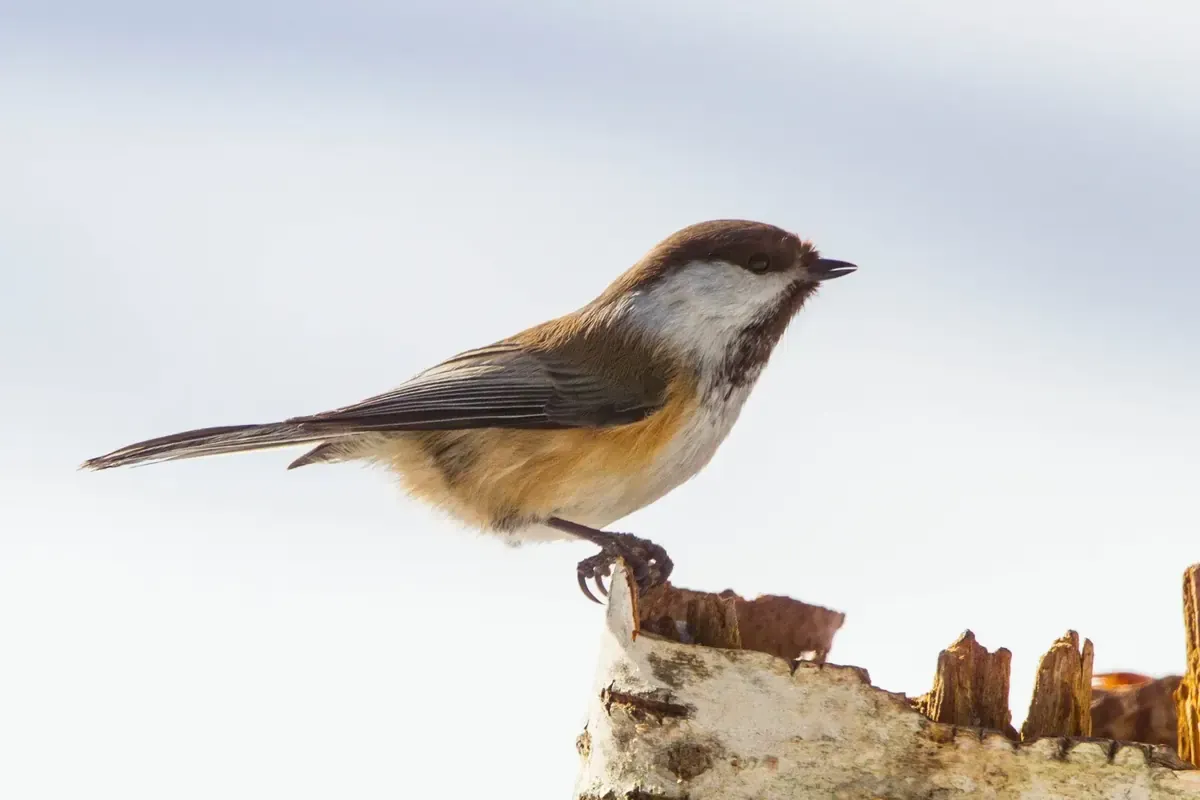
- Dark greyish-brown cap, not black except closest to the eye and bill
- White cheeks and a black chin
- Warm brown back, rusty brown flanks and pale grey belly
- White edges to tail and wing feathers give wings and tail a paler grey tone
Call and song
The song is partly a buzzing "tji-yrr tji-yrr tji-yrr", partly a Marsh Tit-like "tje-tje-tje-tje". The call, "zi-zi täh täh täh täh", resembles a Willow Tit's, but the notes are less drawn out and stressed. It also gives a drawn-out "dih" repeated four to five times.
Where and when
The Grey-headed Chickadee is resident in Sweden. It occurs from north-western Dalarna to central Härjedalen, and from Hotagen and Strömsund in northern Jämtland northwards. The Swedish population is estimated at 34 000 to 78 000 pairs. Its share of all bird reports is highest in Norrbotten, and it is reported most from November to February. It is Near Threatened (NT) on the 2025 Swedish Red List.
When is it seen in Sweden?
Where is it reported?
- No reports
- Small share
- Medium share
- Large share
Reported most in November to February. Rarely reported in May. Its share of all bird reports is highest in Norrbotten.
Food and behaviour
It feeds mainly on invertebrates, plus seeds and fat, in autumn and winter especially oily conifer seeds. In its breeding territory it stores food in twig tips, branch forks, needle bases and under bark flakes. It rarely forages on the ground. In winter it sometimes joins mixed foraging flocks and roosts in holes. Most are resident, though young birds can wander in large numbers in some years.
Easily confused with
More in the Paridae family
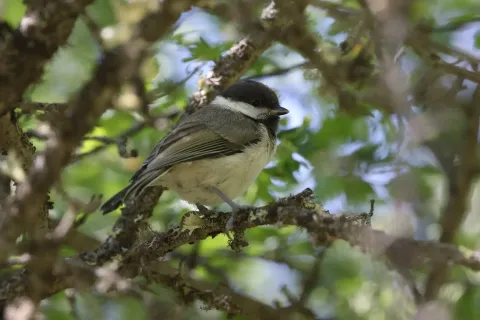
Photo: Lucwrte, CC BY-SA 4.0, via Wikimedia Commons, resized

Photo: Ron Knight, CC BY 2.0, via Wikimedia Commons, resized

The text was written with AI from facts in Wikipedia and may be shared under CC BY-SA 4.0. Sources: Swedish article, English article, German article
Report data: Artportalen (SLU Swedish Species Information Centre) via GBIF.org, 2016 to 2025. Red list: The Swedish Red List 2025, SLU Swedish Species Information Centre via GBIF.org.
Checked against sources on . How we make these pages