Paridae
Sombre Tit
Poecile lugubris
- Scientific name
- Poecile lugubris
- Family
- Paridae
- In Sweden
- Does not occur
- Size
- 13 to 14 cm
- Global Red List (IUCN)
- Least concern (LC)
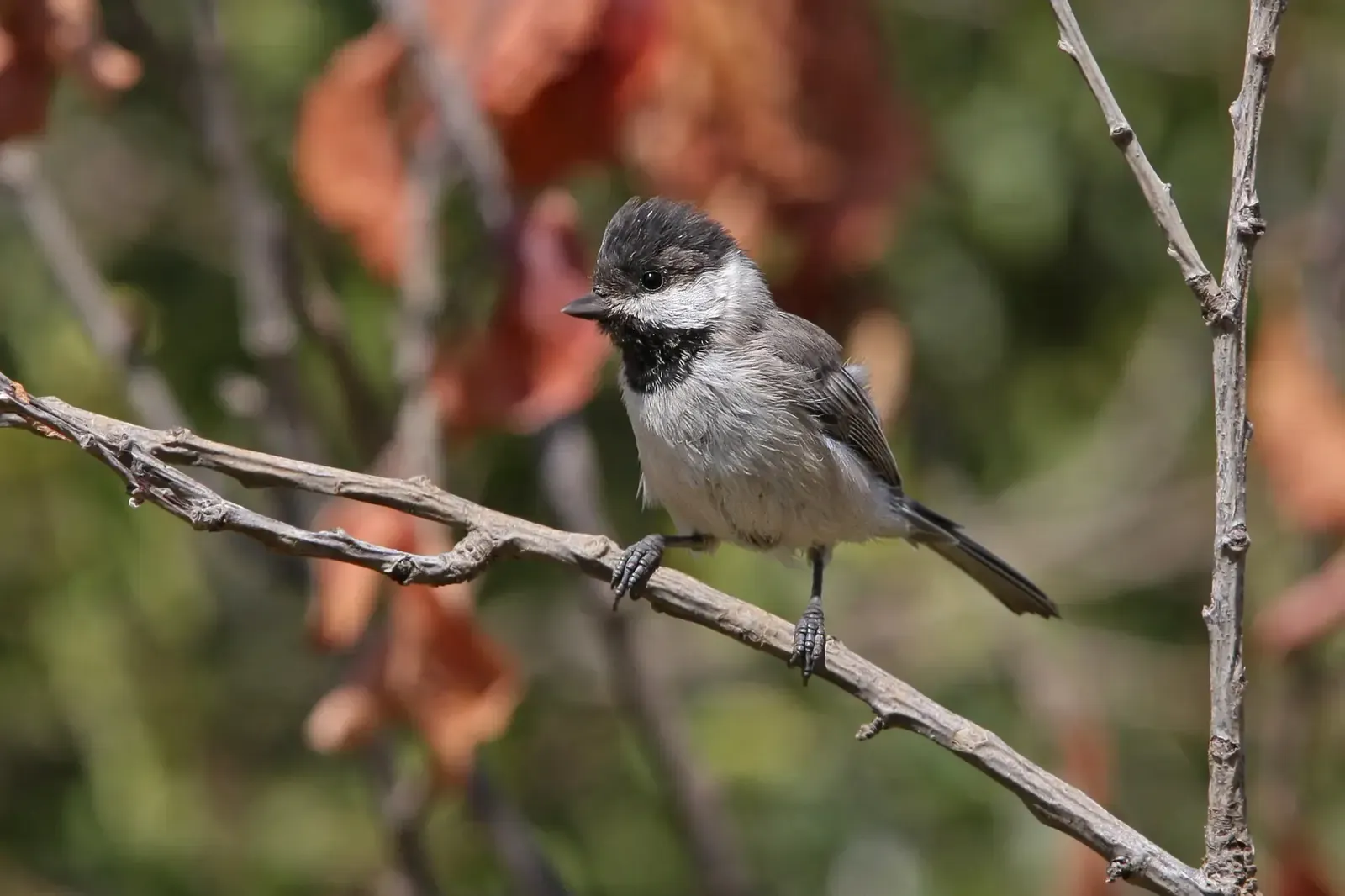
Wears its sooty-grey cap like a sailor's hat.
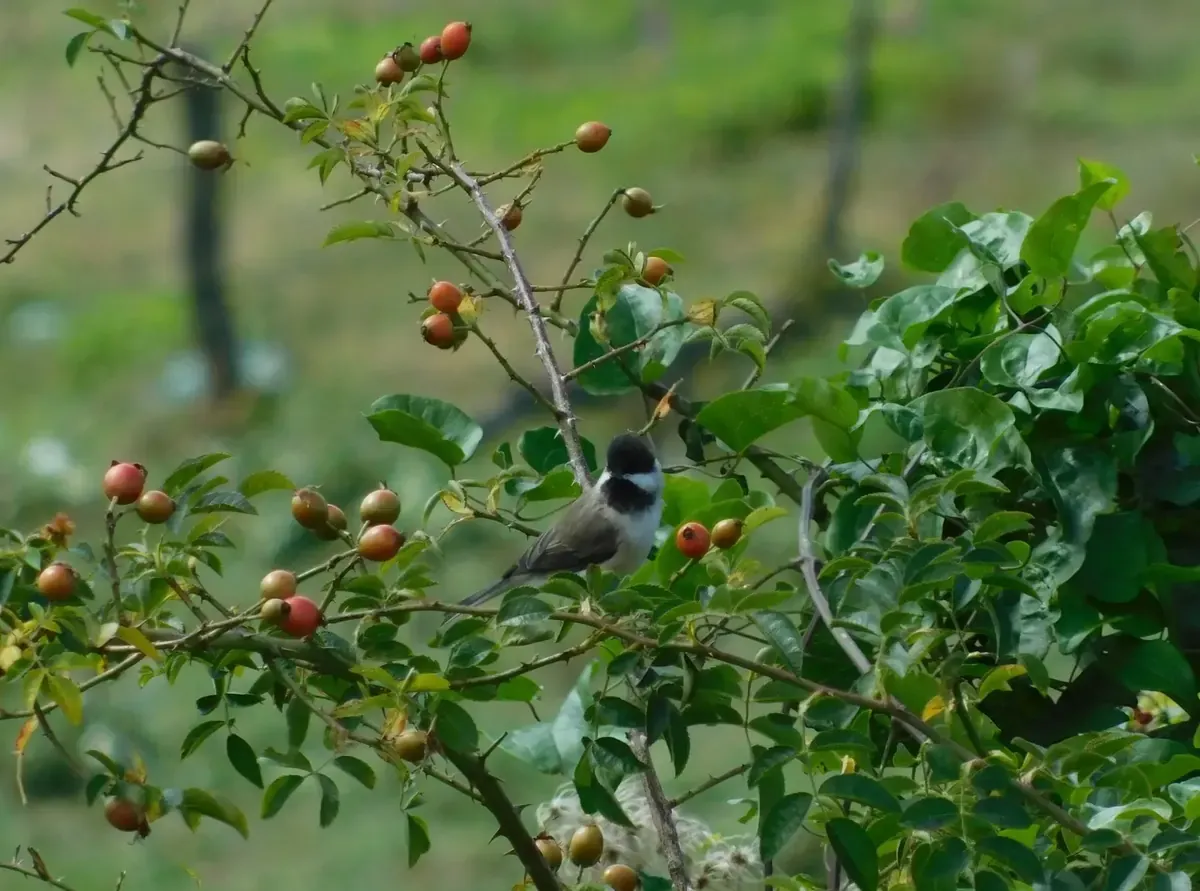
The Sombre Tit is a tit that favours macchia with scattered trees and bushes, including olive groves, plum orchards and other fruit trees. It is also seen in open park-like country, especially in mountainous limestone terrain.
How to recognise it
- Very large black bib that leaves the white cheek as only a narrow wedge
- Brown-tinged greyish black cap reaching far down the head
- Male sooty brownish black on crown and nape, female more chocolate brown there
- Size and proportions of a Great Tit, with a fairly strong bill
Call and song
The simple song resembles a Marsh Tit's but with an impure voice, roughly "tjriv-tjriv-tjriv". Calls are Blue Tit-like and scolding like a sparrow, sometimes with a harsher tone. A characteristic call is a buzzing "tschrrrr", and the alarm is a fairly deep, Great Tit-like "tchetchetche".
Where and when
The Sombre Tit does not occur in Sweden, and there are no reports in Artportalen from 2016 to 2025. It is resident but may move to lower areas in parts of its range. It occurs from sea level up to 2 300 metres.
Food and behaviour
It feeds mainly on insects, especially caterpillars and other larvae, searching on the ground and in lower branches. Compared with other tits it is fairly quiet and retiring. It breeds from March to early August in holes in rotting fruit trees, in nest boxes or in rock crevices. The female alone incubates five to seven eggs for 12 to 14 days, and both parents feed the young.
Easily confused with
-
The Willow Tit is similar in colour, but the Sombre Tit has a larger black bib, a cap reaching further down the head and often a peaked crown.
-
Compared with the Marsh Tit, the Sombre Tit has a proportionally longer tail.
-
The Siberian Tit is a similar species but differs from the Sombre Tit in the colours of its plumage.
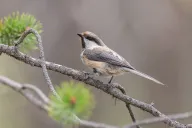
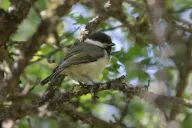
Wears its sooty-grey cap like a sailor's hat.
More in the Paridae family
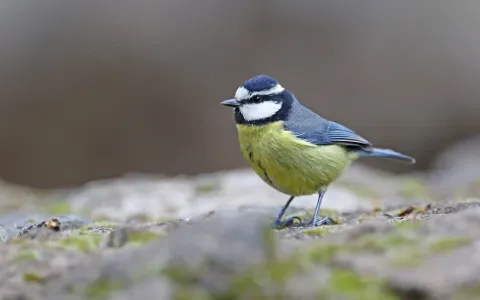
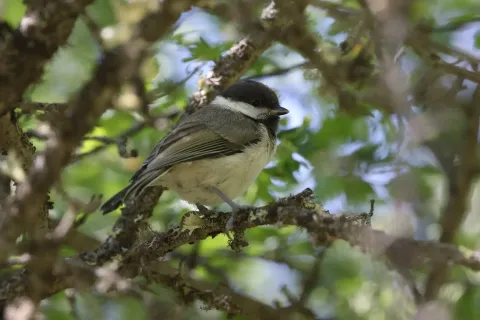
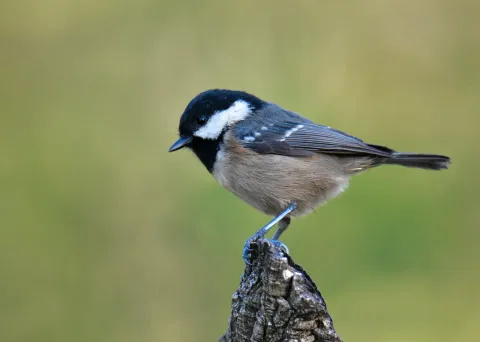
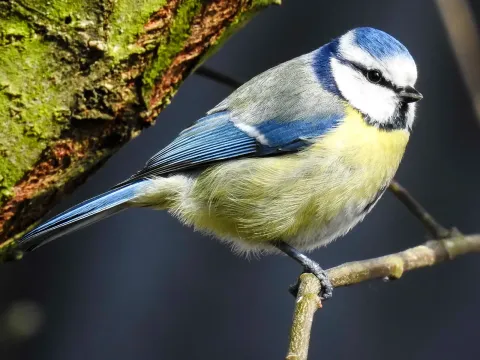
Photo: Christoph Moning, CC BY 4.0, via Wikimedia Commons, resized

Photo: Nikola Veljković, CC BY-SA 4.0, via Wikimedia Commons, resized

The text was written with AI from facts in Wikipedia and may be shared under CC BY-SA 4.0. Sources: Swedish article, English article, German article
Report data: Artportalen (SLU Swedish Species Information Centre) via GBIF.org, 2016 to 2025.
Checked against sources on . How we make these pages