Anatidae
Greylag Goose
Anser anser
- Scientific name
- Anser anser
- Family
- Anatidae
- In Sweden
- Partial migrant, breeds here
- Size
- 74 to 84 cm
- Swedish Red List 2025
- Not red-listed
- Global Red List (IUCN)
- Least concern (LC)
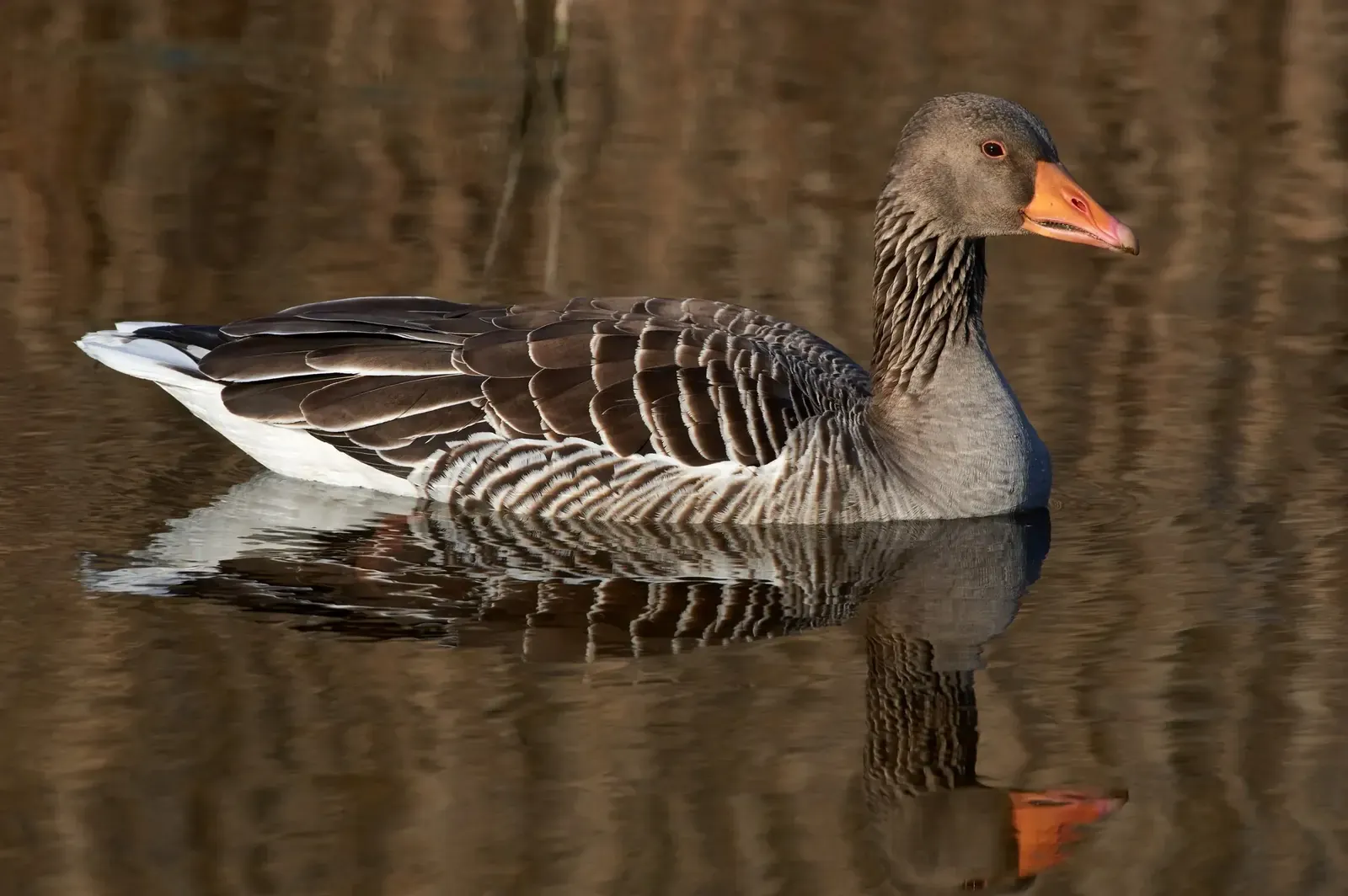
The Greylag Goose is a large, heavy grey goose. It breeds near water, in wetlands, by small and large lakes and along coasts.
How to recognise it
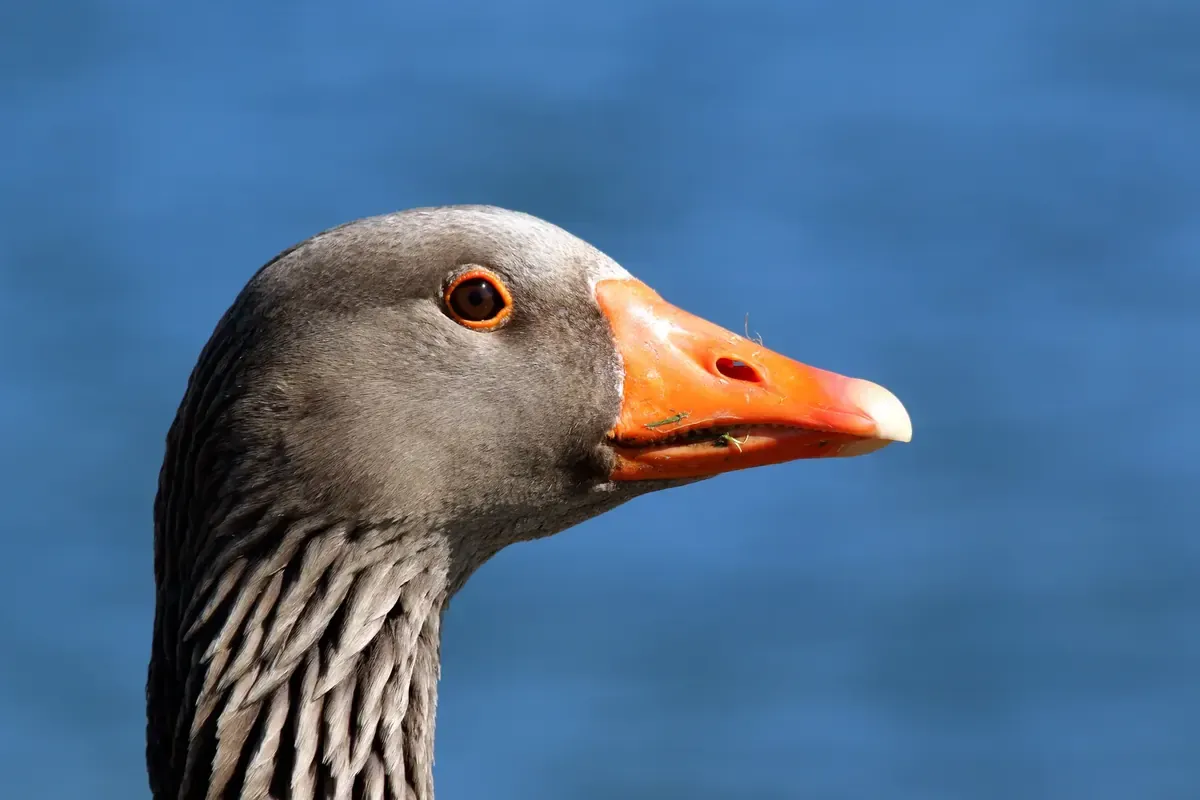
- Big, heavy grey goose with a thick orange-red or pink bill and white nail
- Paler breast and belly with black spots, white undertail and no white on the head
- In flight: pale head, dark back and pale grey forewings that can look almost white
- Sexes alike, young birds lack black spots on breast and belly and have greyish legs
Call and song
The Greylag Goose is very noisy, with harsh, nasal, cackling calls. The most typical call is a ”kijaaa-ga-ga” with the first note in falsetto. A flock sounds like baying hunting dogs.
Where and when
A partial migrant, it breeds across much of southern Sweden and along the Norrland coast, preferably on the coast and in the outer archipelago. It is seen mostly March to October, but is reported all year and from all 21 counties. In winter it uses shore meadows, flooded fields and pastures near water. Large numbers of young geese gather yearly to moult on the islets at Rone near Gotland.
When is it seen in Sweden?
Where is it reported?
- No reports
- Small share
- Medium share
- Large share
Reported all year round. Reported from all 21 counties.
Food and behaviour
Adults feed on plant material, mainly grass, while the young eat many small animals. Greylags are very wary and give loud warnings at the slightest danger. On longer journeys the flock flies in a V formation. Right after breeding they moult and cannot fly. A clutch is usually four to six eggs, which the female usually incubates for 27 to 28 days.
More in the Anatidae family
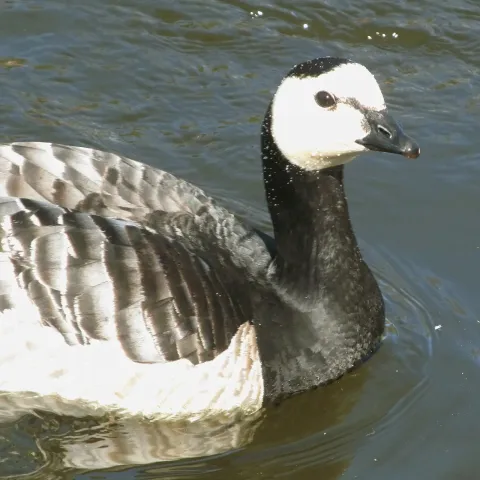
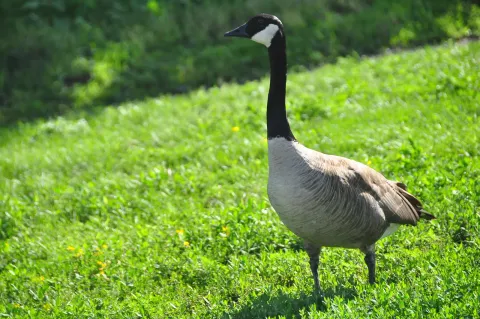
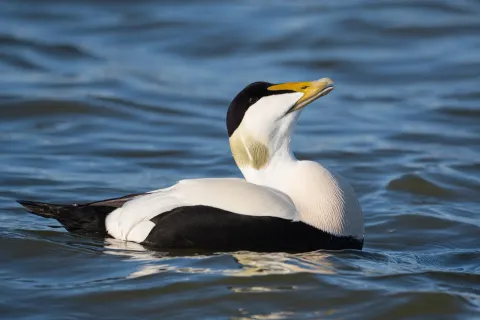
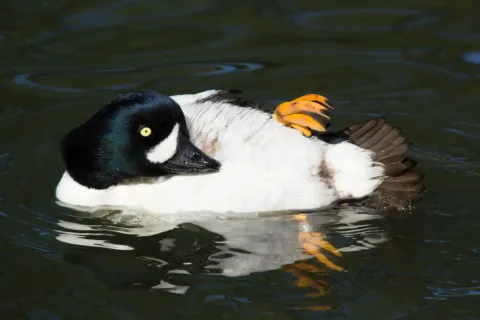
Photo: Hobbyfotowiki, CC0, via Wikimedia Commons, resized

Photo: Charles J. Sharp, CC BY-SA 4.0, via Wikimedia Commons, resized

The text was written with AI from facts in Wikipedia and may be shared under CC BY-SA 4.0. Sources: Swedish article, English article, German article
Report data: Artportalen (SLU Swedish Species Information Centre) via GBIF.org, 2016 to 2025. Red list: The Swedish Red List 2025, SLU Swedish Species Information Centre via GBIF.org.
Checked against sources on . How we make these pages