Anatidae
Mute Swan
Cygnus olor
- Scientific name
- Cygnus olor
- Family
- Anatidae
- In Sweden
- Partial migrant, breeds here
- Size
- About 140 cm
- Swedish Red List 2025
- Not red-listed
- Global Red List (IUCN)
- Least concern (LC)
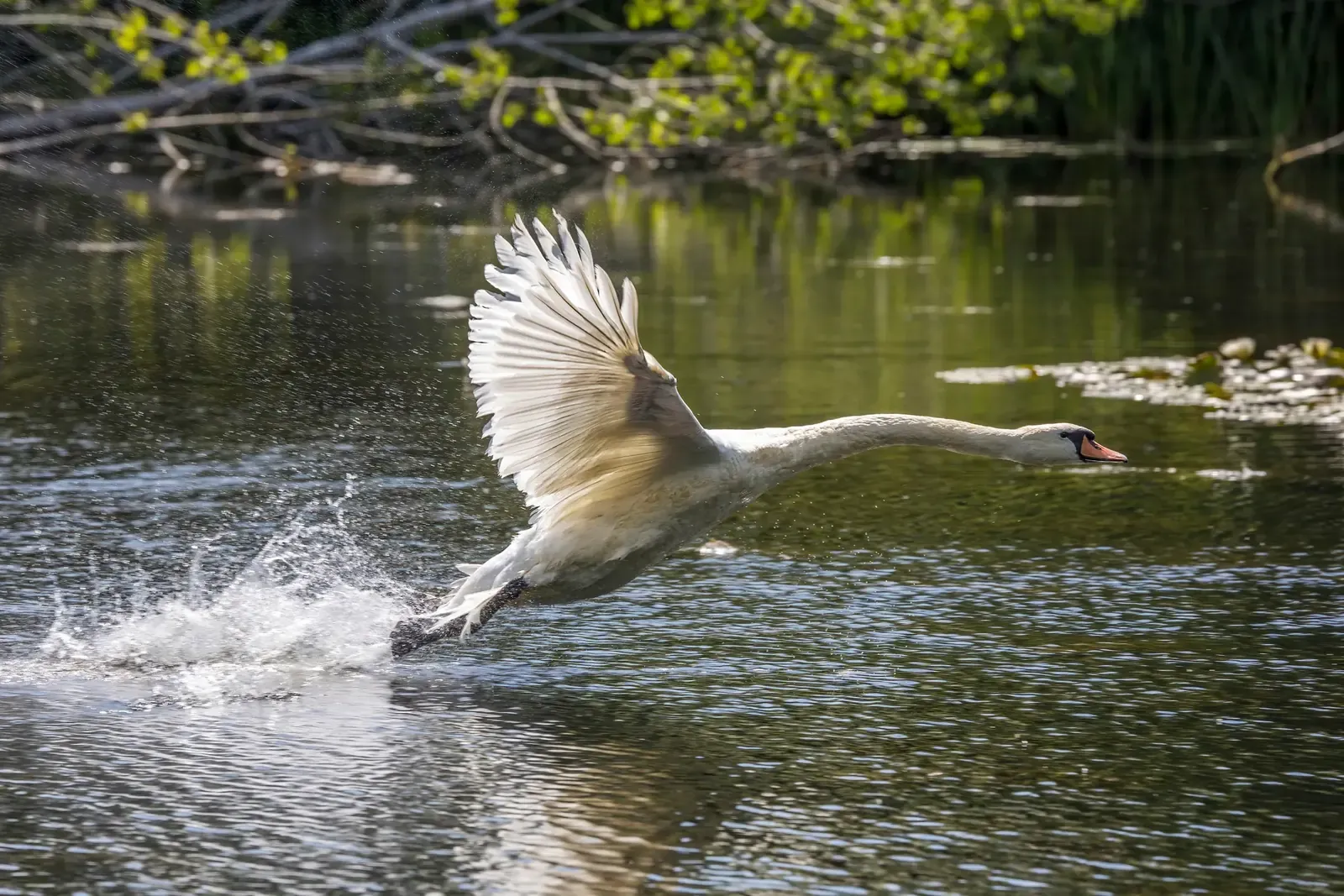
The Mute Swan is a large white swan with an orange and black bill and a black knob at its base. It lives on lakes, lagoons and slow rivers, in Sweden around the coasts and in reedy lakes.
How to recognise it
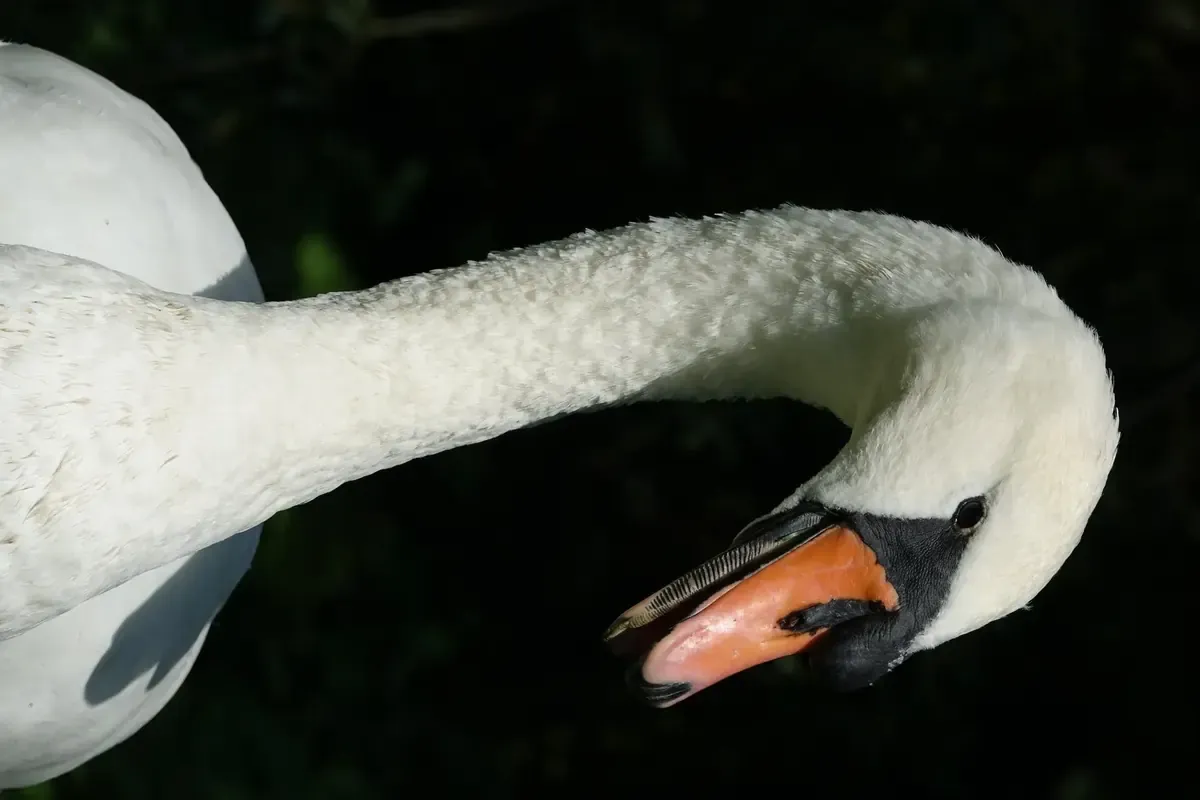
- Adults are all white, the bill orange and black with a black knob at the base
- Black triangle at the bill base points towards the eye, which has a black ring
- Long flexible neck often held in an S-curve, small head and blackish-grey legs
- Male has a larger knob; young are greyish brown-white, bill grey-black turning pinker
Call and song
In flight the wings make a constant, metallic swishing sound that can be heard 1 to 2 kilometres away. Its calls are described as grunting, hoarse whistling and snorting. Excited birds give a hard, loud "hueiarr" or "kiorr", and it often hisses at rivals and intruders in its territory.
Where and when
The Mute Swan breeds in Sweden and is partly migratory. It occurs around the coasts and in reedy lakes from Skåne to central Norrland. In southern Sweden it is resident, along the Norrland coast often migratory. It is reported all year round and from all 21 counties. At Ottenby on southern Öland there is a colony of over 100 pairs.
When is it seen in Sweden?
Where is it reported?
- No reports
- Small share
- Medium share
- Large share
Reported all year round. Reported from all 21 counties.
Food and behaviour
The Mute Swan grazes water plants from the bottom with its long neck and can reach the bottom in water down to about 1.5 metres deep. It defends its territory hard and may attack people who come too close. When it feels threatened it raises its wings and lowers its head. In May and June it lays five to nine grey-green eggs in a large nest of reeds.
Easily confused with
-
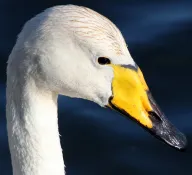
The Mute Swan's wings make a metallic swishing sound in flight, which the Whooper Swan lacks.
More in the Anatidae family
Photo: Charles J. Sharp, CC BY-SA 4.0, via Wikimedia Commons, resized

Photo: Gzen92, CC BY-SA 4.0, via Wikimedia Commons, resized

The text was written with AI from facts in Wikipedia and may be shared under CC BY-SA 4.0. Sources: Swedish article, English article, German article
Report data: Artportalen (SLU Swedish Species Information Centre) via GBIF.org, 2016 to 2025. Red list: The Swedish Red List 2025, SLU Swedish Species Information Centre via GBIF.org.
Checked against sources on . How we make these pages