Fringillidae
Parrot Crossbill
Loxia pytyopsittacus
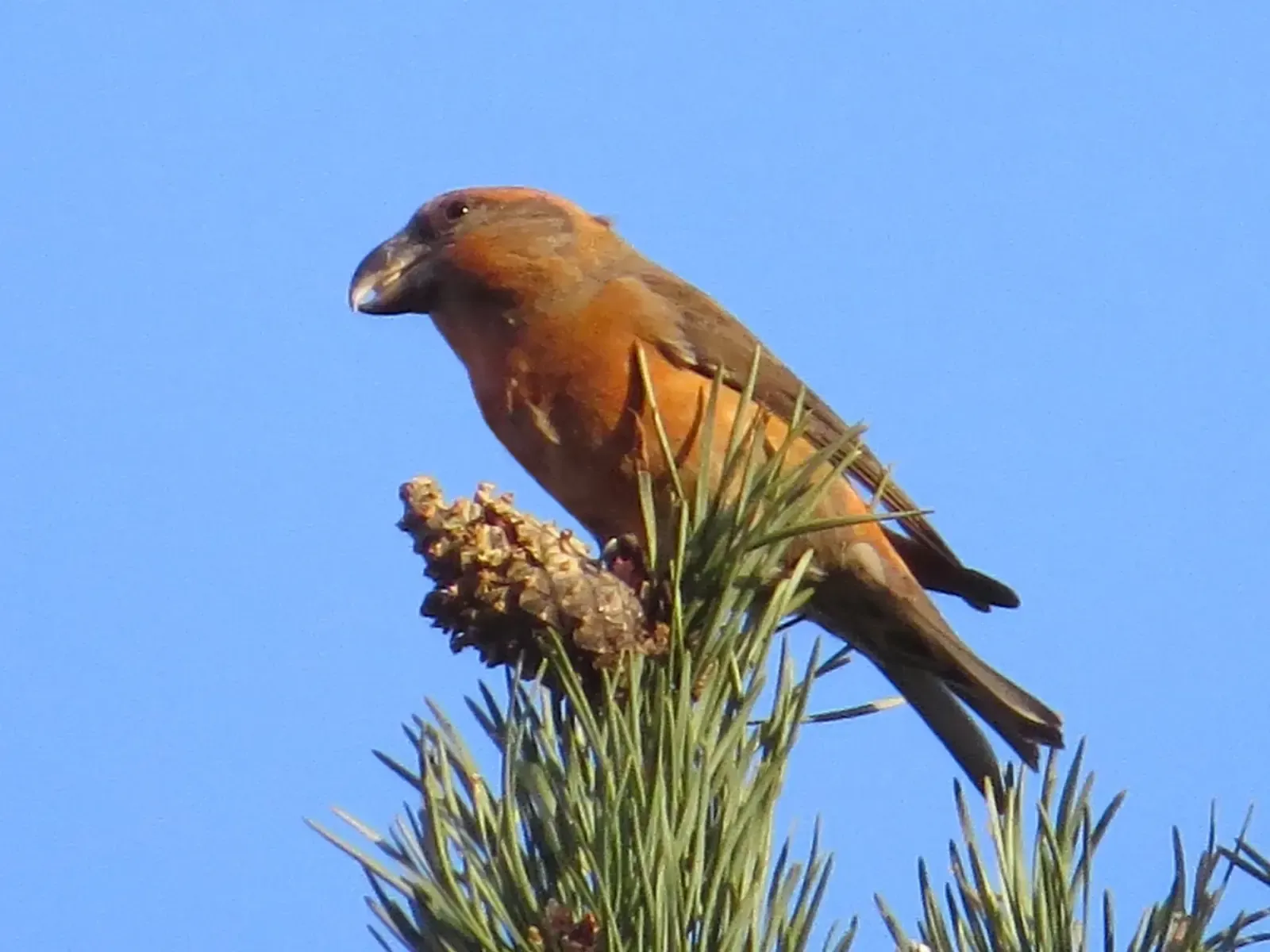
- Scientific name
- Loxia pytyopsittacus
- Family
- Fringillidae
- In Sweden
- Resident all year
- Size
- 16 to 18 cm
- Swedish Red List 2025
- Not red-listed
- Global Red List (IUCN)
- Least concern (LC)
The Parrot Crossbill is a heavy, powerfully built finch that breeds in pine forest or in mixed conifer forest with plenty of pine. In Sweden it is a resident bird.
How to recognise it
- Thicker neck and proportionally larger head and bill than Common Crossbill
- Crossed, deep, heavy bill, though the crossed tips are often hard to see
- Male mainly brick red, female grey-green above with a yellow-green rump
- Dark to blackish wings and tail with pale grey edges in all plumages
Call and song
The Parrot Crossbill is talkative and calls often. The call, typp-typp-typp, resembles that of Common Crossbill but is harder and deeper and lacks its often inserted "l". The song is made up of trilling sounds and low twittering mixed with the call.
Where and when
The Parrot Crossbill is resident in Sweden, and the population is thought to be stable and viable. It is reported most in October. Its share of all bird reports is highest in Västerbotten, Gävleborg and Gotland. It is not on the Swedish Red List 2025.
When is it seen in Sweden?
Where is it reported?
- No reports
- Small share
- Medium share
- Large share
Reported most in October. Its share of all bird reports is highest in Västerbotten, Gävleborg and Gotland.
Food and behaviour
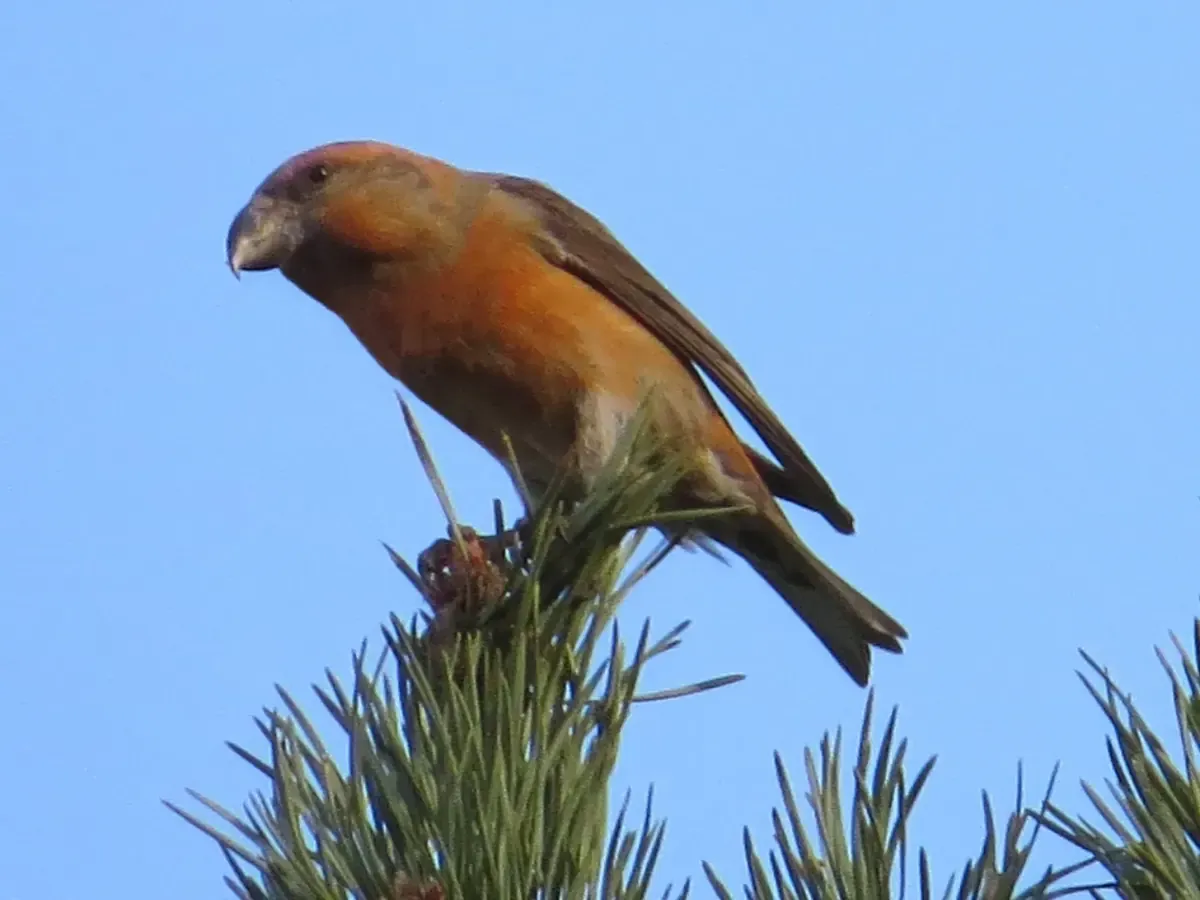
The Parrot Crossbill specialises in seeds from pine cones. It also eats other conifer seeds, buds and shoots, and small amounts of insects and larvae. It has been seen biting off twigs with pine cones and carrying them to a branch. Outside the breeding season it forms flocks, often with other crossbills. Some winters, known as invasion years, part of the population moves further and can reach Central Europe.
Easily confused with
-
Loxia scotica
The Parrot Crossbill is hard to tell from Scottish Crossbill, since the differences in plumage are negligible.
More in the Fringillidae family
Photo: MPF, CC BY-SA 3.0, via Wikimedia Commons, resized

Photo: MPF, CC BY-SA 3.0, via Wikimedia Commons, resized

The text was written with AI from facts in Wikipedia and may be shared under CC BY-SA 4.0. Sources: Swedish article, English article, German article
Report data: Artportalen (SLU Swedish Species Information Centre) via GBIF.org, 2016 to 2025. Red list: The Swedish Red List 2025, SLU Swedish Species Information Centre via GBIF.org.
Checked against sources on . How we make these pages