Anatidae
Red-breasted Merganser
Mergus serrator
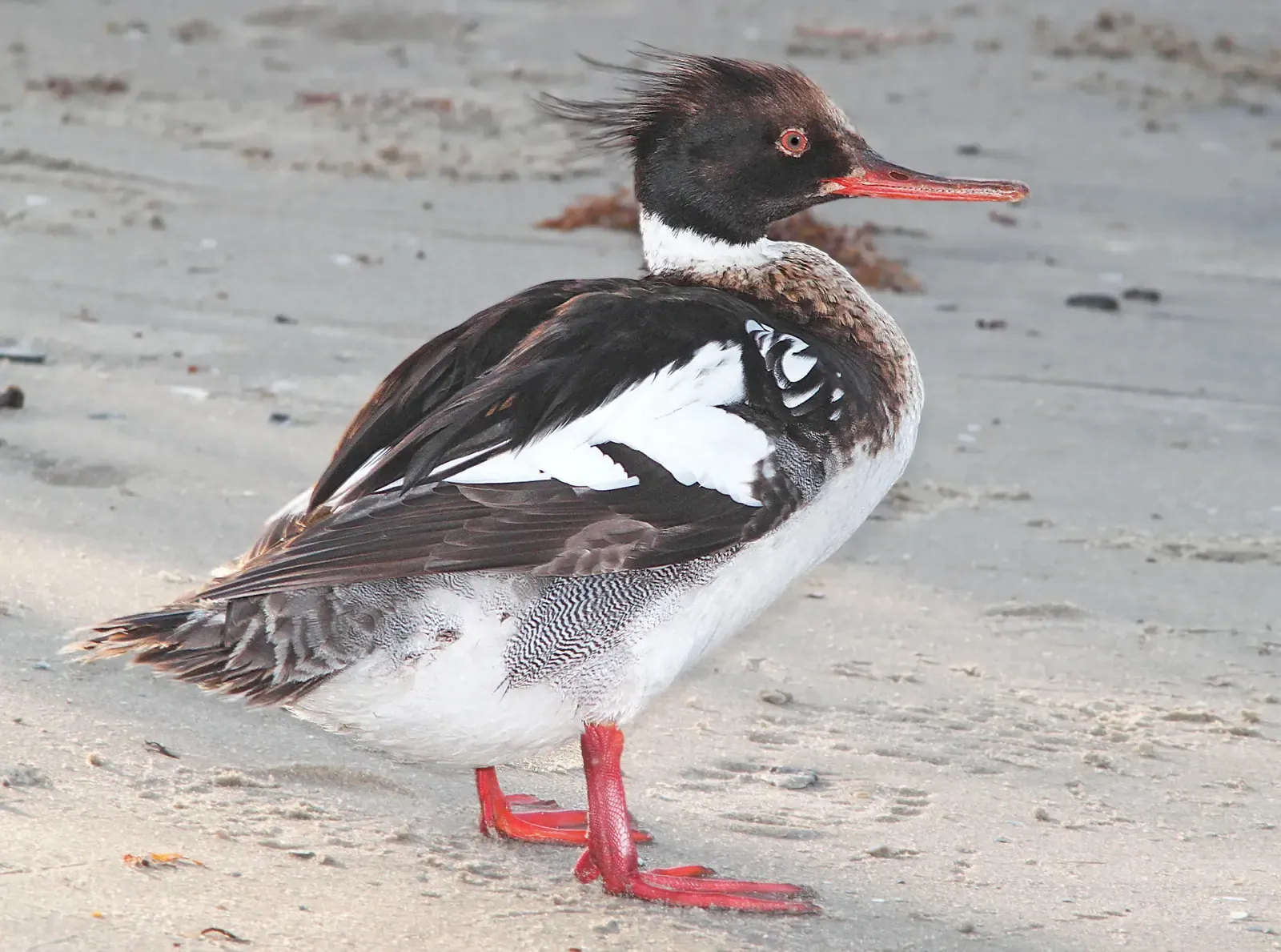
- Scientific name
- Mergus serrator
- Family
- Anatidae
- In Sweden
- Partial migrant, breeds here
- Size
- 52 to 59 cm
- Swedish Red List 2025
- Not red-listed
- Global Red List (IUCN)
- Least concern (LC)
The Red-breasted Merganser is a duck with a long, thin red bill that breeds on the shores of clear lakes and rivers, and also by sheltered sea bays and estuaries. In winter it is found along sea coasts.
How to recognise it
- Breeding male: black head with a greenish gloss, long crest, white collar and rusty breast
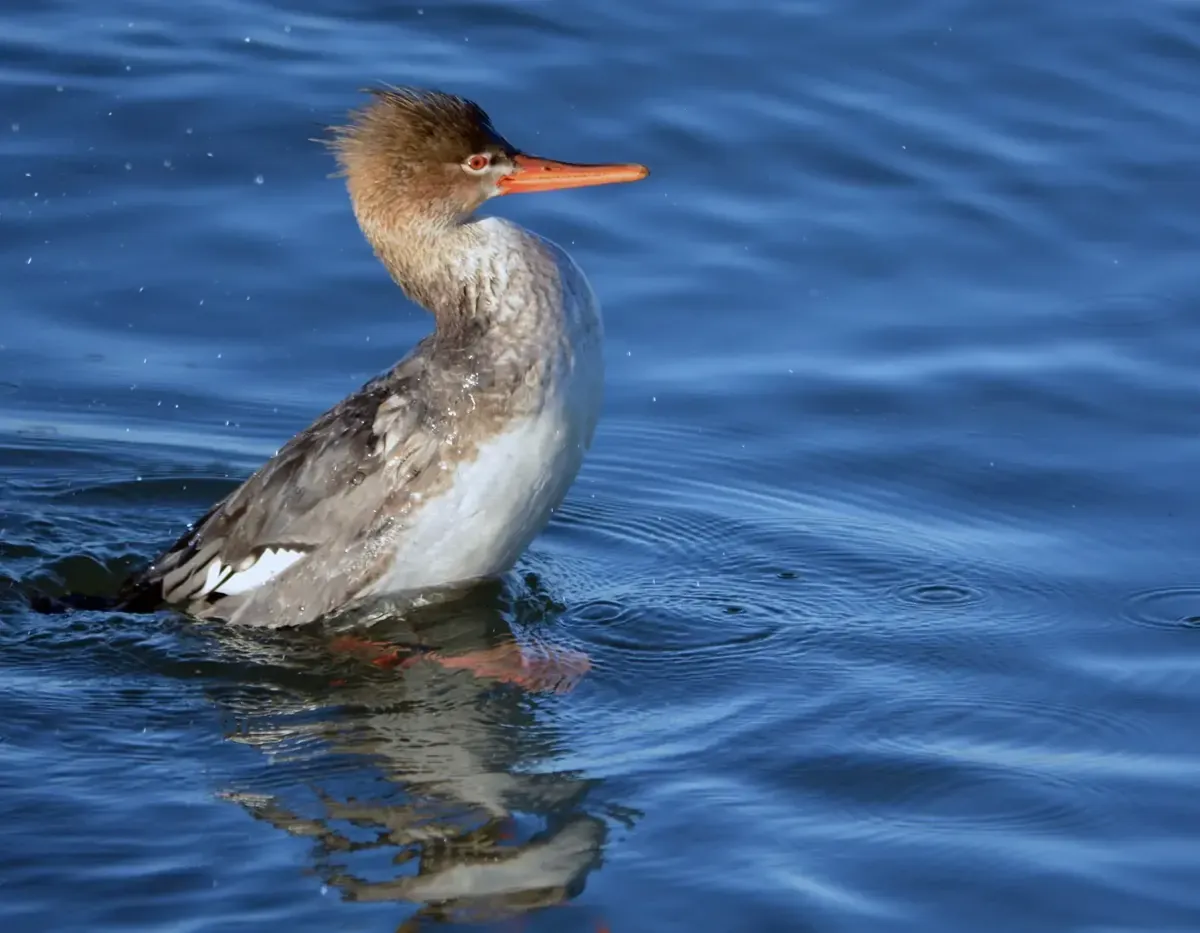
- Female has a reddish-brown head and upper neck but no white chin patch
- Long, slim, straight red bill with serrated edges, red feet and a ragged crest
- Black bars on white wing patch, eclipse male resembles female but with large white wing patch
Call and song
It is mostly silent. The female's rolling "prrak prrak prrak" is often heard, and in flight she gives a harsh "gruk". The male's display call is rarely heard and very faint, like a rhythmic hiccup and a sneeze with a pause between.
Where and when
It is a partial migrant that breeds in Sweden. It is reported all year and from all 21 counties. The population was estimated at 21 000 pairs in 2018. Autumn migration starts in September, and some return as early as February. In June males leave to moult in small groups on the coast. Some winter near the breeding areas, for example on the west coast.
When is it seen in Sweden?
Where is it reported?
- No reports
- Small share
- Medium share
- Large share
Reported all year round. Reported from all 21 counties.
Food and behaviour
It feeds mostly on small schooling fish, as well as plant material and aquatic invertebrates. Several mergansers often hunt together and catch their prey by diving. On migration and in winter quarters it often gathers in flocks of up to a hundred birds or more. In display the males stretch, bend and pull in their necks, often several at once.
More in the Anatidae family
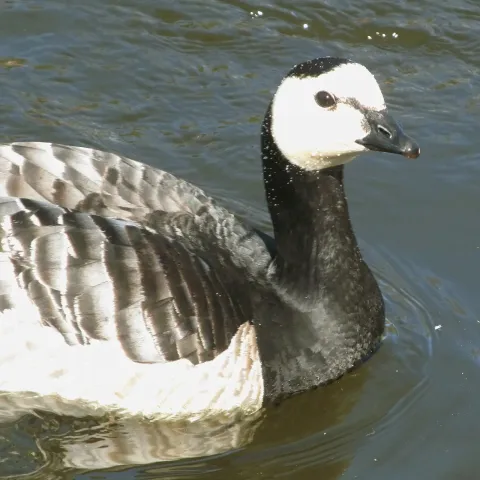
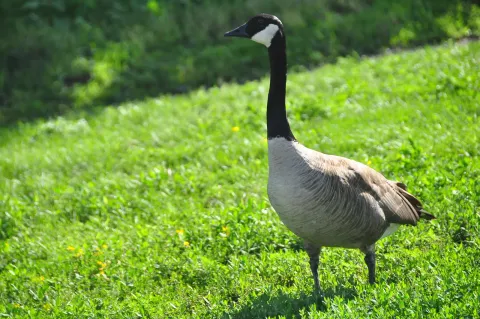
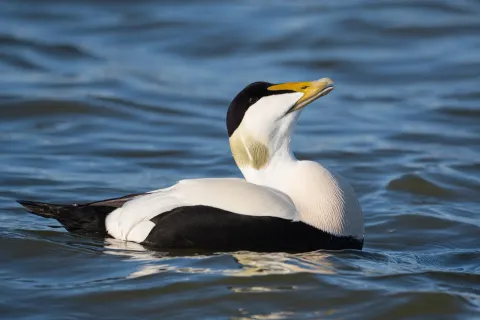
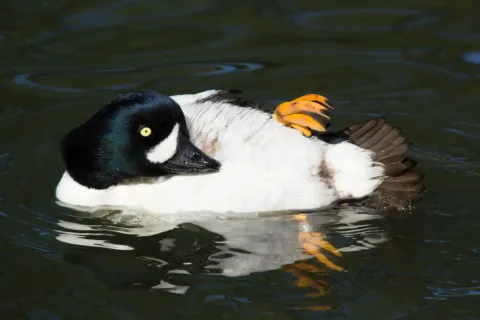
Photo: ALAN SCHMIERER, CC0, via Wikimedia Commons, resized

Photo: peggycadigan, CC BY 2.0, via Wikimedia Commons, resized

The text was written with AI from facts in Wikipedia and may be shared under CC BY-SA 4.0. Sources: Swedish article, English article, German article
Report data: Artportalen (SLU Swedish Species Information Centre) via GBIF.org, 2016 to 2025. Red list: The Swedish Red List 2025, SLU Swedish Species Information Centre via GBIF.org.
Checked against sources on . How we make these pages