Strigidae
Tawny Owl
Strix aluco
- Scientific name
- Strix aluco
- Family
- Strigidae
- Size
- 37 to 43 cm
- Swedish Red List 2025
- Not red-listed
- Global Red List (IUCN)
- Least concern (LC)
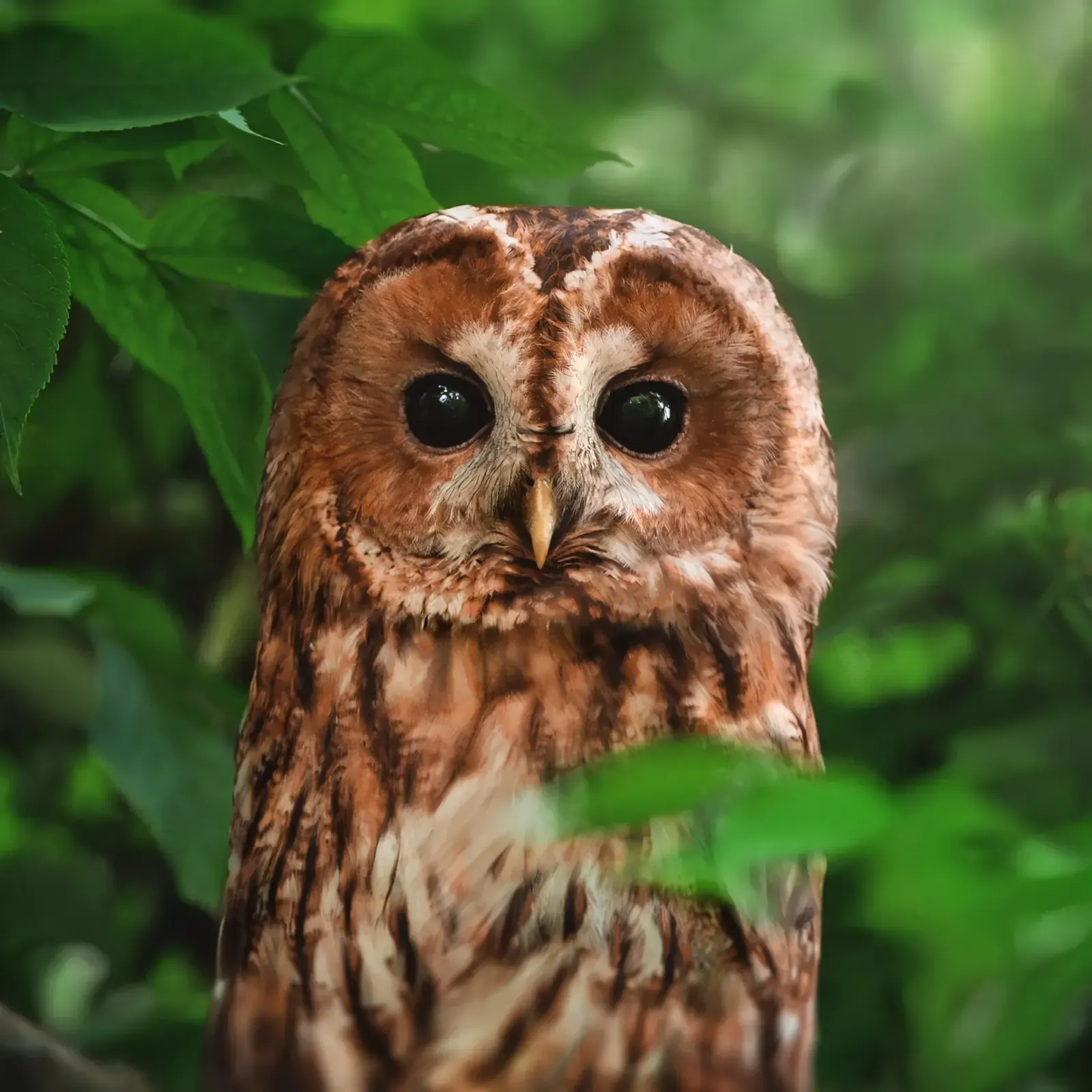
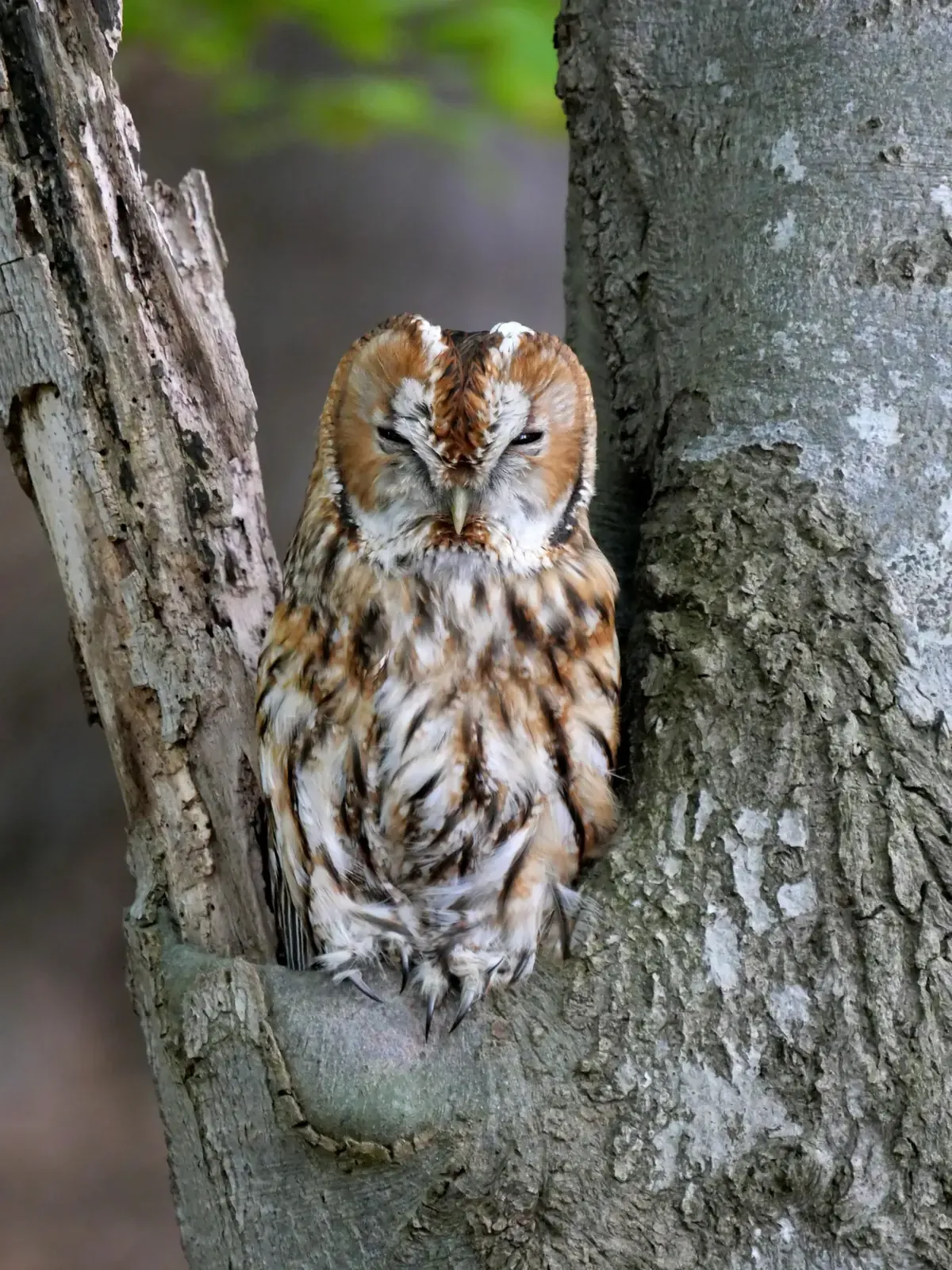
The Tawny Owl is an owl without ear tufts that lives in broadleaf and mixed woodland, preferably near water. Cemeteries, gardens and parks have let it spread into urban areas.
How to recognise it
- Large, rounded head with a fairly flat face and no ear tufts
- Dark brown eyes in a facial disc that is usually fairly plain
- Upperparts rufous brown or greyish brown, underparts whitish with brown streaks
- The female is clearly larger than the male and more than 25 percent heavier
Call and song
The commonest call is a shrill contact call, ke-vitt. The male announces himself with a quavering hoo ... ho, ho, hoo-hoo-hoo-hoo. Typical is a duet where the female calls ke-vitt and the male answers with his hooting. The male's territorial song carries far from September to November and in early spring.
Where and when
In Sweden the Tawny Owl occurs north to southern Västerbotten, and the population is estimated at 10 000 to 20 000 pairs. According to the Swedish Bird Survey it declined significantly during the 2010s. It is reported most in February. Its share of all bird reports is highest in Västmanland, Örebro and Kronoberg.
When is it seen in Sweden?
Where is it reported?
- No reports
- Small share
- Medium share
- Large share
Reported most in February. Its share of all bird reports is highest in Västmanland, Örebro and Kronoberg.
Food and behaviour
By day it stays hidden and only sets out to hunt at dusk. It watches from a branch and then drops or glides silently down onto its prey. Its food is mainly woodland rodents, along with other mammals up to the size of a young rabbit, birds, earthworms and beetles. Near the nest it may attack dogs, cats and people, sometimes unprovoked.
Easily confused with
-
The Long-eared Owl has ear tufts, which the Tawny Owl lacks. In flight the Tawny Owl looks bulkier, longer tailed and broader winged.
-
The Ural Owl resembles the Tawny Owl in shape but is much larger.
-
Strix nebulosa
The Great Grey Owl resembles the Tawny Owl in shape but is much larger.
More in the Strigidae family
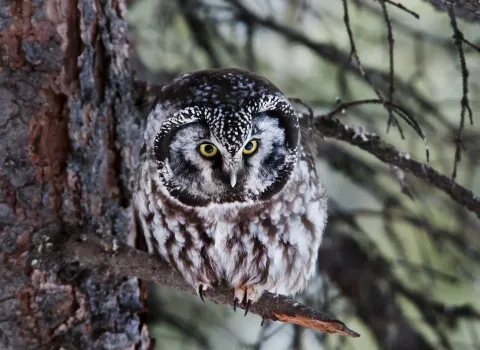
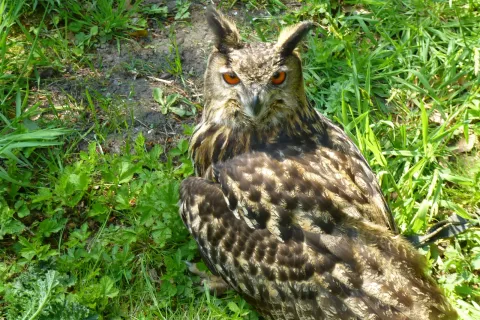
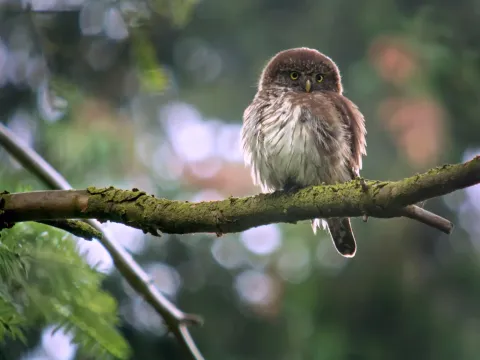
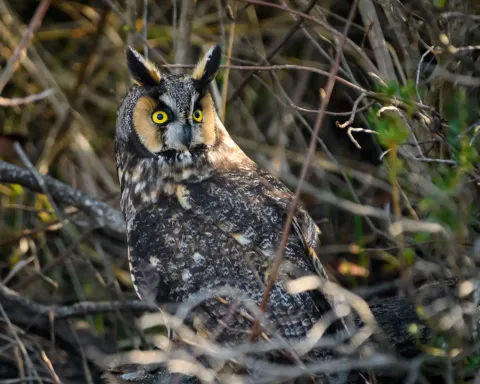
Photo: Aneta p, CC BY 4.0, via Wikimedia Commons, resized

Photo: WaldFeewald, CC BY-SA 4.0, via Wikimedia Commons, resized

The text was written with AI from facts in Wikipedia and may be shared under CC BY-SA 4.0. Sources: Swedish article, English article, German article
Report data: Artportalen (SLU Swedish Species Information Centre) via GBIF.org, 2016 to 2025. Red list: The Swedish Red List 2025, SLU Swedish Species Information Centre via GBIF.org.
Checked against sources on . How we make these pages